

Kovrr is Trusted By Global Enterprises







One Fabric. Six Use Cases.
All powered by Kovrr's AI Interaction Data Fabric.
Ungoverned AI Is Everywhere.
Kovrr Secures Every Interaction.



The Security Stack Already Sees AI. Kovrr Turns It Into One Finding.
A network proxy records where AI traffic went and an identity provider records who signed in, yet neither connects the two. The AI Interaction Data Fabric joins signals from every connected source into one finding in under 3 seconds, with no new sensor to deploy.
The Full Toolkit for AI Governance and AI Usage Control
- Govern AI Agents & Audit Trails
- Real-Time AI Inventory & Shadow AI
- Monitor & Control Employees' AI Usage
- Assess 3rd-Party Vendors' AI Risk
- Auto-Detect AI Compliance Gaps
- Prioritize Risk & Report to the Board
Every Agent Action, Traced Back to a Named User
Agents act under shared service accounts, and their own logs rarely show who authorized a call or which data moved with it. Kovrr rebuilds each action from the identity and network signals the agent passed through and ties it to the person behind it, with a full audit trail of every decision. Where policy requires it, the Kovrr MCP Agent Broker enforces scope before a tool call completes.
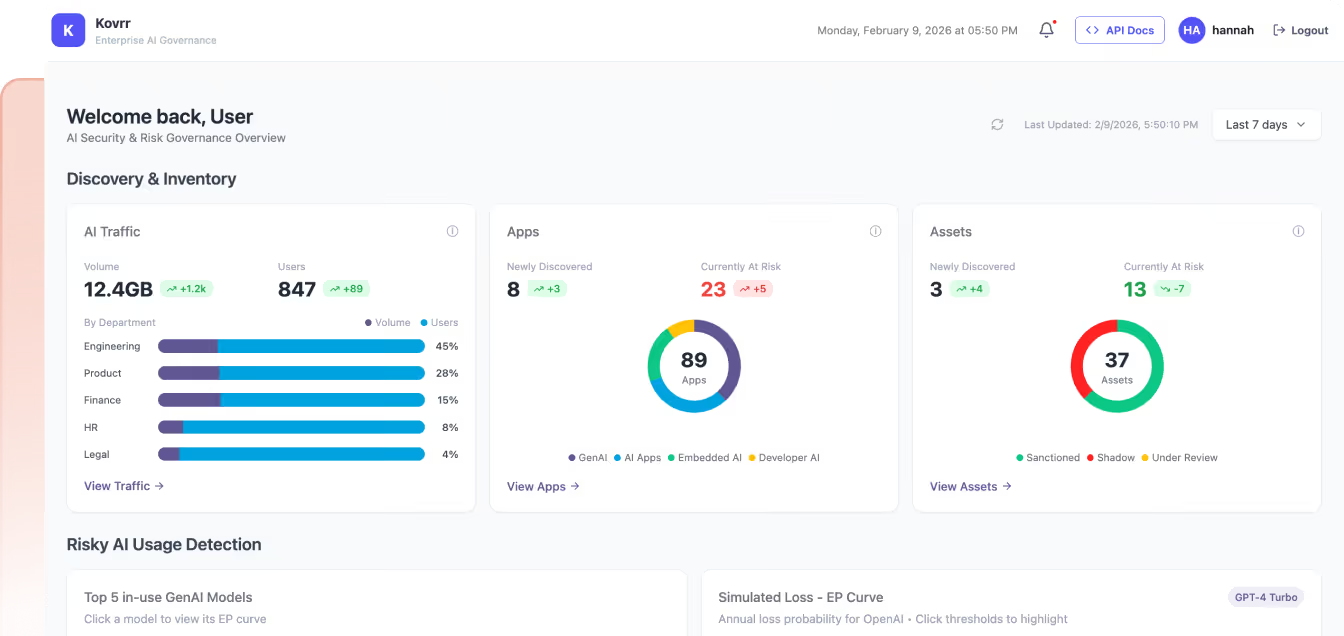

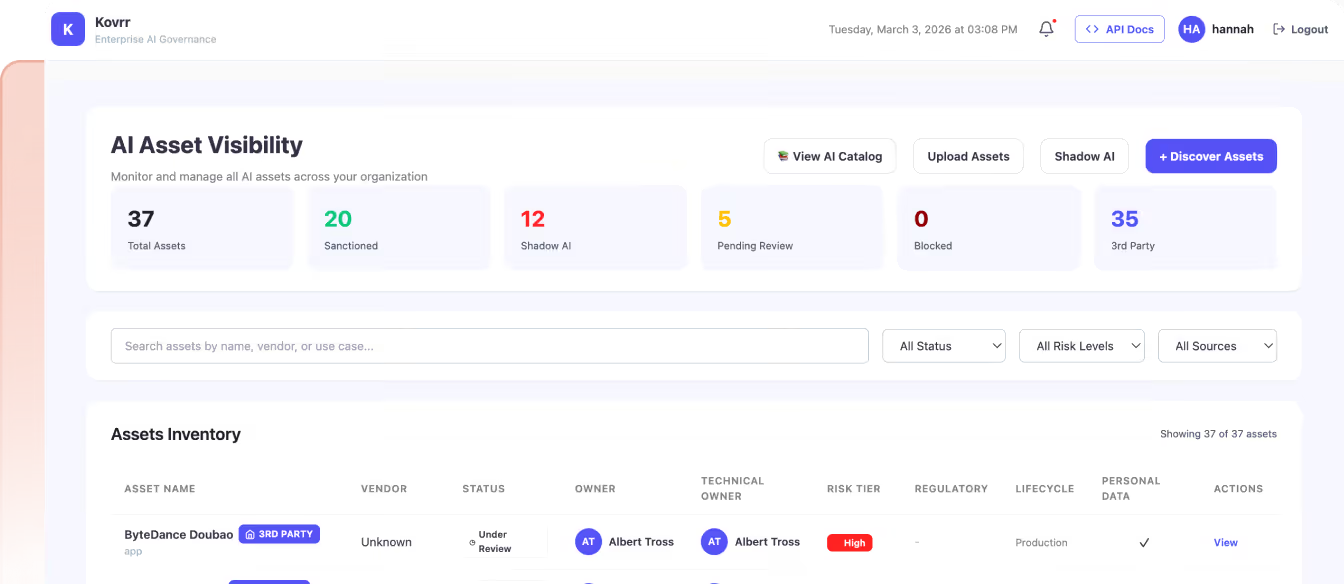
An AI Inventory That Stays Current Between Audits
Kovrr builds the inventory from telemetry the organization already collects, with no new sensor to deploy. Sanctioned tools, shadow AI in personal accounts, desktop apps, and AI embedded in third-party software all land in one list. Each entry has a named owner and a risk profile from the 18,000+ applications in the Kovrr AI catalog. New assets appear on the next sync instead of the next review cycle.
Policy Enforced at the Moment Employees Use AI
Employees reach for AI to get work done, often through a personal account or a tool nobody approved. Kovrr resolves the account and the class of data behind each interaction without capturing prompts, and Kovrr Browser Protect warns or blocks by rule when sensitive data is typed into an AI tool. Thresholds follow the company's own policy, and every finding reaches the role that owns it.
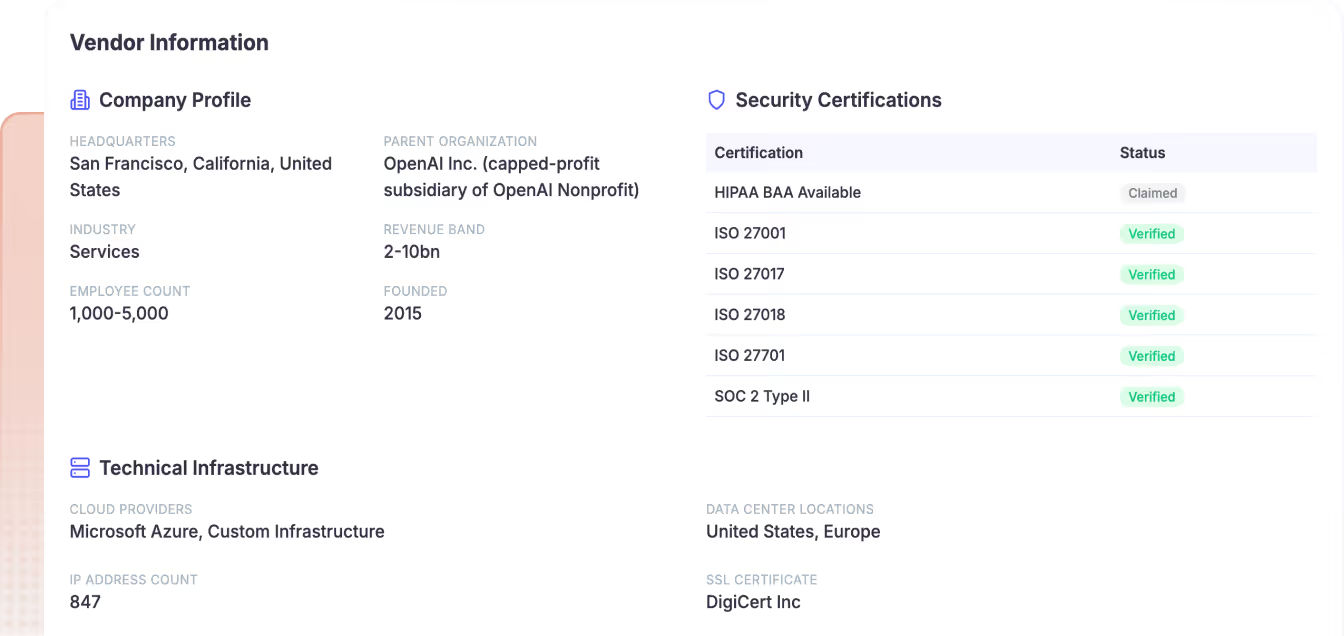
Vendor AI Risk Scored Before and After the Contract Is Signed
The Kovrr AI Vendor Catalog scores 18,000+ AI applications on whether they train on customer input and how long they retain it. Security and procurement teams vet each new AI use case against those scores, and Kovrr flags AI features that arrive later through vendors already under contract.
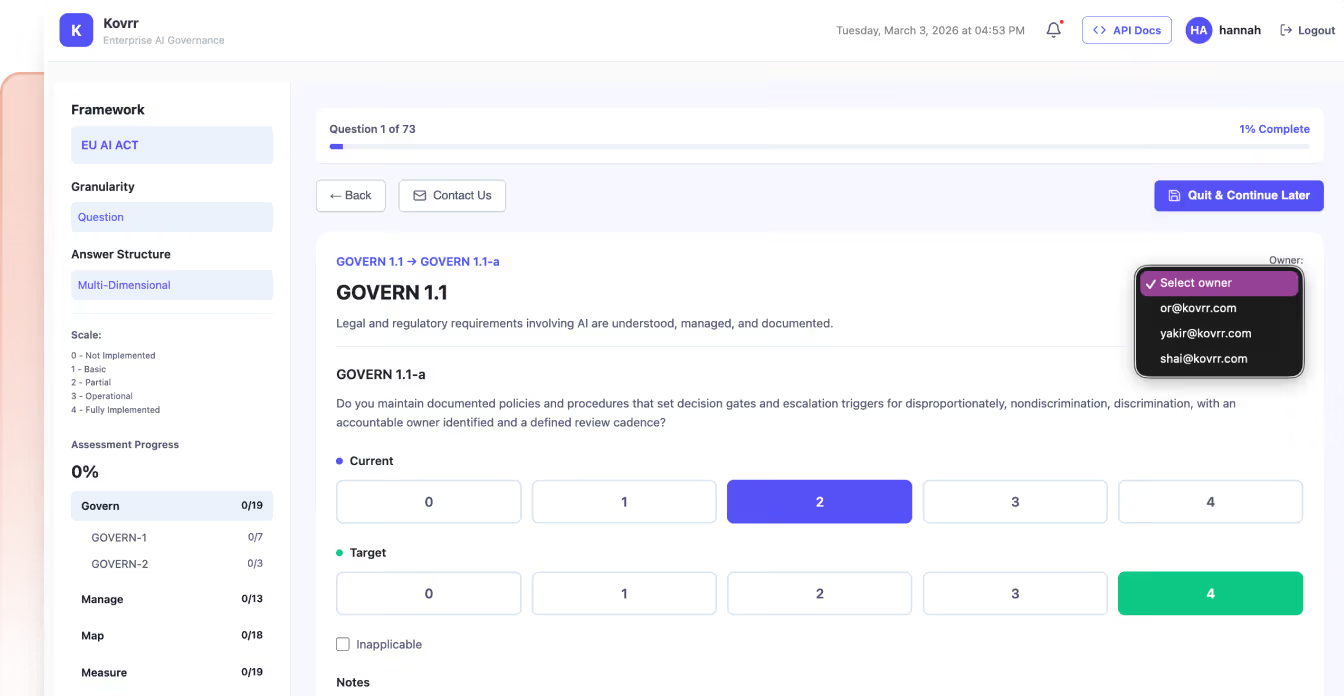
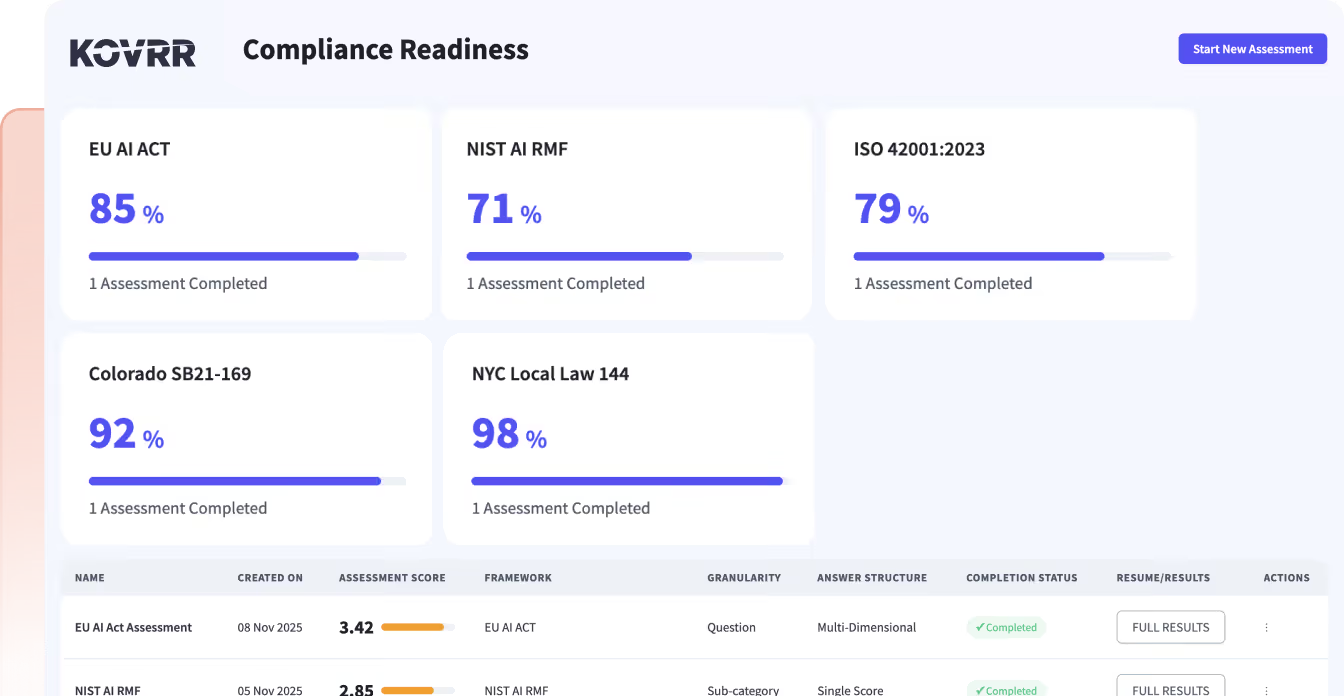
Audit Evidence Collected Before the Auditor Asks
Kovrr maps AI usage and controls against requirements such as the EU AI Act and ISO 42001 and flags where coverage falls short. Each finding carries the logged activity behind it, with a full audit trail of who acted and when, instead of a spreadsheet assembled the week before an audit.
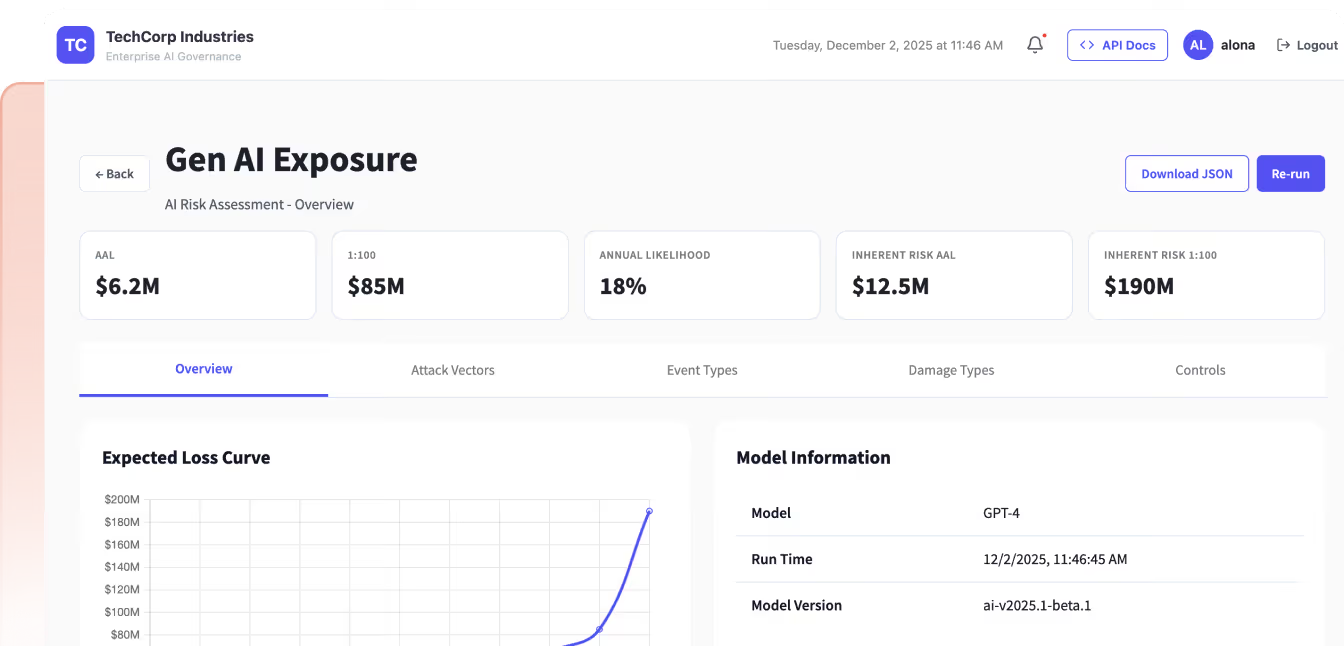
AI Risk Ranked by Exposure and Reported in Business Terms
Kovrr ranks AI risks by the findings behind them, with the most exposed scenarios first in the remediation queue. For executives and the board, AI Risk Quantification (AIRQ) models projected loss against the organization's own environment, and board reports show exposure per scenario and in aggregate.
Every Security Tool Sees Just a Part of AI Use. Kovrr Connects the Parts.
Network, endpoint, identity, and data security tools each hold a piece of every AI interaction. Kovrr is the only platform that brings all of those signals together into one finding, with no new sensor, and enforces back through the same tools where policy calls for it.




vs. Other AI Security Tools

vs. SASE / Network Visibility
vs. GRC Tools
vs. EDR / Endpoint Security
vs. DLP and Data Security Tools
vs. Third-Party Risk Tools
AI Risk Is Not Waiting. Neither Should You.
Govern Every AI Interaction With the Stack in Place.
Visibility starts on the tools already deployed, with no new sensor. Enforcement switches on when policy is ready.

