
AI Risk Management: Defining, Measuring, & Mitigating the Risks of AI
Seven categories of AI risk, the difference between assessing and quantifying them, and how to express AI exposure in terms a board can actually act on.



What is AI risk management?
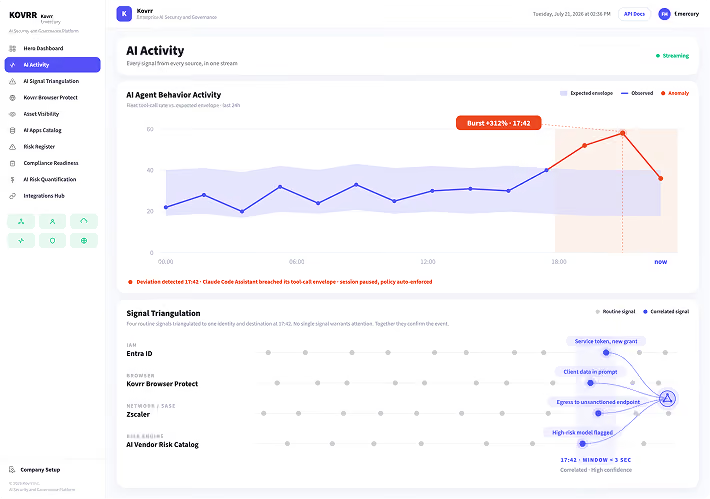
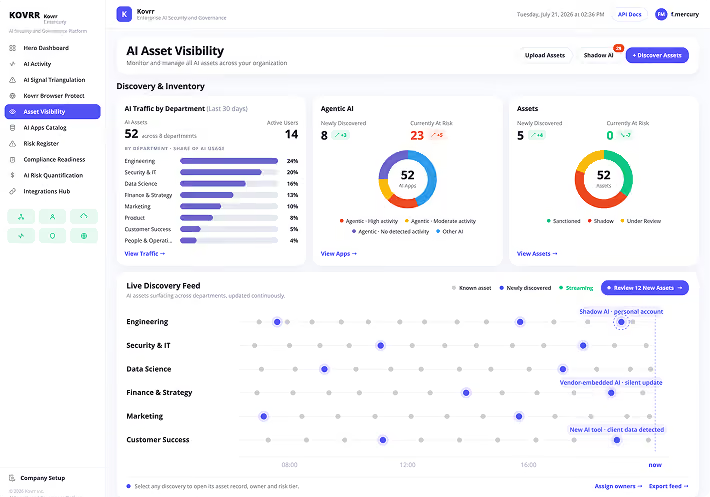
AI risk management is the structured practice of identifying where AI operates in an organization, evaluating whether existing controls are adequate, and forecasting the financial and operational impact of AI-related failures. It differs from general cyber risk management in scope — AI introduces exposure through model behavior, training data, and third-party AI features that traditional asset management never tracked.
What are the main types of AI risk?
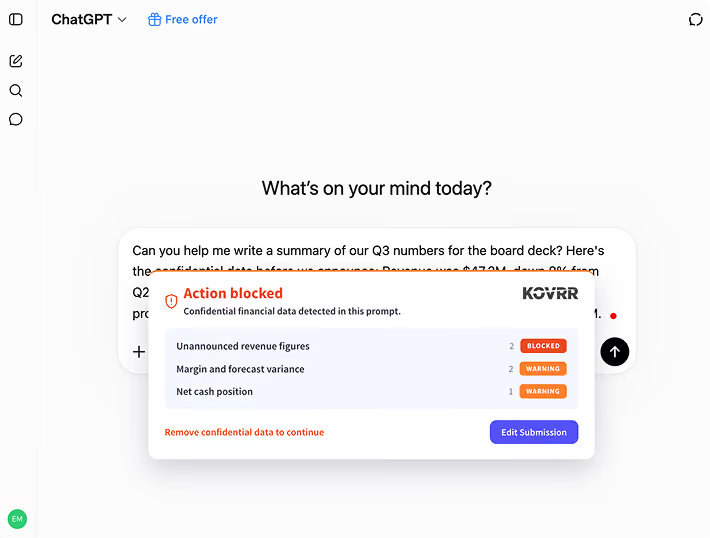
AI risk is commonly broken into seven categories: cybersecurity, operational, bias and ethical, privacy, regulatory and compliance, reputational and business, and societal risk. Most real incidents span several at once — a compromised model can simultaneously breach privacy law, disrupt operations, and damage public trust — which is why categories are a lens for analysis rather than a filing system.
What is the difference between an AI risk assessment and AI risk quantification?
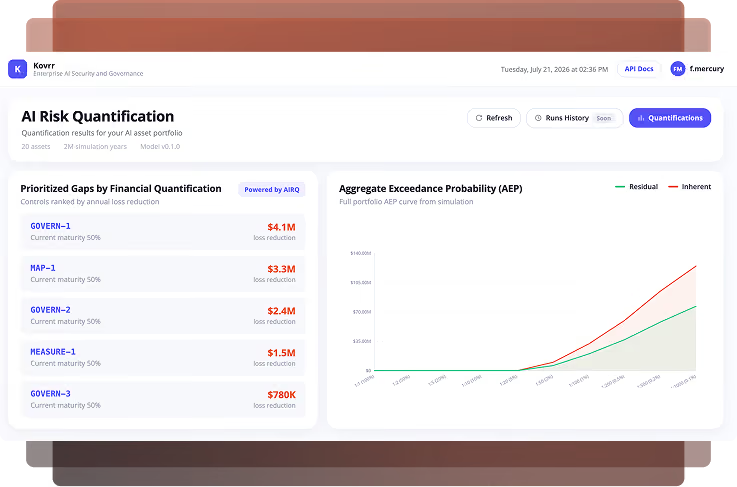
An assessment establishes visibility: where AI is used, how mature existing safeguards are, and where control gaps sit against a framework like NIST AI RMF or ISO 42001. Quantification builds on that baseline to forecast likelihood and financial impact. Assessment tells you your controls are weak; quantification tells you what that weakness is likely to cost.
Which frameworks apply to AI risk management?
The NIST AI Risk Management Framework and ISO/IEC 42001 are the two most widely adopted for structuring assessments. The EU AI Act sets binding legal requirements for how AI systems are assessed, monitored, and controlled. MITRE ATLAS serves a different purpose — mapping the tactics adversaries actually use against AI systems, much as ATT&CK does for conventional attacks.
How do you measure AI risk in financial terms?
By modeling it. Quantification ingests assessment outputs, incident records, firmographics, and threat intelligence to build a scenario catalog specific to the organization, then runs thousands of simulated years using techniques like Monte Carlo. The output is typically a loss exceedance curve showing the full range of possible outcomes and the probability of losses passing any given threshold.


