
How to Build a Durable AI Governance Program: A 3-Pillar Framework



What is an AI governance program?
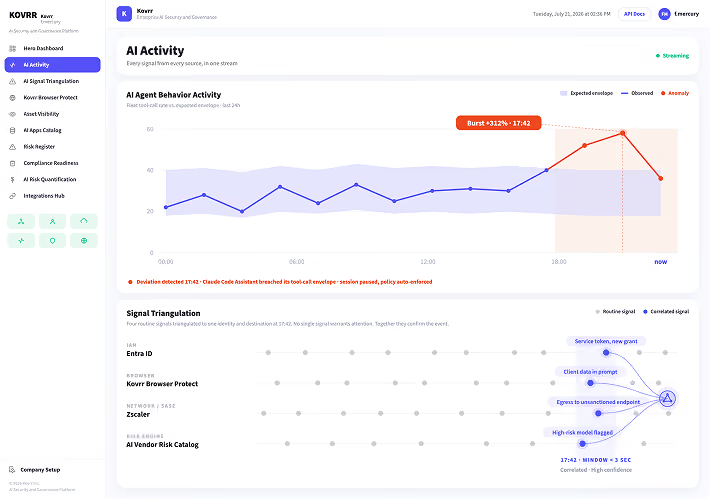
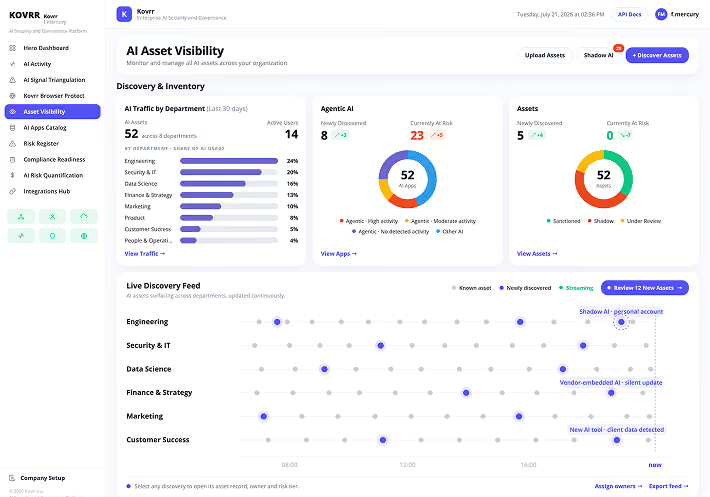
An AI governance program is the set of policies, controls, and oversight processes an organization uses to manage how AI systems are built, bought, and used. A durable program spans the full lifecycle — discovering AI assets, defining approved use cases, enforcing guardrails, and reporting risk to leadership — rather than functioning as a one-off compliance exercise.
What are the three pillars of AI governance?
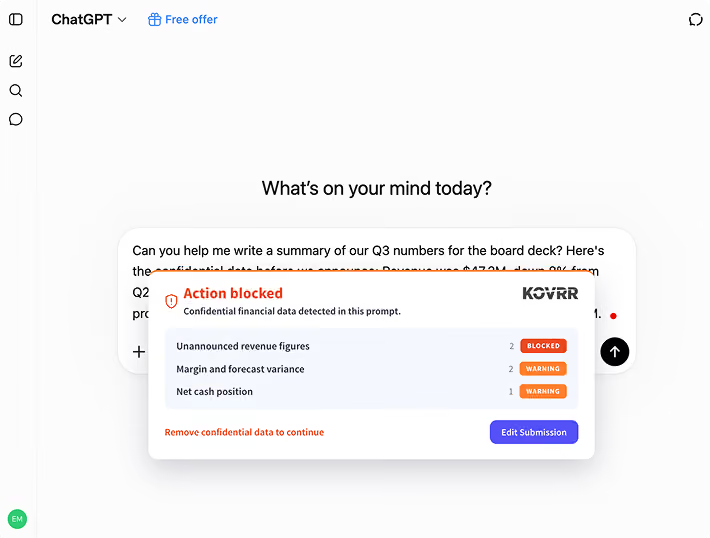
The three pillars are data governance, AI governance, and security. Most organizations run these as separate programs, which is where blind spots form: a system can be approved by a governance committee while pulling from ungoverned data or operating outside security controls. Connecting all three into one framework is what makes a program durable.
Who is responsible for AI governance in an organization?
In practice the CISO usually owns AI governance, because AI risk surfaces through familiar channels — unapproved adoption, third-party exposure, and data leakage. Programs that work give the CISO clear accountability while pulling legal, data, and business owners into a defined decision structure rather than an advisory committee with no authority.
Which regulations and standards apply to AI governance?
The most frequently cited are the EU AI Act, the NIST AI Risk Management Framework, and ISO/IEC 42001. A durable program maps each AI asset to the specific requirements that apply to it, so evidence already exists when an audit or regulatory request arrives instead of being assembled under deadline.
How do you measure whether an AI governance program is working?
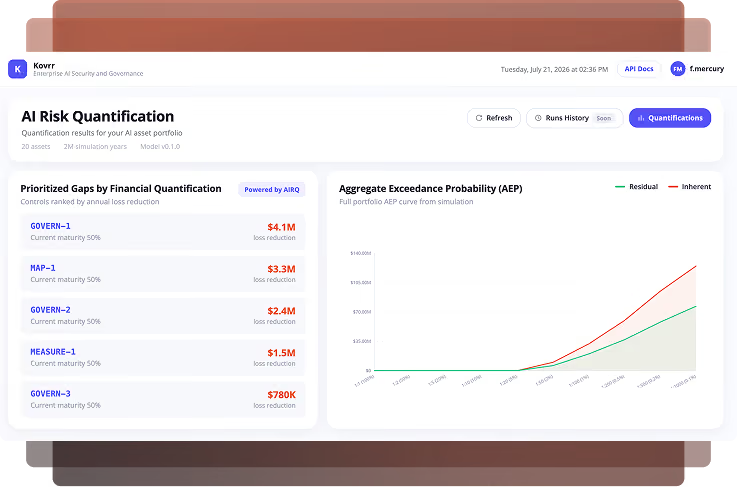
Measure it financially. Counting policies published or systems reviewed shows activity, not risk reduction. Quantifying the exposure attached to each AI asset and risk scenario lets teams prioritize by impact, show leadership how exposure moves over time, and defend spend on the controls that actually change the number.

