
Compensating Controls
Compensating controls are alternative safeguards implemented when a required primary control cannot feasibly be used, providing equivalent risk reduction through different mechanisms and typically documented as a formal deviation.
When Compensating Controls Come Into Play
Frameworks and regulations specify required controls. Reality sometimes prevents direct implementation. A legacy system may not support multi-factor authentication. A production process may not tolerate the latency a required control introduces. In these cases, compensating controls provide equivalent protection through different means.
Compensating controls are not exemptions. They are documented deviations with alternative safeguards that produce comparable risk reduction, subject to review and approval.
Compensating Controls in Practice
Common compensating-control patterns include additional monitoring where preventive controls cannot be applied, network segmentation to reduce the exposure of a system that cannot be patched to the latest baseline, and manual review processes where automated controls are not available. Each is justified by the specific gap it compensates for.
Regulatory Treatment
Most compliance frameworks accept compensating controls explicitly. PCI DSS has a formal compensating control process with worksheets and documentation requirements. Other frameworks (ISO, NIST) accept the concept less formally, through the general provision for equivalent controls.
The common thread is documentation. A compensating control that is not documented, reviewed, and approved is a gap, not a compensating control.
Related Terms


Turn Cyber Risk Into Financial Exposure the Board Can Act On
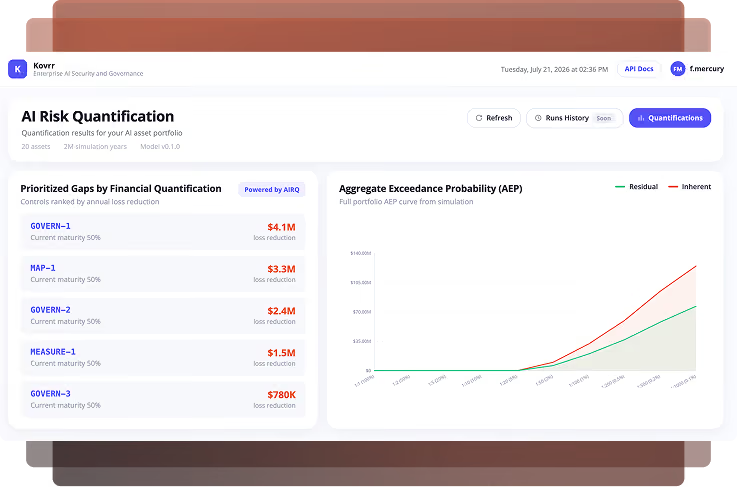
Security leaders are being asked to defend budgets, prioritize controls, and report cyber risk in the same terms as every other enterprise risk. Kovrr's CRQ Platform models loss scenarios, benchmarks control performance, and gives the C-suite a defensible view of where cyber sits on the balance sheet.