

Cybersecurity Controls
Cybersecurity controls are the measures used to reduce cyber risk, spanning technical safeguards (encryption, authentication, monitoring), administrative safeguards (policies, training, procedures), and physical safeguards (facility access, hardware security).
How Controls Are Categorized
Frameworks organize controls in different ways, but common categorizations include: by function (preventive, detective, corrective), by type (technical, administrative, physical), and by framework alignment (CIS Controls, ISO 27001 Annex A, NIST 800-53). Each categorization highlights different attributes of the same underlying safeguards.
The frameworks matter for compliance and reporting. The categorizations matter for design and coverage analysis.
Coverage vs. Effectiveness
Control coverage counts what has been deployed. Control effectiveness measures what those controls actually do. Coverage without effectiveness is common: fully deployed controls that fail against the specific threats the environment faces.
Quantified programs measure both, and treat effectiveness as the primary metric for reporting and investment decisions.
Controls in Quantified Programs
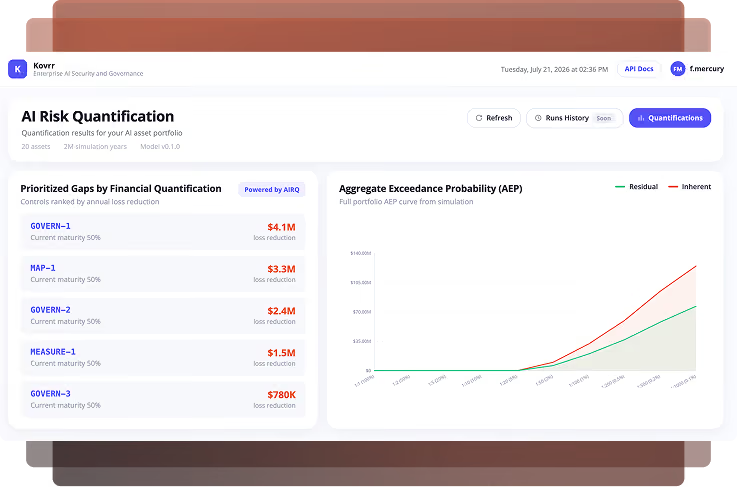
In CRQ, controls reshape loss distributions. Adding an effective control reduces both the frequency and severity of the events it addresses, which shows up as measurable reduction in AAL and tail exposure. That relationship is what lets programs defend specific control investments in financial terms.
Related Terms


Turn Cyber Risk Into Financial Exposure the Board Can Act On
Security leaders are being asked to defend budgets, prioritize controls, and report cyber risk in the same terms as every other enterprise risk. Kovrr's CRQ Platform models loss scenarios, benchmarks control performance, and gives the C-suite a defensible view of where cyber sits on the balance sheet.