

Security Posture
Security posture is the overall state of an organization's cybersecurity defenses at any given moment, reflecting deployed controls, their measured effectiveness, and the resulting current risk exposure.
What Security Posture Actually Captures
Posture is a snapshot term. It answers: right now, given the controls we have deployed and how well they are operating, what is the state of our defenses? A strong posture means controls are broadly deployed, operating effectively, and appropriate to the threat environment. A weak posture means gaps, drift, or ineffective controls.
Posture is not the same as maturity. Maturity describes how established the program is. Posture describes how well the program is performing at a specific moment. Mature programs can have temporarily weak posture, and immature programs can have moments of strong posture.
Measuring Posture
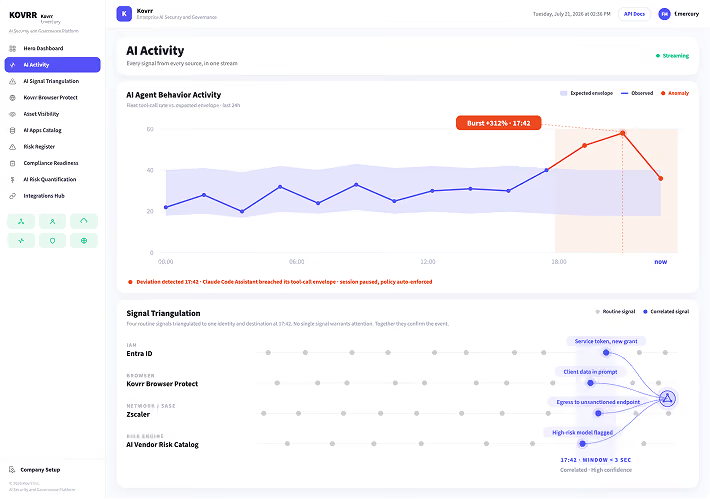
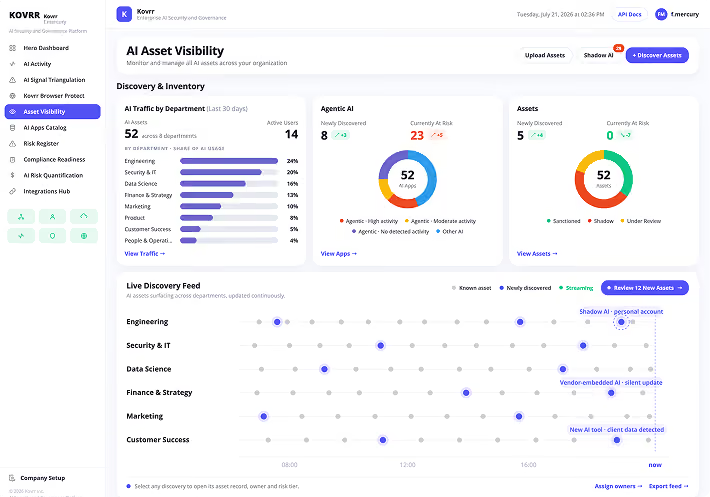
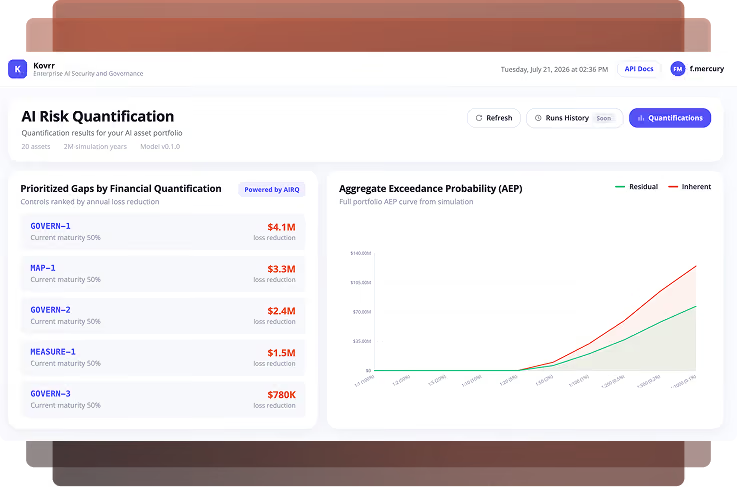
Effective posture measurement combines coverage data (what controls are deployed), effectiveness data (are those controls working as intended), and quantified exposure data (what is the resulting residual risk). CCM provides the operational infrastructure, and CRQ provides the financial expression.
Posture in Enterprise Reporting
Modern board reporting often includes both posture (how well the program is currently performing) and exposure (the financial consequence of that posture). Boards care about both. Posture tells them whether the program is doing what it should. Exposure tells them what the resulting risk is.
Related Terms


Turn Cyber Risk Into Financial Exposure the Board Can Act On
Security leaders are being asked to defend budgets, prioritize controls, and report cyber risk in the same terms as every other enterprise risk. Kovrr's CRQ Platform models loss scenarios, benchmarks control performance, and gives the C-suite a defensible view of where cyber sits on the balance sheet.