

Cybersecurity Materiality Threshold
A cybersecurity materiality threshold is the level of impact at which a cyber event becomes material under SEC rules, triggering required public disclosure within four business days under Item 1.05 of Form 8-K.
Why a Materiality Threshold Matters
The SEC Cyber Disclosure Rule requires public registrants to disclose material cyber incidents. It does not define a specific dollar threshold. Materiality follows the standard SEC framework, based on whether a reasonable investor would consider the information important.
Because that framework is qualitative, organizations need to have determined in advance how they will assess materiality when an incident occurs. Waiting to figure it out in the middle of an active incident is not workable.
How Organizations Define the Threshold
Common approaches include financial impact thresholds calibrated against overall enterprise financials, operational impact thresholds tied to specific business functions, regulatory impact thresholds based on affected data categories, and combination frameworks that consider multiple dimensions together.
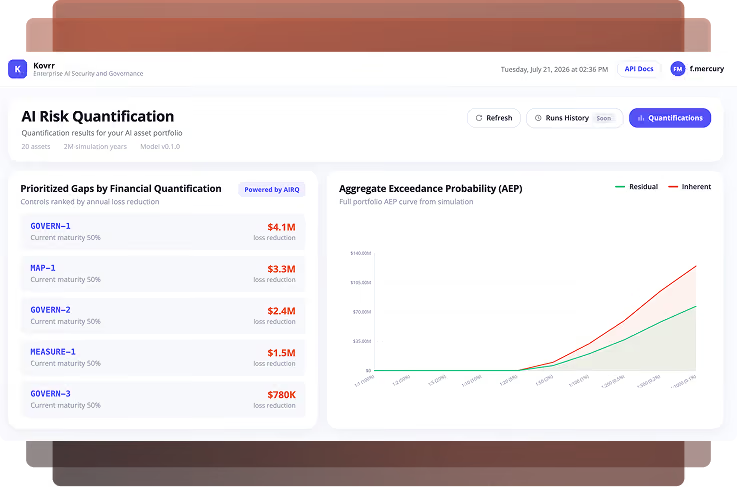
Quantified programs increasingly use CRQ outputs to inform the threshold, particularly around what constitutes material financial impact given the size and profile of the enterprise.
Threshold in Incident Response
The threshold is not just a disclosure trigger. It shapes incident response prioritization, communications planning, and executive escalation. See materiality determination for the operational process and Kovrr's cyber regulations and materiality analysis capability.
Related Terms


Turn Cyber Risk Into Financial Exposure the Board Can Act On
Security leaders are being asked to defend budgets, prioritize controls, and report cyber risk in the same terms as every other enterprise risk. Kovrr's CRQ Platform models loss scenarios, benchmarks control performance, and gives the C-suite a defensible view of where cyber sits on the balance sheet.