

Risk Assessment
A risk assessment is the structured process of identifying, analyzing, and evaluating risks in an organization or system, producing prioritized information that informs treatment decisions and risk management strategy.
The Standard Risk Assessment Process
Standard risk assessment methodologies share a common structure. Identify risks (threats, vulnerabilities, and their intersection with assets). Analyze risks (likelihood and impact). Evaluate risks (compare against risk criteria or tolerance). Produce prioritized output for treatment.
Standards like ISO 27005, NIST 800-30, and FAIR all specify variations of this process. The core structure is consistent across them.
Qualitative vs. Quantitative Assessment
Traditional cyber risk assessments used qualitative approaches: rating likelihood and impact on scales, producing heat maps as outputs. That approach is easy to communicate but does not support enterprise risk comparison or defensible investment decisions.
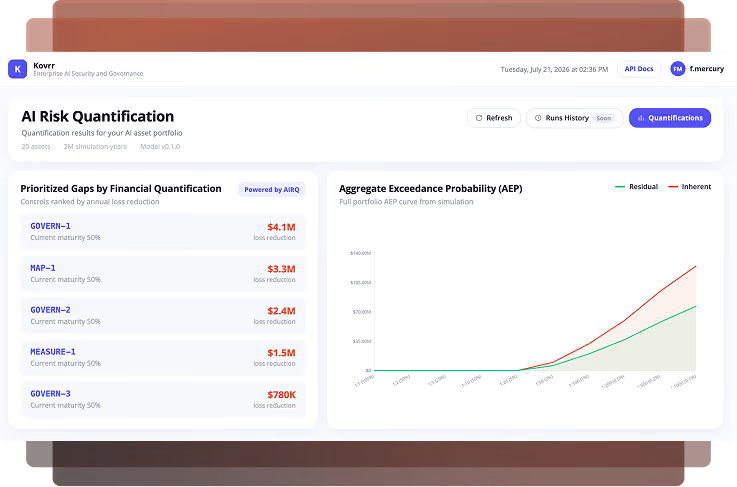
Quantitative assessment expresses likelihood and impact in probabilistic and financial terms, producing outputs that can be aggregated, compared, and used to defend spending. CRQ is the modern quantitative approach.
Risk Assessment in Regulatory Context
Most cyber regulations require risk assessment as a foundation. DORA, NIS2, and ISO 27001 all specify risk assessment obligations. Regulators increasingly expect the assessment to be defensible, current, and connected to actual control decisions rather than performed once and shelved.
Related Terms


Turn Cyber Risk Into Financial Exposure the Board Can Act On
Security leaders are being asked to defend budgets, prioritize controls, and report cyber risk in the same terms as every other enterprise risk. Kovrr's CRQ Platform models loss scenarios, benchmarks control performance, and gives the C-suite a defensible view of where cyber sits on the balance sheet.