
ISO 27001
ISO/IEC 27001 is the international standard for information security management systems (ISMS), providing certifiable requirements for how organizations govern, operate, and continually improve their information security programs.
What ISO 27001 Requires
The standard specifies requirements for establishing, implementing, maintaining, and continually improving an ISMS. Requirements cover leadership, planning, support, operation, performance evaluation, and improvement. Annex A lists a broad set of information security controls, with the specific controls chosen based on risk assessment.
ISO 27001 certification is meaningful evidence in customer procurement, regulatory contexts, and internal governance. It is the most widely adopted certifiable information security standard globally.
ISO 27001 vs. Other Frameworks
ISO 27001 is certifiable. NIST CSF 2.0 is not (though NIST CSF alignment can be attested). ISO 27001 provides a management system framework. CIS Controls provide implementation-level control guidance. Mature programs typically combine them, using ISO 27001 for the management system, CSF for outcome-level structure, and CIS for implementation detail.
ISO 27001 in Quantified Programs
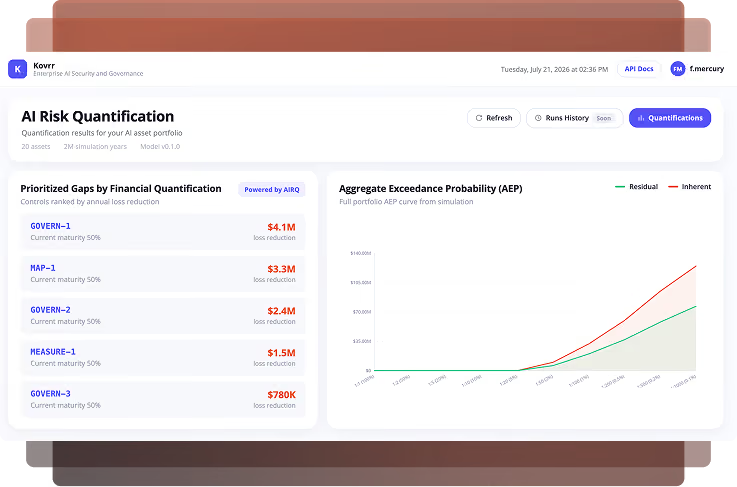
ISO 27001-aligned control posture feeds into CRQ like any other control framework. The specific controls implemented under ISO 27001 reshape modeled loss distributions based on measured effectiveness, and the certification itself is often referenced by insurers and customers as evidence of governance maturity.
ISO 27001 and Related Standards
ISO 27001 is part of a family. ISO 27002 provides implementation guidance for the Annex A controls. ISO 27005 covers information security risk management specifically. ISO 27017 and 27018 address cloud and personal data considerations.
Related Terms


Turn Cyber Risk Into Financial Exposure the Board Can Act On
Security leaders are being asked to defend budgets, prioritize controls, and report cyber risk in the same terms as every other enterprise risk. Kovrr's CRQ Platform models loss scenarios, benchmarks control performance, and gives the C-suite a defensible view of where cyber sits on the balance sheet.