
SOC 2
SOC 2 is an AICPA reporting framework for service organizations, evaluating controls relevant to security, availability, processing integrity, confidentiality, and privacy, widely used by SaaS and technology vendors as customer-facing assurance.
What SOC 2 Actually Covers
SOC 2 evaluates controls against the AICPA's Trust Services Criteria across five categories: security (baseline, required for every SOC 2), availability, processing integrity, confidentiality, and privacy. Organizations select which categories apply based on their service scope.
SOC 2 Type 1 reports evaluate design of controls at a point in time. Type 2 reports evaluate operating effectiveness over a period (typically 6-12 months), and are the more commonly requested by enterprise customers.
SOC 2 vs. Other Frameworks
SOC 2 is not a certification (it produces a report, not a certificate). It differs from ISO 27001 in scope, methodology, and audience. SOC 2 is typically preferred by US enterprise customers of technology vendors. ISO 27001 is more common in European and multinational contexts. Many mature vendors maintain both.
Why SOC 2 Matters
For B2B technology vendors, SOC 2 reports are often a procurement prerequisite. Enterprise customers request them during due diligence, and their absence can prevent commercial engagement. The reports also serve as evidence of security practices in vendor risk management and regulatory contexts.
SOC 2's contribution to broader security program maturity is real but bounded. It evaluates specific controls at a specific scope, not the overall enterprise security program.
Related Terms


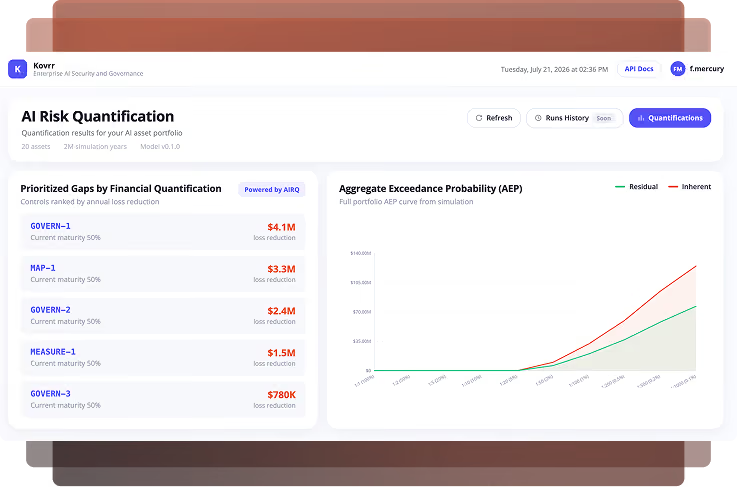
Turn Cyber Risk Into Financial Exposure the Board Can Act On
Security leaders are being asked to defend budgets, prioritize controls, and report cyber risk in the same terms as every other enterprise risk. Kovrr's CRQ Platform models loss scenarios, benchmarks control performance, and gives the C-suite a defensible view of where cyber sits on the balance sheet.