
Supply Chain Attack
A supply chain attack is one in which an adversary compromises an organization indirectly by first attacking a trusted vendor, service provider, or software dependency, then using that access to reach the ultimate target.
Why Supply Chain Attacks Are Effective
Supply chain attacks exploit trust relationships. Enterprises typically apply lighter security scrutiny to updates from trusted software vendors, to communications from established service providers, and to workloads running on approved platforms. Attackers who compromise those trusted intermediaries inherit that trust.
The attack pattern also produces leverage. A single successful compromise of a widely used vendor can affect thousands of downstream customers simultaneously, as major supply chain incidents have repeatedly demonstrated.
Where Supply Chain Attacks Enter
Common entry points include compromised software updates from established vendors, tampered open-source dependencies pulled into enterprise applications, compromised managed service providers with privileged access to customer environments, and compromised hardware components introduced at manufacturing or distribution.
The AI-specific analog is covered in AI supply chain attack, with training data, model weights, and MCP servers as new attack vectors.
Managing Supply Chain Risk
Effective defenses combine TPRM for pre-engagement assessment, software composition analysis for dependency visibility, monitoring of privileged third-party access, and quantified analysis of concentration risk for critical dependencies.
See what keeps a CISO up at night: managing cyber supply chain risk.
Related Terms


Turn Cyber Risk Into Financial Exposure the Board Can Act On
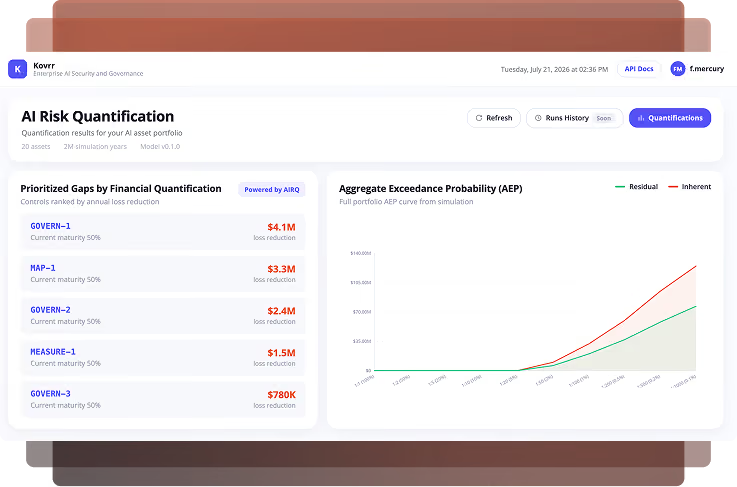
Security leaders are being asked to defend budgets, prioritize controls, and report cyber risk in the same terms as every other enterprise risk. Kovrr's CRQ Platform models loss scenarios, benchmarks control performance, and gives the C-suite a defensible view of where cyber sits on the balance sheet.