
AI Supply Chain Attack
An AI supply chain attack compromises an AI system through its upstream components, including foundation models, datasets, open-source libraries, MCP servers, or third-party providers, rather than through the deployed system directly.
How AI Supply Chain Attacks Work
An enterprise AI system depends on many components it did not build. Foundation models come from external providers. Training and fine-tuning datasets often incorporate third-party data. Libraries and frameworks are pulled from open-source ecosystems. MCP servers connect the AI to tools maintained by others. Each of these is a potential attack vector.
Attack patterns include poisoned open-source model weights uploaded to public repositories, compromised datasets that embed adversarial patterns into fine-tuned models, malicious MCP servers that inject instructions into AI tool descriptions, and compromised AI vendor infrastructure that affects every downstream customer.
Why AI Supply Chain Attacks Are a Growing Category
The AI stack has more third-party dependencies than traditional software, and the tooling to audit them is less mature. An organization can inspect its own code but rarely has visibility into a foundation model's training data or a fine-tuning provider's data handling. That opacity is what makes AI supply chain a growing attack category.
See what keeps a CISO up at night: managing cyber supply chain risk for the broader supply chain risk dynamic that AI extends into new territory.
Defenses Against AI Supply Chain Attacks
Standard defenses include maintaining an AI Bill of Materials (AIBOM), requiring provenance documentation from model and data providers, scanning models for known malicious patterns before deployment, monitoring for behavioral anomalies in production, and applying AI-specific third-party risk management to key providers.
Related Terms


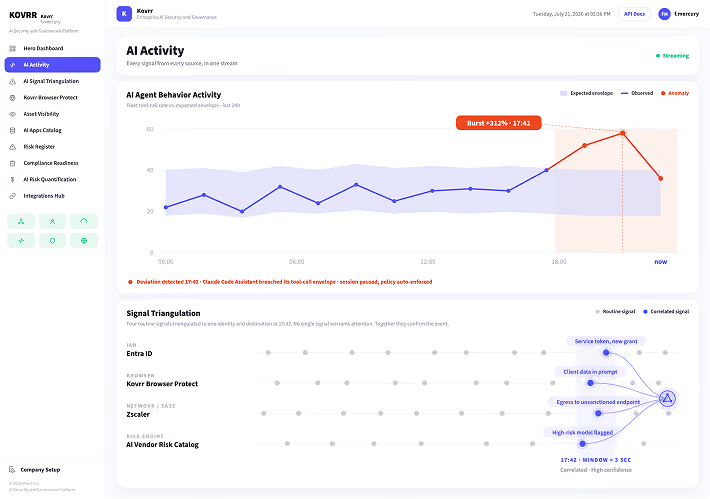
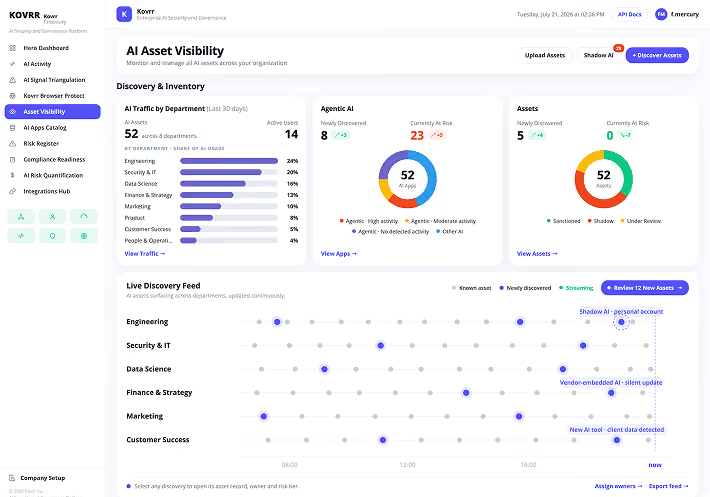
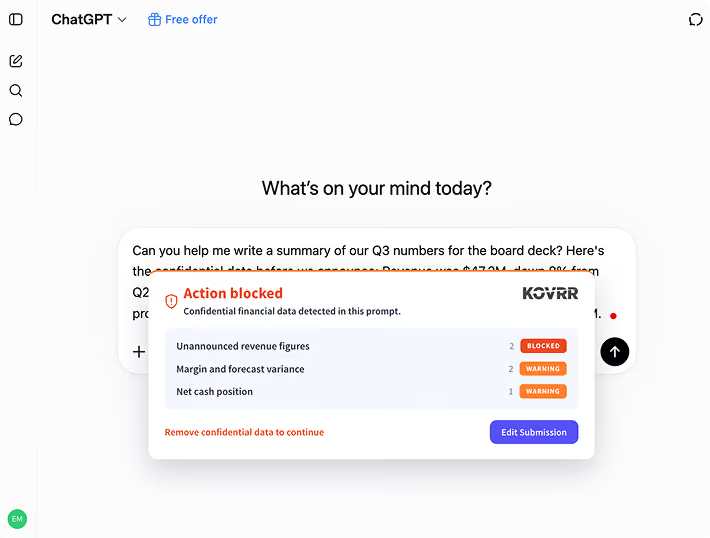
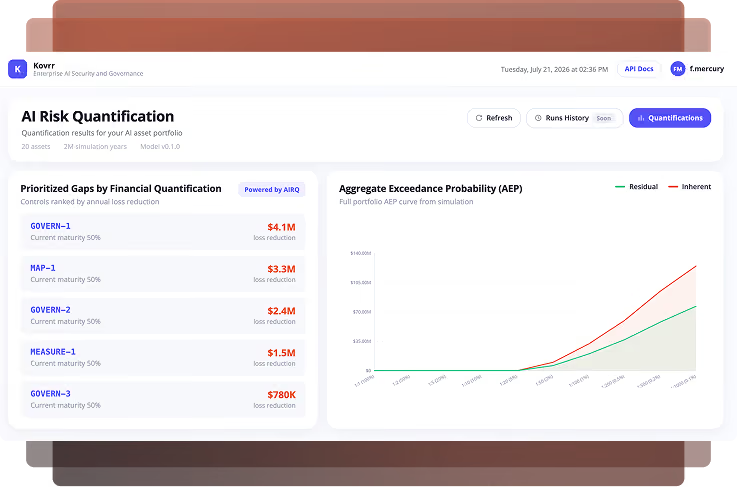
Full AI Visibility. Full Control. One Connected Platform.
Enterprise AI is expanding faster than most governance programs can track. Kovrr connects every AI signal across browser, endpoint, network, identity, and vendor systems into a single platform so security, governance, and risk teams work from the same evidence.