
AI Bill of Materials (AIBOM)
An AI Bill of Materials (AIBOM) is a structured inventory documenting every component of an AI system, including models, datasets, libraries, frameworks, and external dependencies, along with their sources and versions.
What an AIBOM Documents
An AIBOM extends the software bill of materials (SBOM) concept into the AI stack. Where an SBOM lists code libraries and their versions, an AIBOM adds the layers unique to AI systems.
- Models: Foundation models, fine-tuned variants, embedded models, and their providers.
- Data: Training datasets, fine-tuning datasets, retrieval sources, and data provenance.
- Dependencies: AI frameworks, inference libraries, MCP servers, and connected tools.
The AIBOM is what an organization consults when a vulnerability, licensing question, or regulatory requirement affects a specific model or dataset. Without one, tracing the impact of an issue across the AI estate is a manual excavation.
Why AIBOMs Are Emerging as a Requirement
Regulatory and procurement pressure is driving AIBOM adoption. The EU AI Act requires providers of general-purpose AI models to document training data and system architecture. Enterprise procurement processes are increasingly asking vendors for AI supply chain transparency. Cyber insurers are beginning to reference AIBOM equivalents in underwriting.
AIBOM and AI Supply Chain Risk
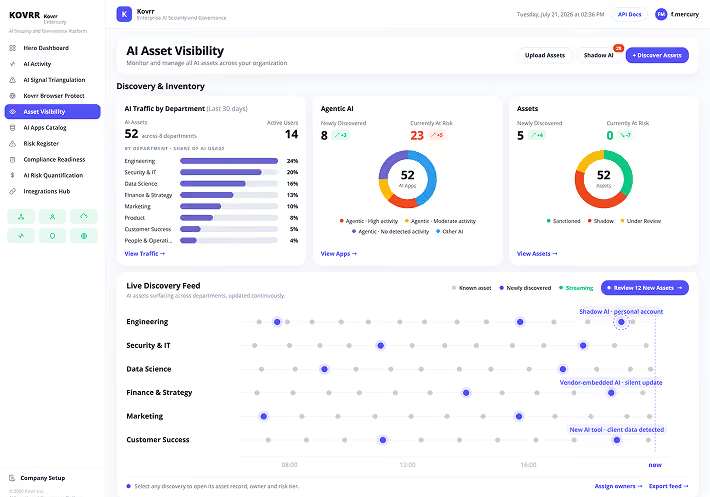
The AIBOM is the reference document for AI supply chain risk management. When a model provider announces a vulnerability or a training data source is disputed, the AIBOM tells the organization which of its AI systems are affected. See how to build an AI asset inventory, which typically feeds directly into AIBOM production.
Related Terms


Full AI Visibility. Full Control. One Connected Platform.
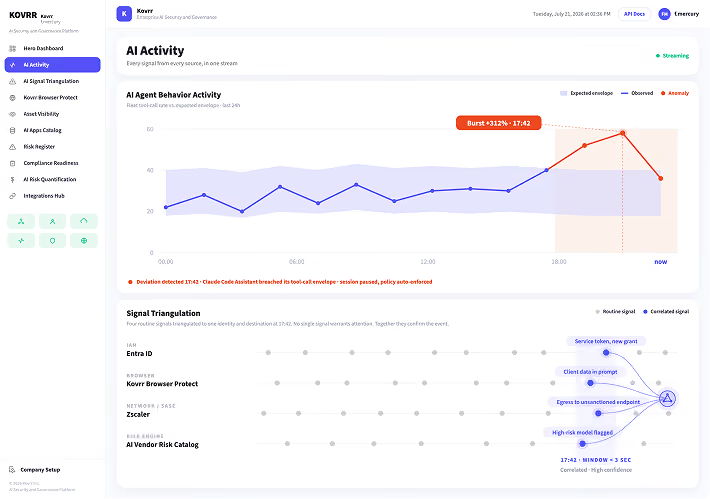
Enterprise AI is expanding faster than most governance programs can track. Kovrr connects every AI signal across browser, endpoint, network, identity, and vendor systems into a single platform so security, governance, and risk teams work from the same evidence.