AI Access Control and Policy Enforcement for Employees and Agents
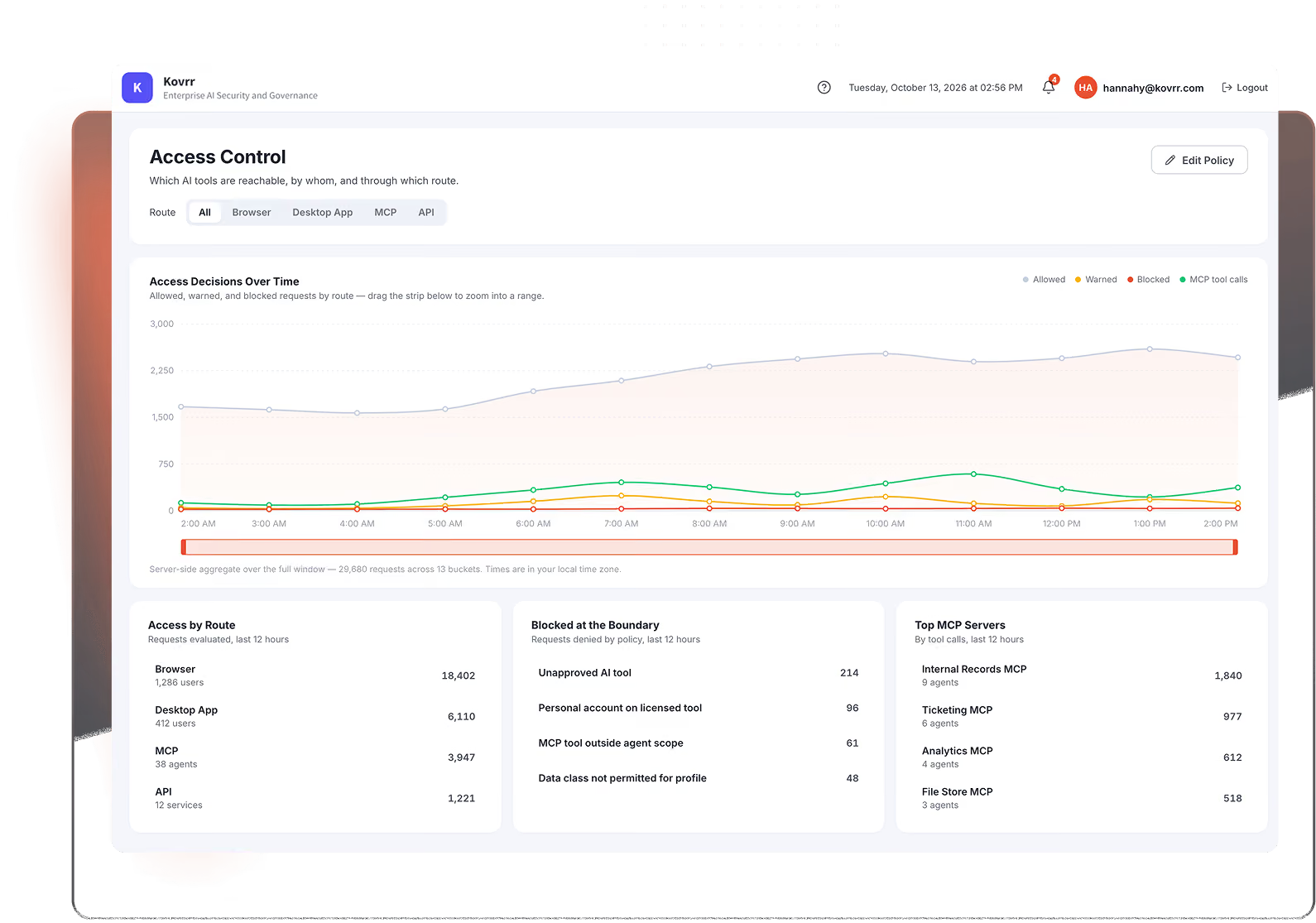
AI reaches corporate data in ways that look nothing alike. A person opens a tool in a browser or a desktop app, and an agent calls one through an MCP server with a token behind it. Kovrr’s AI Security and Governance Platform governs which tools are reachable and what can be submitted to them, applying the same policy to every request.

Where AI Access Control and Policy Enforcement Break Down
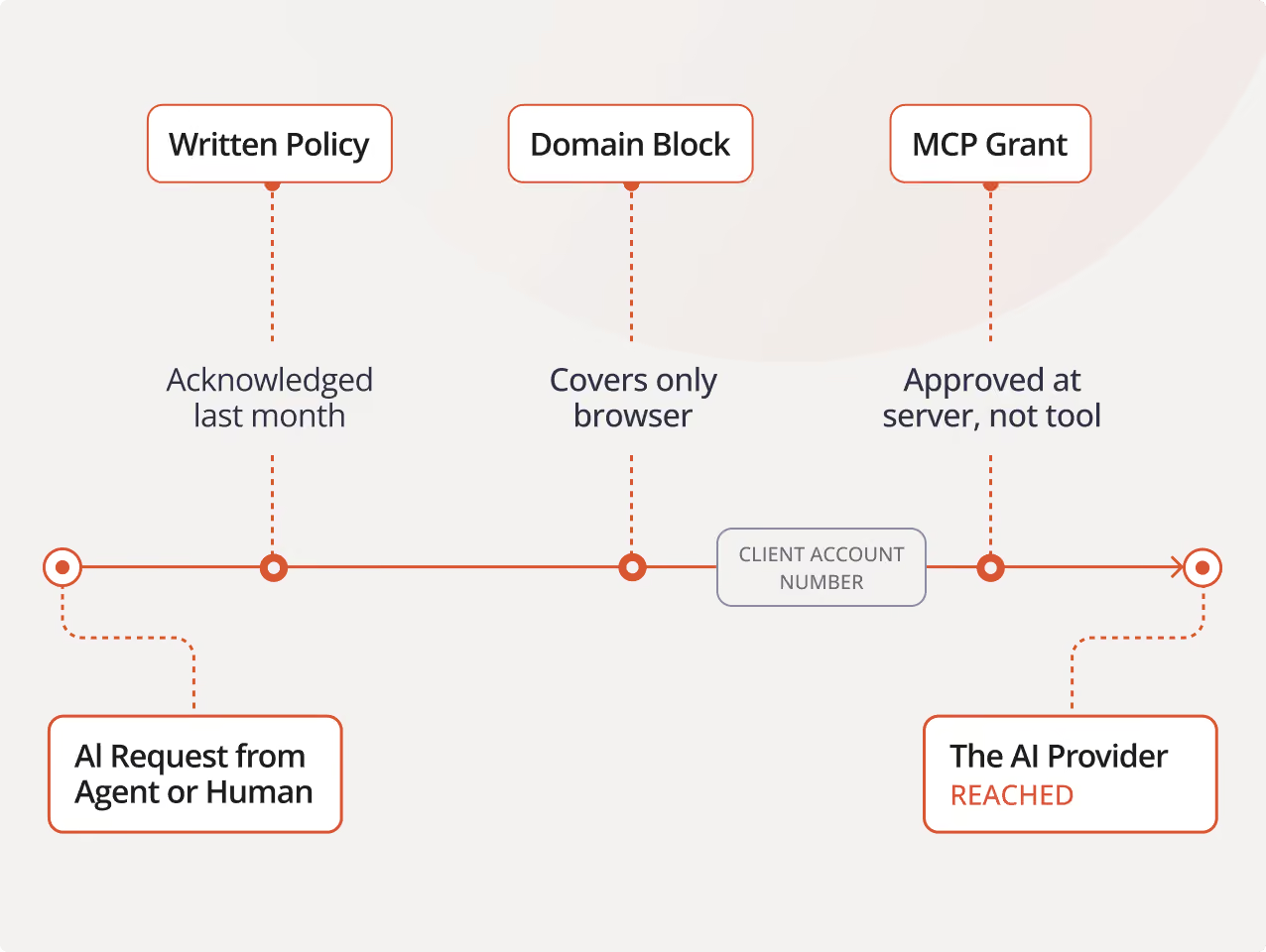
A written policy and a domain block are the two controls most organizations have but, in the age of agentic AI, neither fires at the moment that matters.
1. The Policy Never Arrives: An acknowledged document depends on an employee recalling it correctly months later, at the point of submission.
2. The Block Sits at the Wrong Layer: A domain block governs a browser tab and does nothing to an agent calling the same provider through a token.
3. The Grant Is Wider Than the Need: An agent approved for one MCP server reaches every tool that server exposes, which nobody reviewed.
Access control and enforcement hold when the decision runs on the requester, the tool, and the data.
How Kovrr Governs Every Route Into AI
Kovrr evaluates every AI request against the same policy, whether it arrives from a browser tab, a desktop app, or an MCP tool call. The decision runs on the requester, the tool, and the data.
One Policy, Every Route: The same rules apply to a browser session and an MCP tool call, so a control written once holds wherever the request originates.
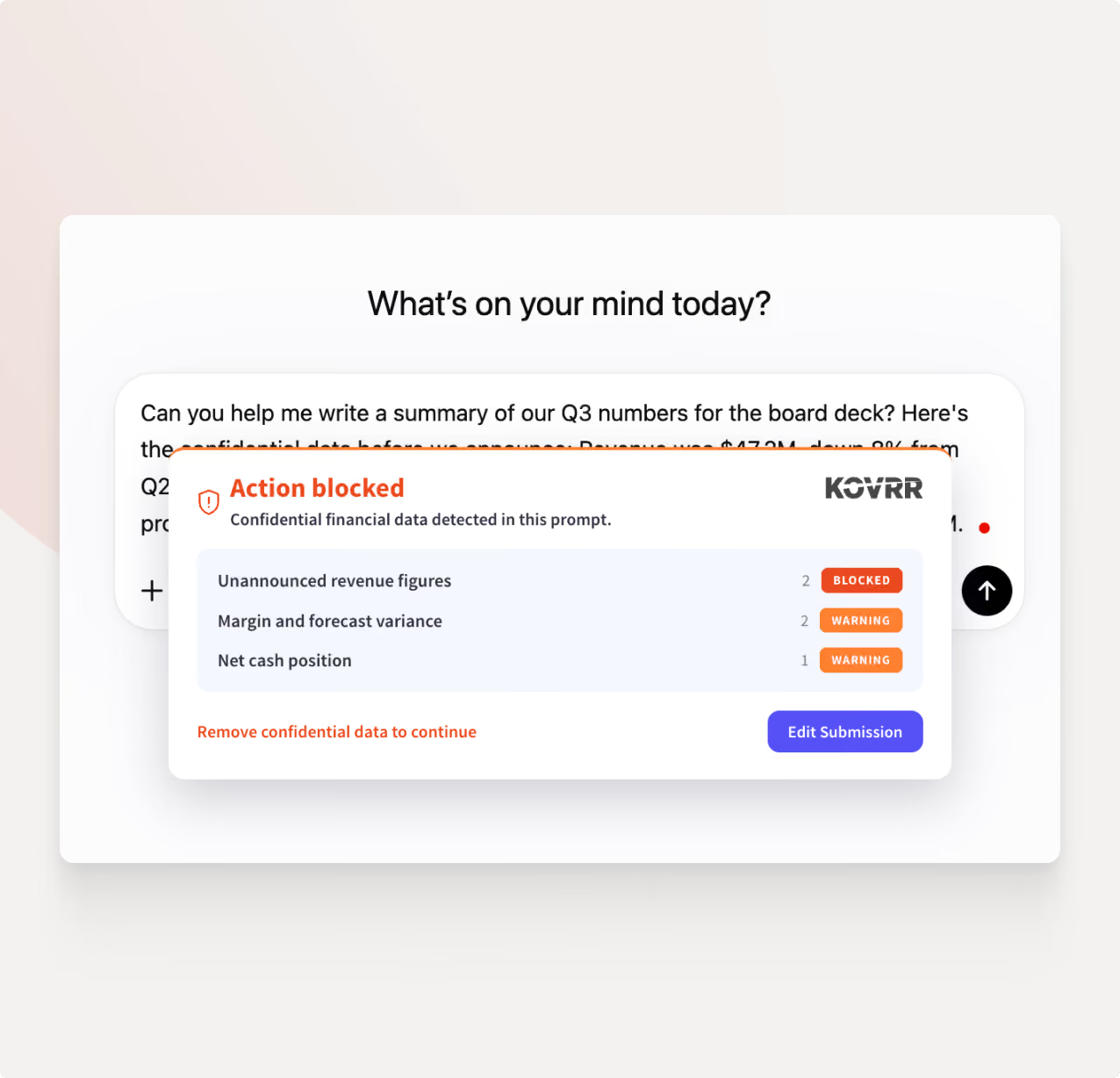
Graduated Enforcement at Submission: Each data category carries its own action and severity, from a warning through redaction to a full block, with 500+ categories matched on the device.
Access by Profile and Account Type: Rules apply by team, department, and role, and a personal account on a licensed tool is a different request from a corporate one.
AI Agent Access Control at the Tool Level: An agent’s grant is scoped to the tools it needs rather than to every tool its MCP server exposes.
An Audit Trail for Autonomous Actions: Every agent request carries the tool reached, the data class, and the user who authorized the token, which is what an auditor asks about an action no person took.


Your Agents Have More Access Than You Approved
Approving an agent for an MCP server grants it every tool that server exposes. This AI Interaction Data Fabric (AIDF) issue traces one tool call end to end, showing what the agent reached and what the grant actually permitted.


The Assurance AI Access Control Brings to Security Teams and Auditors
AI Access Control & Policy Enforcement FAQs
Schedule a DemoWhat is AI access control?

How does AI access control differ from AI policy enforcement?
What is AI agent access control?
What is MCP access control?
How is AI policy enforced without stopping work?
What record does access control produce?
