AI Risk Prioritization in Terms the Board Already Uses
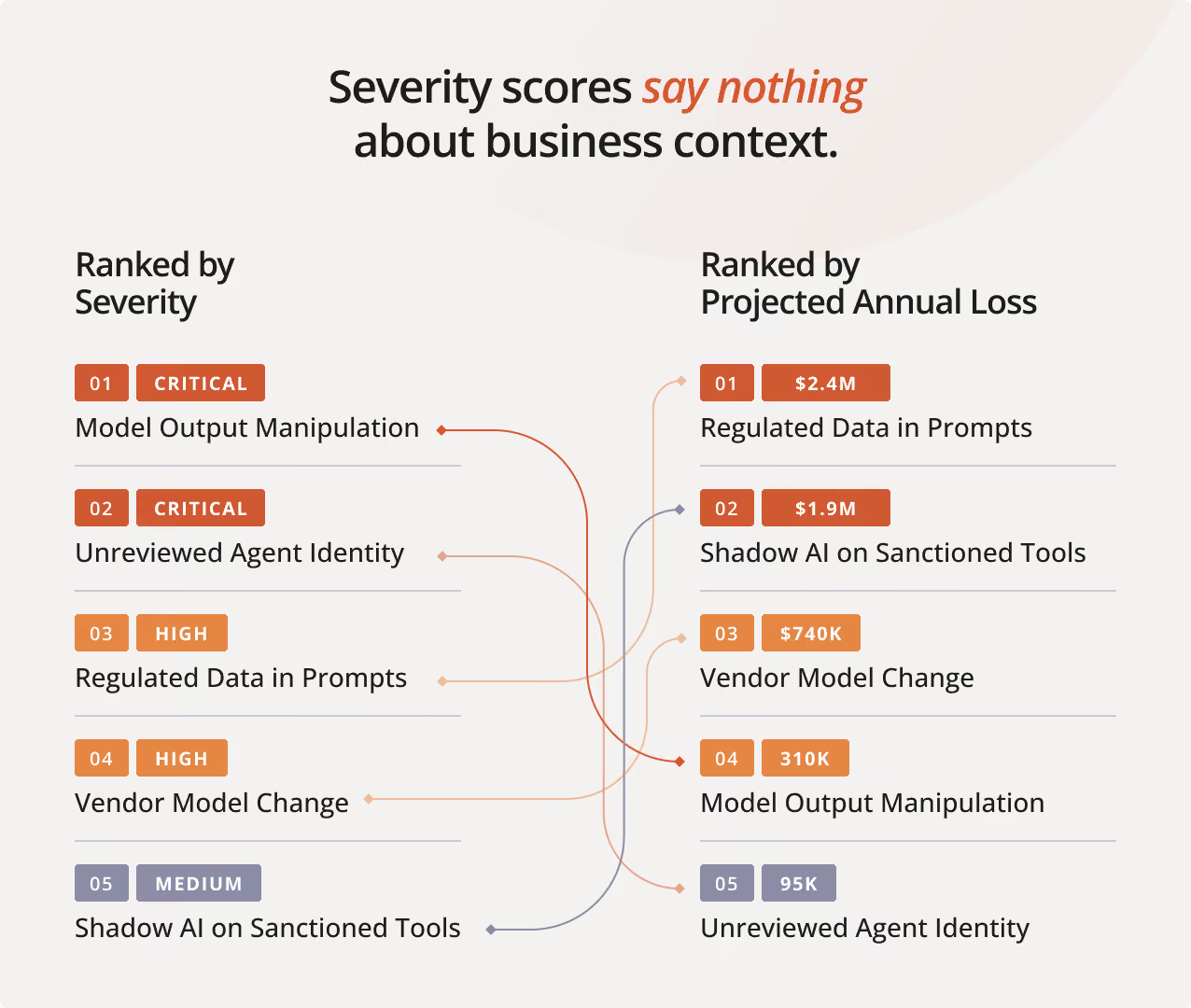
A list of AI risks ranked by severity scores leaves a security team with no way to defend what it chose to fix first. Kovrr’s AI Security and Governance Platform sizes each risk in financial terms against the organization’s own environment, so remediation follows projected loss and the same figures answer the board when it asks what AI exposure is doing to the business.

Why Severity Scores for AI Risk Stall at the Board
A severity score orders AI risks against each other, and a board decision needs a different unit.
1. No Comparison to Anything Else: A critical AI finding and a critical infrastructure finding carry the same label while costing the organization different amounts.
2. No Basis for a Budget: A remediation request backed by a severity rating asks for money without stating what the money prevents.
3. No Answer to What Changed: A score that moves from high to medium describes a reclassification rather than a reduction in exposure.
AI risk prioritization holds when each risk carries a justifiable figure the business already understands.
From AI Findings to a Figure the Board Reads
Kovrr models each AI risk against the organization’s own environment and returns a projected annual loss. Remediation sequences by what fixing a risk is worth rather than by the label attached to it.
Exposure Modeled, Not Estimated: Each risk carries a projected annual loss built from observed usage, data classes, and vendor terms rather than a workshop estimate.
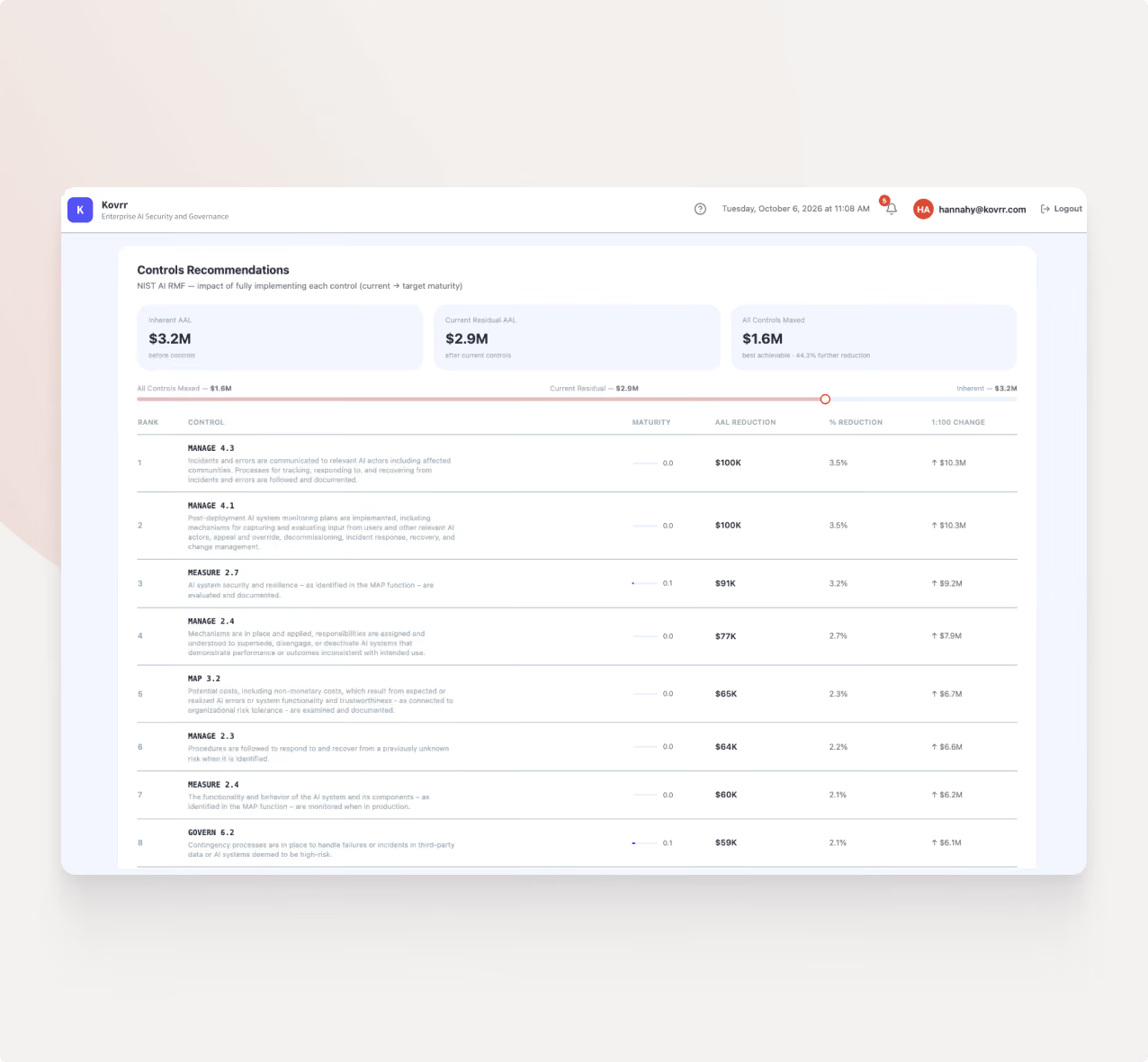
Controls Ranked by Loss Reduction: Every recommended control shows the exposure it removes in dollars, so a remediation budget is argued from projected savings.
A Queue Rather Than a Backlog: Findings arrive already sequenced by projected loss, so the question of what to work on next is answered before anyone opens the list.
One Figure Across Audiences: The number that sequences engineering work is the number the board sees, which removes the translation step between the two.
Board Materials From the Same Source: Reporting draws on the modeled exposure directly, so what reaches the board matches what the security team is working from.


The Financial Exposure Model Behind Every Figure
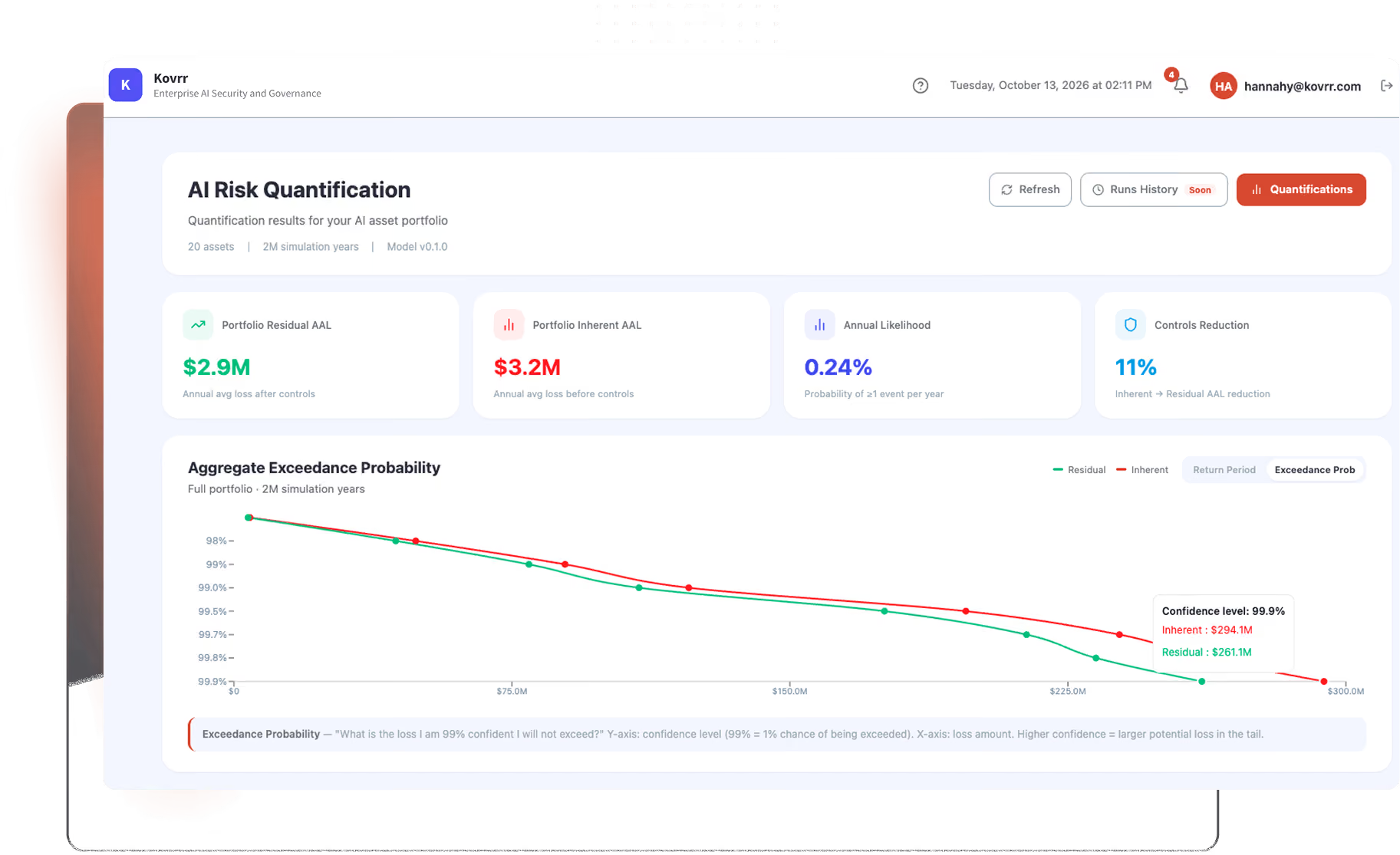
Kovrr’s AI Risk Quantification (AIRQ) models exposure against the organization’s own environment, returning projected annual loss, exceedance probabilities, and the controls that reduce each one.


Why AI Risk Prioritization Is Criticalin the Agentic Era
AI Risk Prioritization FAQs
Schedule a DemoWhat is AI risk prioritization?

How do you prioritize AI risks without a loss history?
What does AI risk scoring measure?
How does AI board reporting differ from a security update?
Does the figure change between board meetings?
How does prioritization connect to the rest of the platform?
