Blog Post
Reporting AI Risk to the Board: What Directors Want to See
August 11, 2026
Directors ask for AI risk reporting because oversight failure is personally actionable. Under the Caremark line of cases, a board that cannot demonstrate it monitored a material risk carries exposure of its own, and AI has moved into that category for most enterprises. The request is rarely curiosity about the technology.
The framing determines what belongs in the pack. Directors need evidence that oversight happened, not education about how models work, and the two produce very different documents. What follows covers the artifacts that satisfy the first, the ones that waste a slide, and the cadence that keeps a record defensible between meetings.
What the Board Is Being Held To
Oversight duty attaches to process rather than outcome. A board is not expected to prevent every AI failure, and it is expected to show that a monitoring system existed, produced information, and reached the directors in time to act. Reporting is the evidence that the system exists.
Process Evidence Beats Assurance
A slide asserting that AI risk is managed carries no evidentiary weight. Dated artifacts do, including assessments with completion dates, named owners against each system, and incident records showing what happened and who acted. The inventory underneath all of it has to be current, since a pack built on an AI asset inventory that missed half the estate documents oversight of the wrong thing. The distinction between a claim and a record is the whole difference in a later review, and accountability expressed as a named person outperforms accountability expressed as a function.
Disclosure Accuracy Is a Director Exposure
Public statements about AI capability now attract regulatory attention where they outrun the product. Where an organization markets AI features in earnings materials or customer collateral, someone has to confirm the claims match what the systems do, and that confirmation belongs in front of the board rather than inside marketing. Boards increasingly ask the question directly, which makes it worth answering before it arrives.
The Four Things Directors Ask For
Board questions on AI cluster tightly, and the pack should answer all four without being asked.
- Evidence of Oversight: A current inventory, named owners and dated assessments rather than a description of the program.
- Regulatory Position: Where the organization stands against each framework and what the next deadline requires.
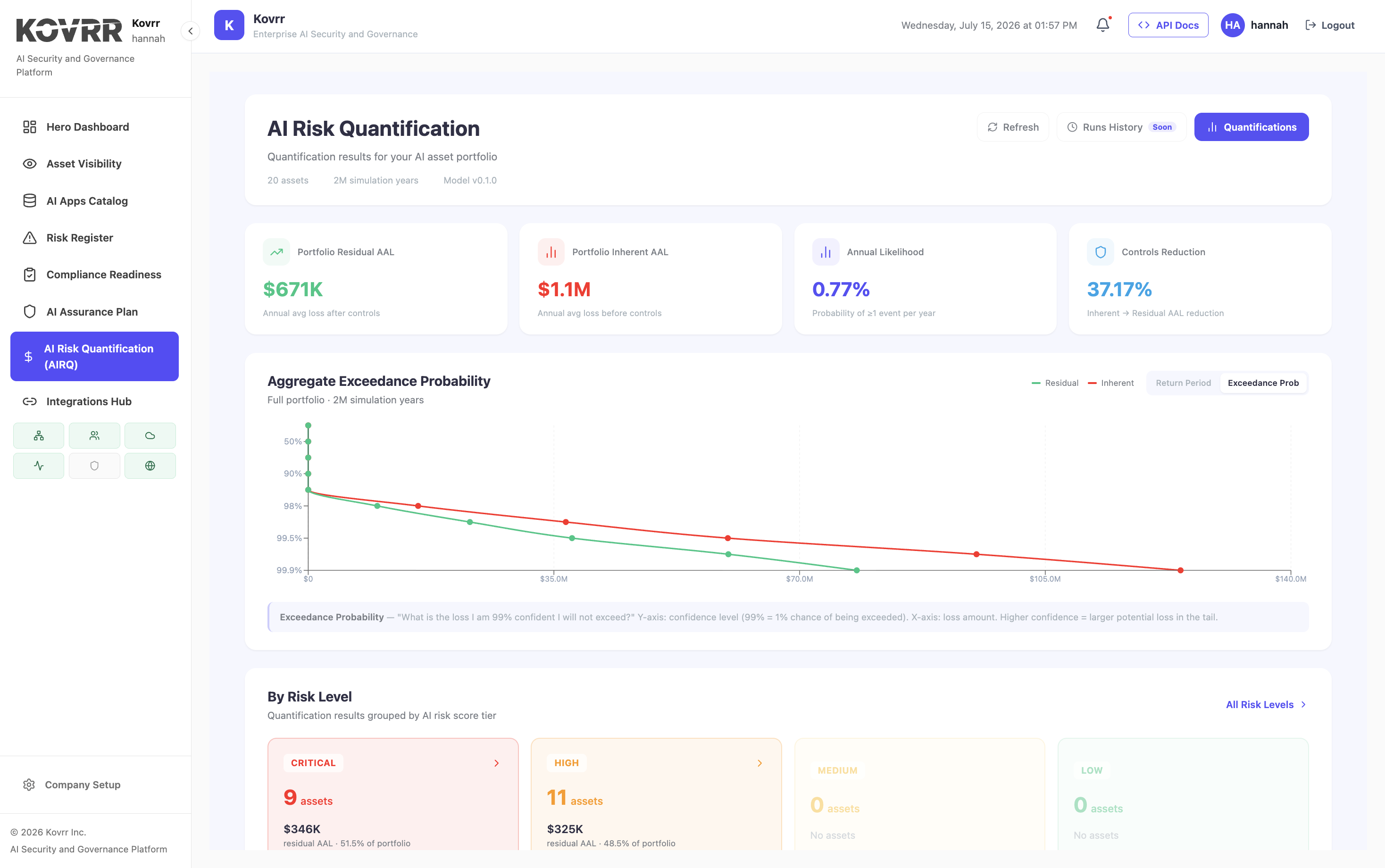
- Financial Exposure: What a bad year and a catastrophic year cost, expressed in currency and trended over time.
Operational control posture completes the set, covering what happens when a model degrades, who intervenes, and what recent incidents revealed. Directors read that section for the response plan rather than the incident list, since a handled failure demonstrates the oversight system working and an unexplained one does not. Documented incident identification and management turns that section from a list into evidence. Naming who owns AI risk internally resolves the question a director will otherwise ask aloud.
Exposure in Currency, Not Severity
Directors allocate capital and they compare risks against each other, which requires a common unit. A heat map with three amber squares supports neither activity, since nothing on it can be weighed against a cyber budget, an insurance limit or a competing investment. Expressing AI exposure as expected annual loss and as a tail figure puts it into the same language as every other item on the agenda.
Two Numbers Carry the Section
Average annual loss answers what a normal year costs and belongs in budgeting conversations. A one-in-one-hundred-year figure answers what a bad year costs and belongs in insurance and resilience conversations. Presenting both prevents the common failure where a modest expected loss makes a severe tail look acceptable, and AI risk quantification produces both from the same model rather than requiring separate exercises.
Residual Against Inherent Shows the Program Working
A single exposure figure tells a board where things stand and says nothing about whether anything is improving. Reporting inherent exposure alongside residual exposure makes the control program's contribution visible as a percentage, which converts a security budget conversation into a return conversation. Organizations already reporting cyber exposure this way find the AI section needs no new vocabulary, and quantified board reporting transfers directly.
Direction of Travel Matters More Than Position
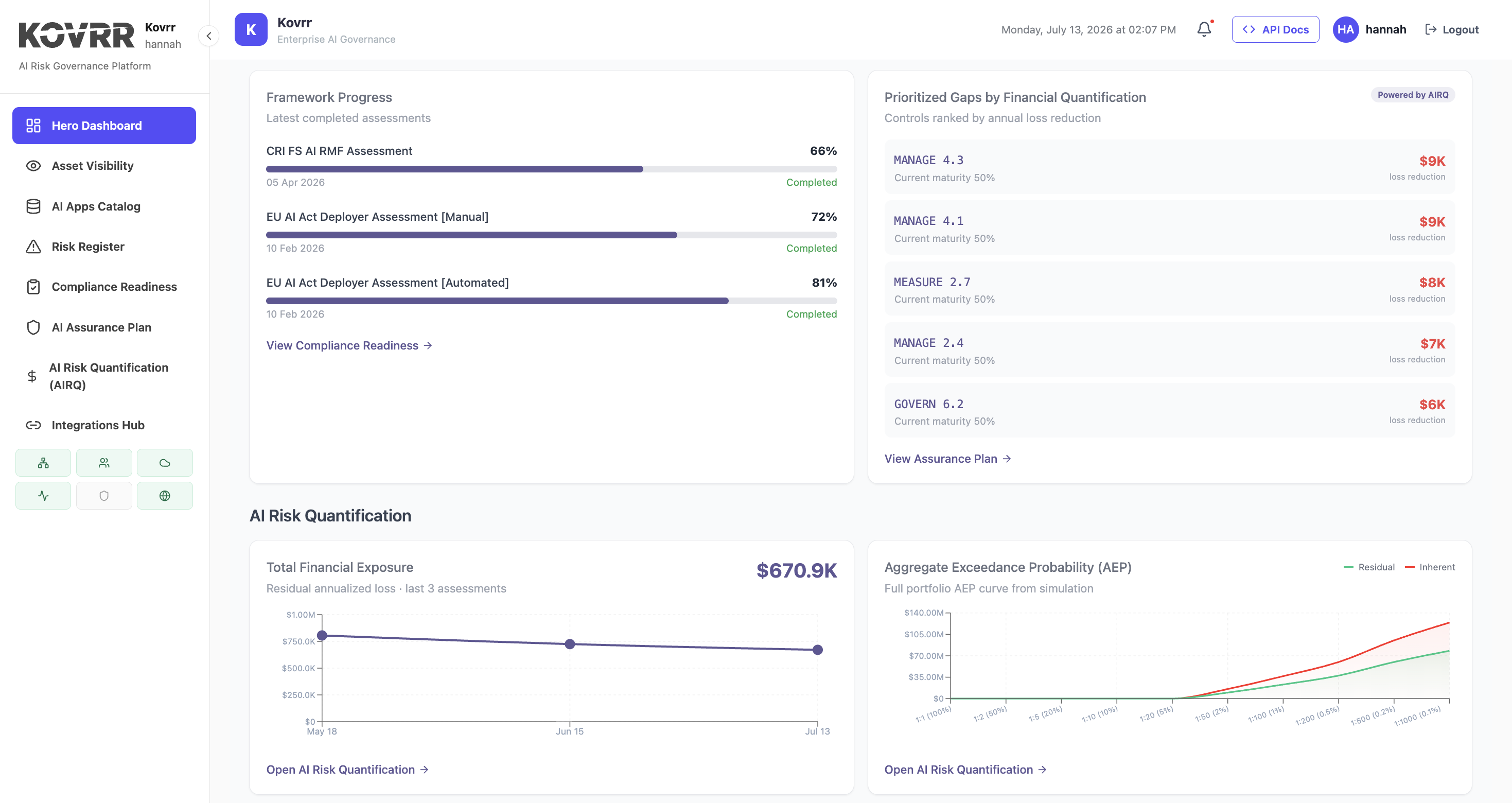
A number without a trend invites the wrong question. Directors seeing a single figure ask whether it is good, which nobody can answer, while directors seeing three consecutive quarters ask what changed, which has an answer. Trending the same metric on the same methodology is what makes the second conversation possible.
Ranking Remediation by Dollars Ends the Debate
Control priorities presented as a severity list produce ties and opinions. The same priorities ranked by the loss each one removes produce an order nobody argues with, and the board approves a sequence rather than a wish list. Where a director asks why one control precedes another, the answer is a figure rather than a judgment.
Regulatory Position Needs a Date Attached
Framework readiness reported as a percentage invites a follow-up about the deadline it relates to, so pairing each figure with its applicable date answers the question in advance. Compliance readiness tracked per framework also shows a board which obligations are approaching rather than which are outstanding, and the two produce different funding conversations. Regulatory change belongs here too, since emerging AI regulation moves the deadlines a prior pack reported against.
Methodology Changes Need Disclosure
Exposure that moves because the model was updated is not exposure that moved because risk changed, and conflating the two destroys the credibility of every future report. Noting model version alongside each figure lets a board distinguish the two without asking, and it protects the reporter when a number improves for uninteresting reasons.
What to Leave Out
Most AI board decks fail by including material that belongs elsewhere. Three categories consume attention without informing a decision.
- Model Mechanics: Architecture, parameter counts and benchmark scores answer questions no director is responsible for.
- Raw Incident Volume: Counts without severity or response detail read as noise rather than as control evidence.
- Framework Vocabulary: Control identifiers and clause numbers belong in the appendix, with the position stated in plain terms.
Coverage claims deserve the same scrutiny. A pack asserting complete visibility while unsanctioned AI use remains unmeasured invites the one question nobody wants asked in the room. Vendor names generally belong in the appendix too. A director needs to know that third-party AI exposure is assessed and who owns it, rather than which platform performs the assessment, though third-party AI vendor risk does warrant its own line once the estate includes embedded vendor AI.
Cadence and the Record Between Meetings
Quarterly reporting suits the board and leaves intervals that matter, since an AI estate changes weekly. The resolution is a standing quarterly pack drawn from a record maintained continuously, so the meeting reports on a system rather than triggering a scramble. Directors examining oversight quality look at the continuity of the record rather than the polish of the deck.
Escalation Rules Beat Ad Hoc Judgment
Some findings should not wait for a quarter. Agreeing in advance which events reach the board immediately, such as a serious incident, a regulatory inquiry or an exposure figure crossing a stated threshold, removes the judgment call from the moment it is hardest to make. Defining a risk appetite threshold gives the escalation rule a number to trigger on.
One Page, Then Appendix
A single page carrying inventory count, exposure with trend, regulatory position and open actions covers what most boards need, with everything else available on request. Packs that invert this ratio tend to be read in the first two minutes of the meeting. Comparison of how different tools construct that slide shows how easily the summary drifts back toward description.
Reporting That Survives a Later Review
The test for an AI board pack is not whether it reads well in the meeting. It is whether, two years later, it demonstrates that a monitoring system produced information and directors acted on it. Dated artifacts, named owners, exposure in currency with a trend, and a stated escalation threshold satisfy that test, while narrative assurance does not. Kovrr's AI Security and Governance Platform generates those figures from the same inventory the program runs on, so the board report reflects a live record rather than a quarterly reconstruction.
To see AI exposure, framework position and control priorities in a format built for directors, book a demo mapped to your own AI estate.

AI Board Reporting FAQs
Speak to an ExpertWhat do board directors want to see in AI risk reporting?

How should AI risk be expressed to a board?
How often should AI risk be reported to the board?
What should be left out of an AI board report?
Why does the board care about AI oversight specifically?
How do you show progress rather than just a position?