
AI Accountability
AI accountability is the assignment of clear responsibility for the decisions, behavior, and outcomes of AI systems across their design, deployment, and operational lifecycle.
What Accountability Requires
Accountability is not the same as oversight. Oversight is watching. Accountability is who is answerable when something goes wrong. For enterprise AI, accountability means specific named roles, in legal, compliance, product, engineering, and executive functions, hold defined responsibilities for AI system behavior and outcomes.
Regulators are increasingly explicit about this. The EU AI Act requires providers and deployers of high-risk AI systems to designate responsible parties. The NIST AI RMF Govern function treats accountability structures as foundational. ISO/IEC 42001 builds accountability into its management system requirements.
Why Accountability Is Hard for AI
Traditional software has clear ownership. A developer writes the code, a product owner defines the requirements, an operations team runs the system. AI blurs those lines. The model was trained by one team, fine-tuned by another, integrated by a third, and deployed by a fourth. When it produces a wrong or harmful output, the question of who is answerable does not resolve neatly.
See ensuring institutional AI ownership with the AI compliance officer for how organizations are addressing this by creating dedicated roles rather than relying on distributed accountability.
Accountability in an AI Governance Program
A mature AI governance program documents accountability at three levels: system level (who owns this specific AI application), function level (who owns AI risk, AI compliance, and AI security as functions), and executive level (who reports AI risk to the board). The documentation matters. In an audit or incident, accountability that is not written down is accountability that does not exist.
Related Terms


Full AI Visibility. Full Control. One Connected Platform.
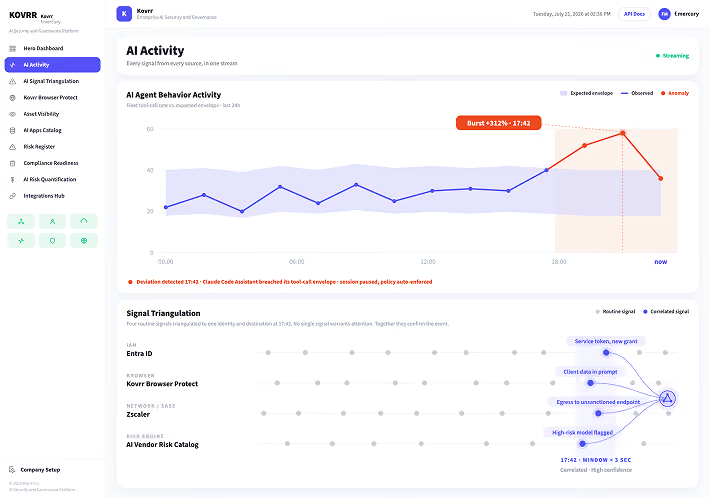
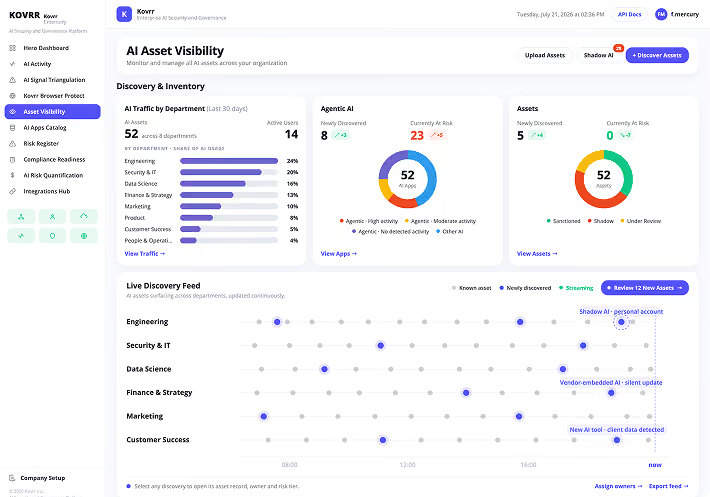
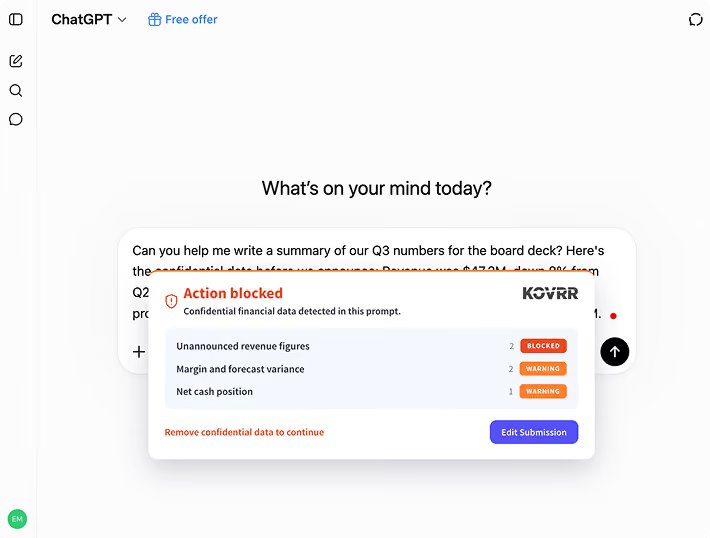
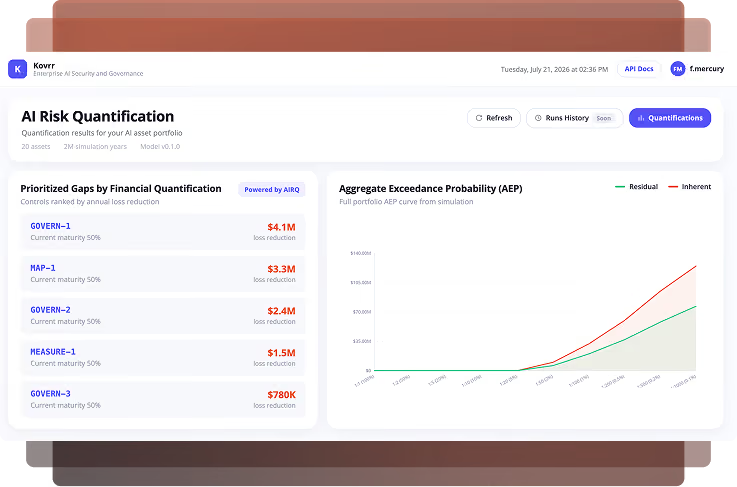
Enterprise AI is expanding faster than most governance programs can track. Kovrr connects every AI signal across browser, endpoint, network, identity, and vendor systems into a single platform so security, governance, and risk teams work from the same evidence.