
AI Governance
AI governance is the framework of policies, controls, roles, and accountability structures that direct how an organization develops, deploys, monitors, and manages AI systems across their entire lifecycle.
What AI Governance Actually Covers
AI governance is the operating system for enterprise AI. It defines what AI use is allowed, who approves it, what controls apply, how risk is measured, how compliance is demonstrated, and who is answerable when something goes wrong. Every functional AI program has governance underneath it, whether explicit or improvised.
See AI risk management as a function of AI governance: a holistic approach for how the pieces connect.
The Core Components
Effective AI governance typically comprises several linked components.
- Policy: The written rules that define what AI can be used for, by whom, and under what conditions.
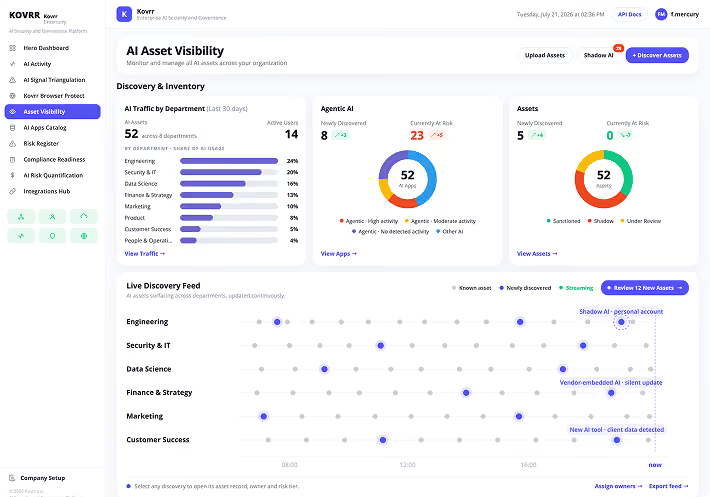
- Inventory: The AI asset inventory that catalogs every AI system in use, sanctioned or shadow.
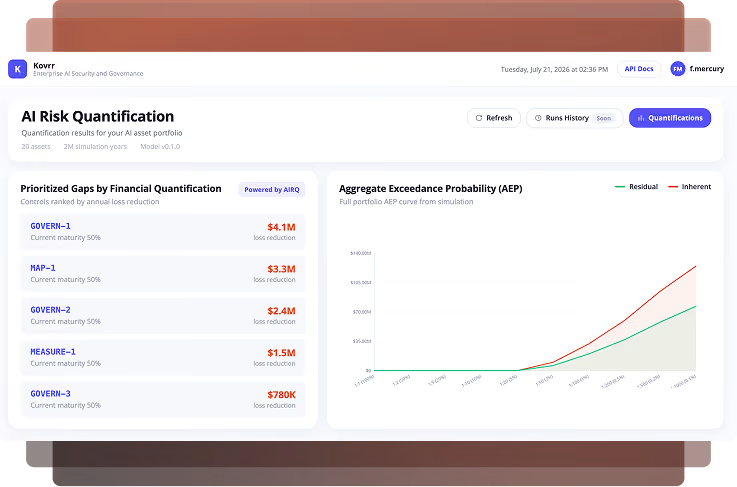
- Risk management: The processes for identifying, assessing, and mitigating AI-specific risks across the lifecycle.
Layered on top of those are the regulatory frameworks organizations map their governance program against, primarily the EU AI Act, NIST AI RMF, and ISO/IEC 42001.
Why AI Governance Is Different from Traditional IT Governance
Traditional IT governance oversees software and infrastructure. AI governance has to oversee systems that learn, adapt, and make decisions autonomously. That requires additional controls around training data, model behavior, drift, and downstream impact that traditional governance frameworks were not built to address. It also has to operate at the speed of AI adoption, which is faster than most legacy governance processes were designed for.
See how weak AI governance increases organizational exposure to risks for the specific ways governance gaps translate into business risk.
How Kovrr Approaches AI Governance
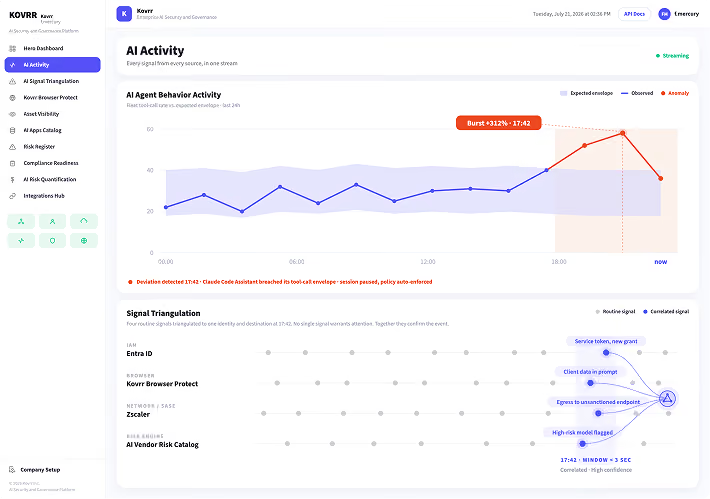
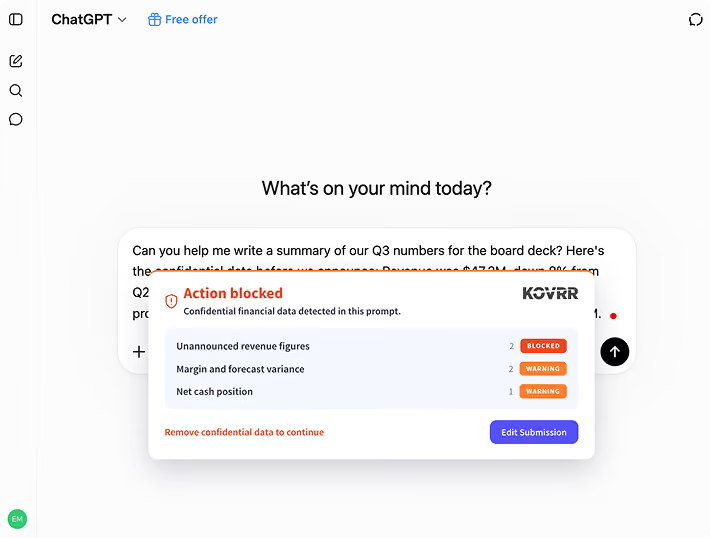
Kovrr's AI Security and Governance Platform operationalizes AI governance across the full lifecycle: discovering AI assets, cataloging them into an inventory, mapping them to applicable frameworks, applying and monitoring controls, quantifying exposure, and producing audit-ready assurance evidence. Governance is treated as an operating capability, not a documentation exercise.
Related Terms


Full AI Visibility. Full Control. One Connected Platform.
Enterprise AI is expanding faster than most governance programs can track. Kovrr connects every AI signal across browser, endpoint, network, identity, and vendor systems into a single platform so security, governance, and risk teams work from the same evidence.