
Blog Post
How Weak AI Governance Increases Organizational Exposure to Risks
June 24, 2026
Artificial intelligence (AI) is transforming businesses rapidly, but weak AI governance creates significant risks. Without proper oversight, organizations face costly data breaches, operational failures, and damage to their reputation. This article explains why strong AI governance is essential to managing these risks. Readers will learn how shadow AI and insufficient controls increase exposure, what frameworks and tools can mitigate risk, and why Kovrr’s AI Security and Governance Platform offers a comprehensive solution to manage AI risk continuously and at scale.
The Growing Business Impacts of AI System Misuse and Failure
AI systems, especially generative AI (GenAI), are now embedded across business processes. They accelerate innovation but also introduce new vulnerabilities. Misuse or failure of AI systems can cause:
- Data leaks or breaches exposing sensitive information
- Biased or incorrect AI outputs harming customers or stakeholders
- Regulatory non-compliance leading to fines and legal costs
- Loss of customer trust and brand damage
- Operational disruptions and financial losses
These risks stem largely from weak AI governance. When organizations lack visibility into AI tools and usage, fail to assess risk properly, or do not enforce controls, they open themselves to costly consequences. Shadow AI, unsanctioned AI tools used without oversight, further compounds this exposure by creating blind spots for security and compliance teams.
Understanding these business impacts highlights why robust AI governance is no longer optional but critical for organizations adopting AI at scale.
Why Shadow AI and Insufficient Oversight Increase Risk
Shadow AI: The Hidden Threat
Shadow AI refers to AI tools and applications deployed or used without official approval or oversight. Employees or departments may adopt third-party AI tools to solve immediate problems, bypassing IT and security controls. This creates several dangers:
- Unmonitored data flows that risk leaking sensitive information
- Unknown AI models that may produce biased or inaccurate outputs
- Lack of accountability for AI decisions and outcomes
- Increased attack surface for cyber threats targeting AI systems
Shadow AI undermines governance programs by hiding risks from leadership and compliance teams. As Microsoft Security Blog notes, “visibility gaps caused by shadow AI increase organizational exposure to AI-related risks.” Without discovery and control, these hidden AI assets can lead to breaches and compliance failures.
Insufficient AI Governance Frameworks
Many organizations struggle to apply consistent governance across AI systems. They may lack policies tailored for AI risks or fail to integrate AI risk into broader enterprise risk management. Common governance gaps include:
- No centralized AI asset inventory or AI risk register
- Weak or inconsistent controls around AI data and model use
- Limited risk quantification to prioritize mitigation efforts
- Poor alignment with AI regulatory requirements and standards
These weaknesses increase the chance of AI misuse or failure, causing significant financial and reputational harm. IBM highlights that accountability gaps and security exposures in AI initiatives are among the top business risks today.
Establishing Robust AI Governance Frameworks to Mitigate Risk
Effective AI governance requires a unified, data-driven approach covering the full AI lifecycle. Leading frameworks such as the NIST AI Risk Management Framework (AI RMF) provide structured guidance to identify, assess, and manage AI risks. Key elements include:
- AI Asset Visibility: Discover all AI tools and applications in use, including shadow AI.
- Risk Register: Centralize AI risks, link them to assets, controls, and governance domains.
- Compliance Readiness: Assess governance maturity against frameworks and regulations.
- Assurance Planning: Define mitigation initiatives with clear ownership and measurable impact.
- Risk Quantification: Model AI risk scenarios to forecast financial and operational losses.
These components enable organizations to maintain continuous oversight and respond proactively to evolving AI risks.
Kovrr’s AI Governance Tool: A Complete Solution for Secure AI Adoption
Kovrr’s AI Security and Governance Platform offers a leading approach to managing AI risk at scale. It combines visibility, risk quantification, compliance assessment, and assurance planning into a unified solution designed for security, risk, and compliance teams.
AI Asset Visibility: Uncovering Shadow AI and More
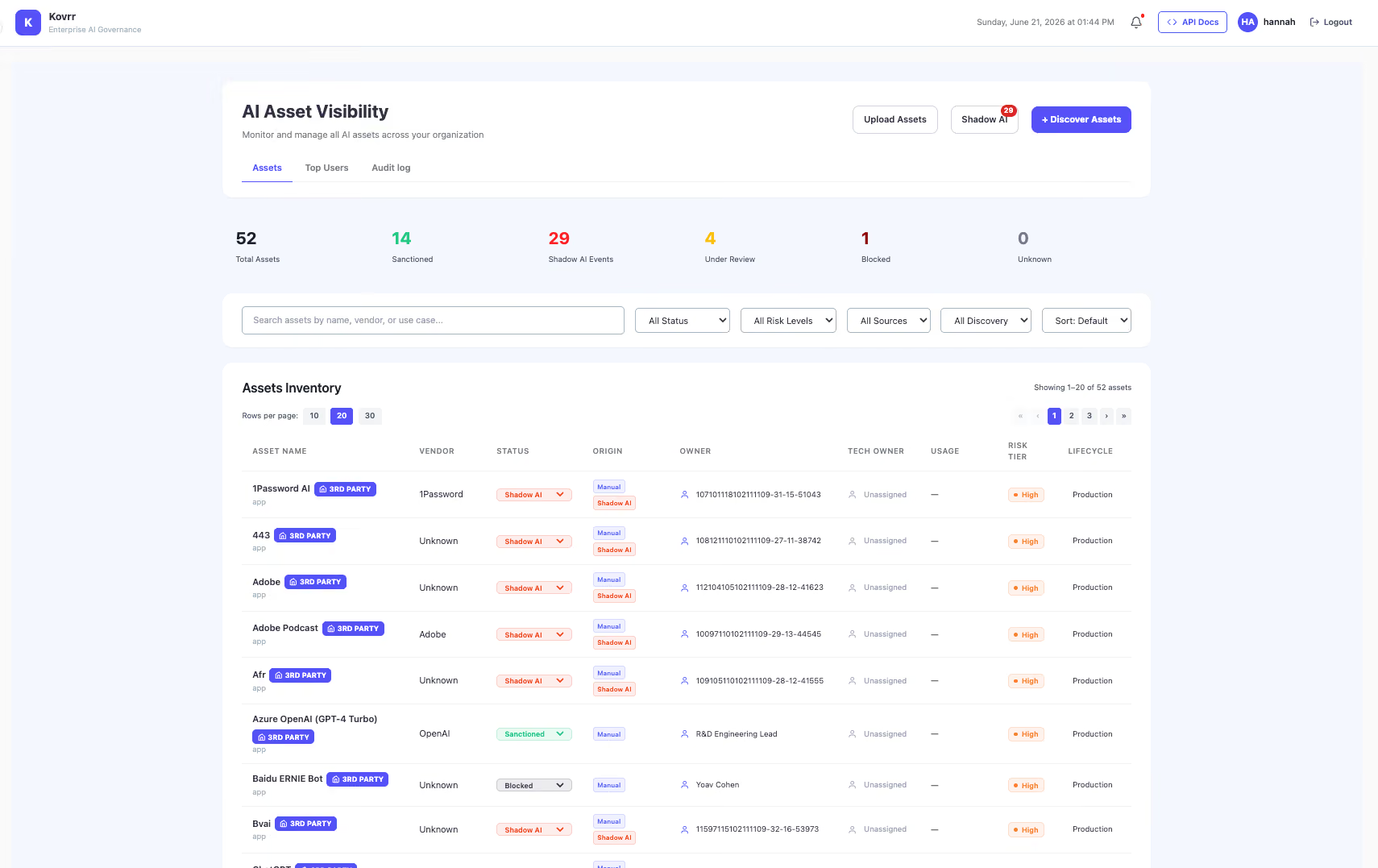
Kovrr identifies both sanctioned and shadow GenAI tools across teams and third-party platforms. It maintains a centralized inventory that captures:
- What AI tools are in use, and how they interact with data
- Which teams or business units are responsible
- Embedded AI features within vendor applications
This visibility foundation is critical for accurate risk assessment and control evaluation.
AI Risk Register: Structured Risk and Compliance Management
The platform centralizes AI risk scenarios linked to assets and governance domains. It tracks ownership, mitigation plans, and risk posture changes over time. This living register supports consistent reporting and accountability across the organization.
AI Compliance Readiness: Benchmarking and Gap Analysis
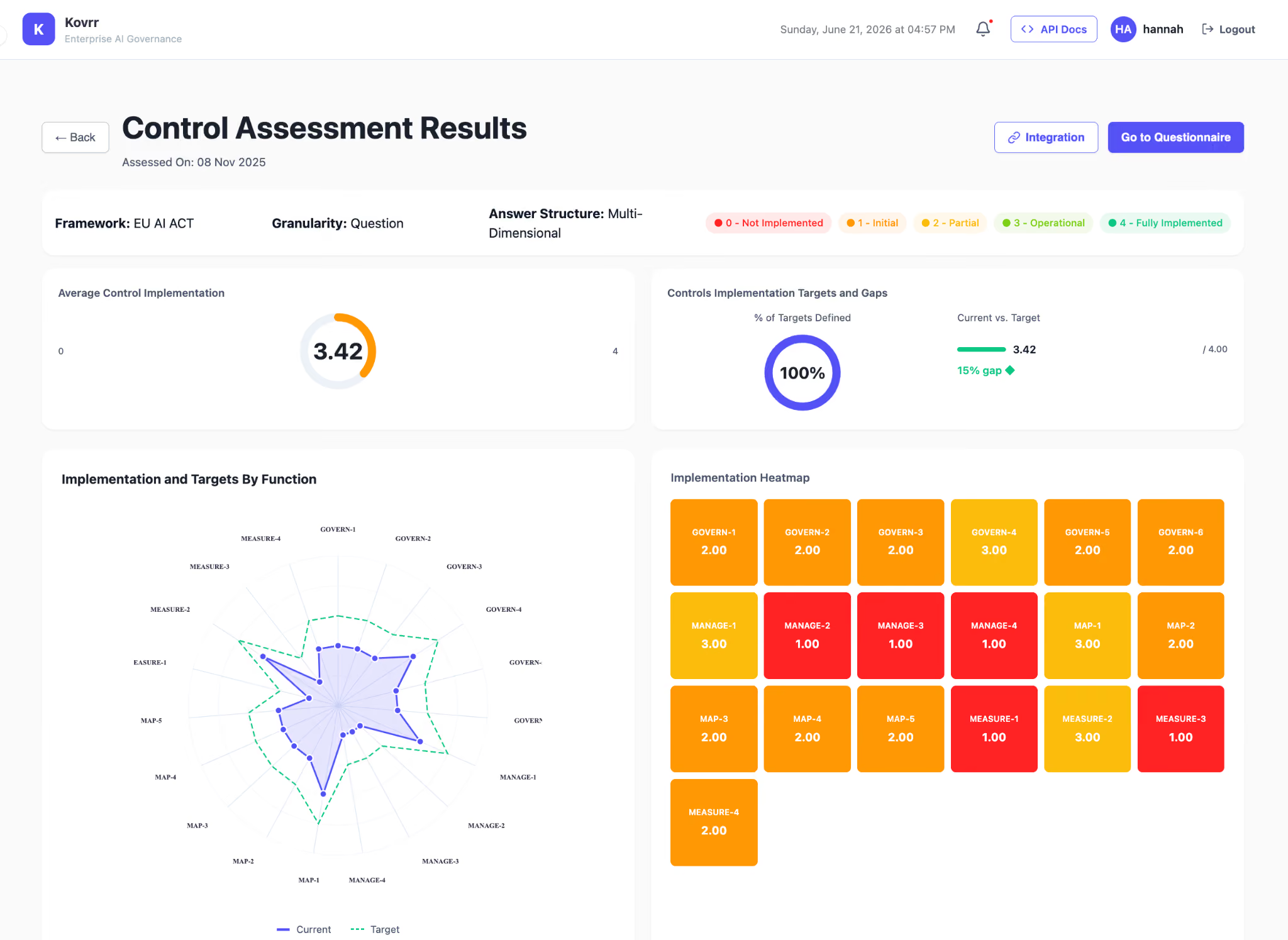
Kovrr benchmarks governance practices against frameworks like NIST AI RMF, ISO/IEC 42001, and the EU AI Act. It identifies compliance gaps that could lead to regulatory or operational exposure. Documentation supports remediation planning and regulatory reviews.
AI Risk Quantification: Data-Driven Decision Support
Kovrr models realistic AI risk scenarios based on actual AI deployment. It forecasts the likelihood and financial impact of AI-related events across key risk categories. Outputs help prioritize investments and report to boards in business terms. The AI Risk Quantification (AIRQ) tool measures how controls influence potential loss outcomes, enabling confident risk management.
AI Risk Governance in Practice: Enabling Responsible AI Use
With Kovrr’s platform, organizations can:
- Uncover Shadow AI: Identify unapproved AI tools and unmanaged usage across teams and vendors.
- Prepare for Regulation: Align governance with frameworks and emerging mandates like the EU AI Act.
- Guide Executive Decisions: Present AI exposure in tangible financial and operational terms for leadership.
- Prioritize Mitigation: Focus resources on risks and controls that materially affect exposure.
- Standardize Oversight: Maintain consistent governance across geographies and business units.
- Enable Responsible Adoption: Support agentic AI use with transparency, accountability, and defensible risk management.
This approach reduces costly breaches and reputational harm while supporting innovation.
Comparing Kovrr with Other AI Governance Solutions
The AI governance market includes competitors such as Credo AI, Holistic AI, Pillar Security, and others. Many offer valuable features like compliance tracking or risk assessment.
However, Kovrr stands out by integrating AI risk quantification based on cyber risk modeling expertise. Its platform uniquely translates complex AI exposure into measurable financial terms tailored to each organization's architecture and risk context. This data-driven insight supports continuous risk management at scale.
Other solutions may focus on compliance checklists or policy management, but lack Kovrr’s depth in risk quantification and assurance planning. Kovrr’s comprehensive visibility into shadow AI and embedded tools also addresses a critical blind spot many competitors overlook.
Aligning AI Governance with Industry Frameworks and Best Practices
Strong governance also means aligning with recognized AI frameworks and security recommendations. Kovrr supports frameworks such as:
- NIST AI Risk Management Framework (AI RMF)
- ISO/IEC 42001 AI management systems
- EU AI Act compliance
- U.S. state laws like Colorado SB21-169 and NYC Local Law 144
Additionally, government agencies like the NSA, CISA, and FBI emphasize secure AI development practices, including threat modeling, access control, and continuous monitoring. Following these standards helps organizations reduce AI cybersecurity risks such as data poisoning, model evasion, and misuse described by ENISA.
Conclusion: The Critical Need for Strong AI Governance
Weak AI governance increases organizational exposure to financial and reputational risks by allowing shadow AI, insufficient controls, and compliance gaps to persist unnoticed. As AI adoption accelerates, businesses must implement comprehensive governance frameworks that provide visibility, risk quantification, compliance readiness, and assurance planning.
Kovrr’s AI Security and Governance platform exemplifies a leading approach. It equips security, risk, and compliance teams with the data-driven insights and tools needed to manage AI risk continuously and at scale. By uncovering shadow AI, aligning with regulatory frameworks, and translating risk into business terms, Kovrr helps organizations reduce costly breaches and reputational harm while enabling responsible AI adoption.
For enterprises seeking to safeguard their AI initiatives and build resilient AI governance programs, Kovrr offers a uniquely complete and practical solution. Schedule a demo today.

Weak Governance & Organizationl Risk FAQ
Speak to an ExpertWhat is shadow AI, and why is it risky?

How does AI risk quantification help organizations?
Which AI governance frameworks should organizations follow?
How can Kovrr help manage AI risk better than other solutions?
What are common mistakes organizations make with AI governance?
Why is continuous monitoring important for AI governance?