
Blog Post
Continuous Control Monitoring: What Annual Testing Misses
August 8, 2026
An annual control assessment produces evidence that a control operated on one day out of three hundred and sixty-five. Sampling narrows it further, since testing twenty-five items from a population of a thousand evidences the control for those twenty-five on that day. The certificate describes a moment and gets read as a year.
Continuous control monitoring closes that interval by testing automatically and often. The honest version of the argument includes what it cannot reach, because roughly a third of a typical control set resists automation entirely and the setup cost is front-loaded. What follows covers the interval, which controls close it, and what remains manual regardless of tooling.
What an Annual Assessment Evidences
Point-in-time testing answers whether a control was operating when examined. Nothing in the result speaks to the eleven months either side, which is where the exposure sits.
Failure Latency Is the Metric Nobody Reports
A control failing in February and tested in December leaves ten months of undetected failure, and no assessment output records that interval. Programs report coverage as a percentage of controls tested while the more useful figure is how long a failure can persist before anyone notices. Expressing that as a number tends to surprise the people who approved the testing calendar. Threat exposure management reached the same conclusion earlier, and continuous threat exposure management exists because periodic assessment left the same interval on the attack surface.
Sampling Compounds the Interval
Sample-based testing exists because manual examination does not scale, and the sample is an inference rather than a measurement. Twenty-five clean records out of a thousand supports a reasonable conclusion and provides no information about the other nine hundred and seventy-five. Where a control fails intermittently rather than completely, sampling is exactly the method least likely to catch it.
Assessment Season Distorts the Result
Controls tend to operate better when everyone knows they are being examined, so an annual cycle measures the organization at its most attentive. The effect is well understood in every other audited discipline and rarely acknowledged in security assessment, where a control assessment is often treated as a neutral instrument rather than an observed one.
What Changes When Testing Runs Continuously
Automated testing removes the labor constraint that made sampling necessary, which changes both the coverage and the unit of measurement. Testing the population rather than a sample turns an inference into a count.
Drift Becomes Visible
Most control failures are not decisions, they are drift. A firewall rule loosened for a migration and never restored, a storage permission opened for a vendor integration, an account retaining access after a role change. Each is invisible to an annual review that happens to occur before or after the window, and each is caught immediately by configuration testing that runs daily.
Exception Reporting Replaces Attestation
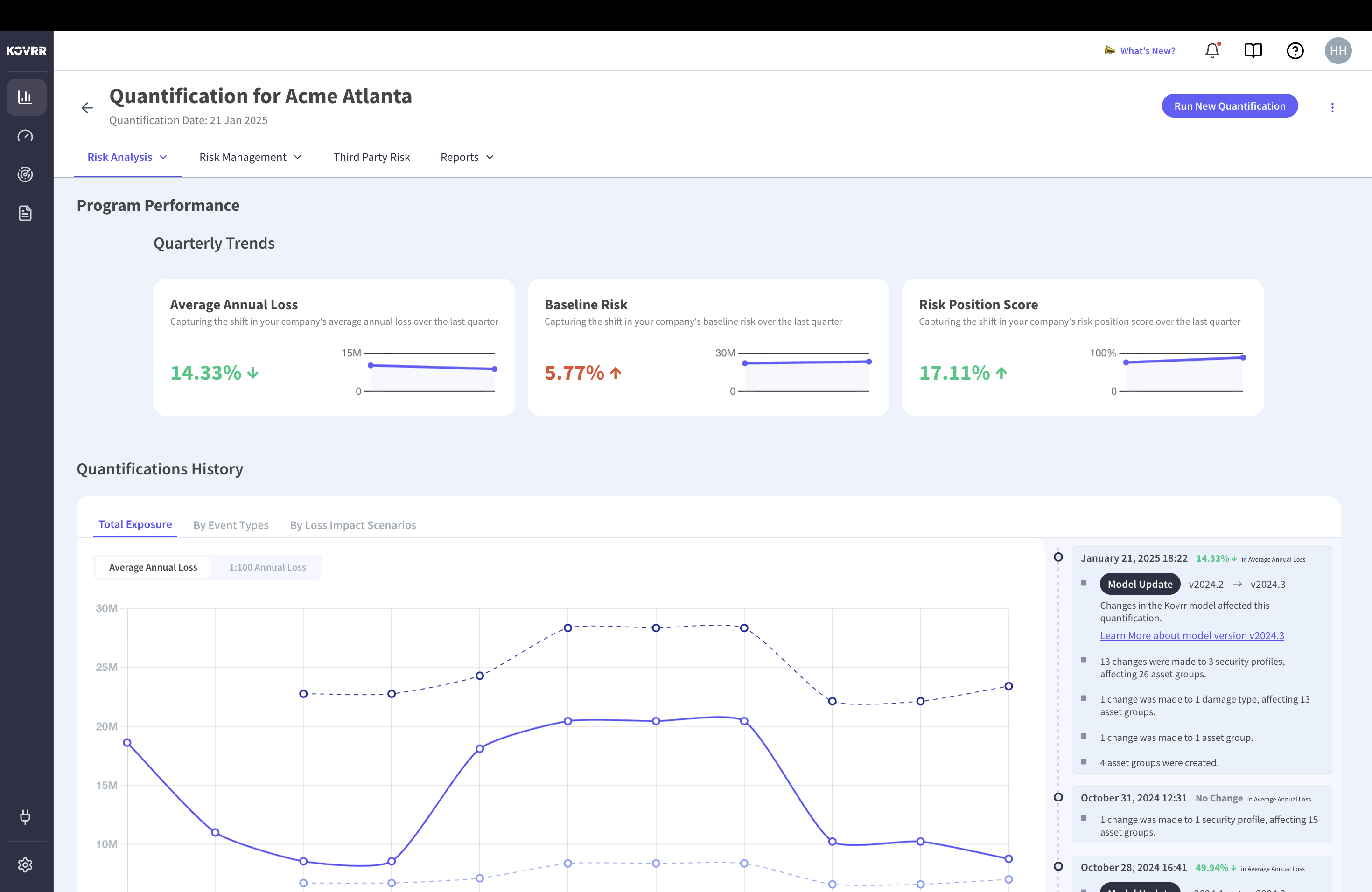
Continuous testing produces exceptions rather than assertions, which changes what a control owner is asked to do. Signing an attestation that a control operated is a claim, while resolving a list of specific failures is work with an outcome. Reporting also becomes cumulative, and monitoring progress over time gives a program something to show between assessment cycles rather than only after them.
Not Every Control Can Be Monitored This Way
Automation suits deterministic controls with structured data behind them. Three categories automate cleanly and the rest do not.
- Access and Identity: Revocation on termination through directory integration, and enforcement of multi-factor authentication across active accounts.
- Configuration State: Firewall rules, storage permissions, encryption settings and patch levels tested against an approved baseline.
- Vulnerability Position: Missing patches and misconfigured assets counted continuously rather than surveyed periodically.
The Hybrid Middle Is Larger Than Either End
Several controls automate partially and stall at a judgment. User access reviews can collect and present permissions automatically while the approval remains human. Vendor risk can ingest external signals continuously while a report review stays manual. Business continuity can verify backups ran and cannot verify that a recovery exercise exercised anything. Recognizing the hybrid category prevents the disappointment of expecting full automation and receiving a queue.
What Stays Manual Regardless of Tooling
Governance controls resist automation because the evidence is judgment. Assessing whether leadership sets an appropriate tone, whether a policy exception was justified, or whether risk strategy aligns with a new business venture requires someone to form a view. A program claiming complete continuous coverage has either excluded these from its control set or is describing something else, and cybersecurity GRC covers both halves rather than only the automatable one.
What Continuous Monitoring Does Not Solve
Two problems survive the transition and both are worth naming before a business case gets written.
Monitoring Is Not Effectiveness
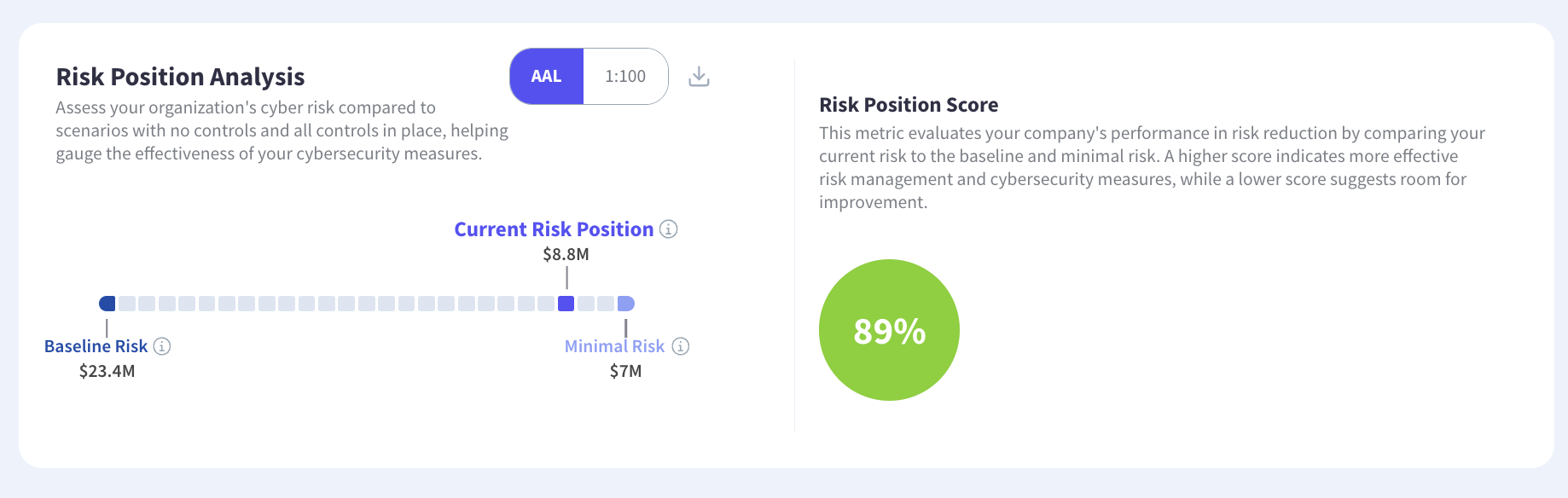
Confirming a control operates says nothing about whether it reduces risk, and a program can achieve complete continuous coverage of controls that were never the ones that mattered. Measuring position against a baseline with no controls and a floor with everything implemented shows how much of the available reduction has been captured, which is a different question from whether the controls are running. Assessment output feeding an action plan rather than a report is what closes the loop. Pairing operational testing with risk-focused prioritization keeps both questions in view.
Alert Volume Needs an Owner
Population testing generates far more findings than sampling, and a queue nobody reads is worse than an annual assessment because it creates a record of known unresolved failures. Thresholds, routing and a named owner per control family are prerequisites rather than refinements. Programs that skip this arrive at the same place as their alert-fatigued security operations colleagues, for the same reasons.
Sequencing the Transition
Converting everything at once fails predictably. Three considerations set a workable order.
- Start Where Data Already Flows: Controls whose evidence lives in a system with an API convert in days rather than quarters.
- Prioritize High-Frequency Failure: Controls that drift often deliver the most value per automation, since those are the ones annual testing misses.
- Keep the Manual Set Explicit: Name the controls that will stay periodic so nobody mistakes the coverage figure for the whole.
Shared controls deserve early attention as well, since a control satisfying several frameworks repays automation more than one serving a single requirement. Asset inventory and log management usually qualify, and maturity scored against a framework shows which controls carry the most weight before any of them are automated. Running maturity assessments on the same control set keeps the periodic and continuous halves comparable.
Control Monitoring and Continuous Auditing Are Different
The terms get used interchangeably and the distinction matters for independence. Continuous control monitoring belongs to management, which operates the controls and watches them. Continuous auditing belongs to internal audit, which tests independently and reports elsewhere. A monitoring system built by the people it monitors is useful and does not substitute for independent testing.
Auditors do rely on management's monitoring where they can validate it, which reduces their own sampling and shortens the engagement. Recording exceptions and resolutions in the risk register rather than in a monitoring tool alone is what makes that reliance possible, since the auditor needs the trail rather than the current state.
Measuring the Interval, Not Just the Control
The case for continuous monitoring rests on time rather than on accuracy. Annual testing is reasonably accurate about the day it happens, and the days it says nothing about are where control failures live. Closing that interval for the controls that permit it, while naming the ones that stay periodic, produces a program that can state how quickly a failure would surface. Kovrr's continuous control monitoring connects that testing to modeled exposure, so a control failure carries a figure rather than a status.
To see control performance tracked continuously against quantified exposure, book a demo with our cyber risk experts.

Continuous Control Monitoring FAQs
Speak to an ExpertWhat is continuous control monitoring?

What does an annual control assessment prove?
Which controls can be monitored continuously?
What cannot be automated in a GRC program?
Does continuous monitoring replace audit?
How should a program start moving toward continuous monitoring?