.jpg)
Blog Post
AI Risk Management as a Function of AI Governance: A Holistic Approach
July 1, 2026
Artificial intelligence (AI) is transforming industries, but it also introduces new risks that organizations must manage. Effective AI risk management is a critical function within AI governance. This article explains how AI risk management fits into the broader governance framework, why it matters, and how organizations can adopt a connected, data-driven approach to reduce AI-related risks continuously.
Readers will gain a clear understanding of the relationship between AI governance and risk management, the challenges enterprises face, and how leading platforms like Kovrr enable a unified, scalable solution for managing AI and cyber risks together.
Understanding AI Governance and Its Role in Risk Management
AI governance refers to the policies, processes, and controls organizations use to ensure AI systems operate safely, ethically, and in compliance with regulations. It covers the entire AI lifecycle, from design and development to deployment and ongoing monitoring. AI risk management is a core function within this governance framework, focusing specifically on identifying, assessing, and mitigating risks associated with AI use.
The Four Pillars of AI Governance
According to research from the Wharton Human-AI initiative, AI governance consists of four key components:
- Definitions and Standards: Establishing clear definitions and standards for AI systems.
- Inventory and Visibility: Maintaining a comprehensive inventory of AI assets.
- Policy and Controls: Developing policies and controls to manage AI risks.
- Governance Framework: Implementing a governance framework that includes monitoring and continuous improvement.
Risk management fits into this model by using the inventory and policies to actively assess and reduce risks, ensuring AI systems align with organizational goals and regulatory requirements. This holistic governance approach helps organizations manage AI responsibly and build trust with stakeholders. As the report states, "AI governance is essential to building trust and accountability in AI systems." source.
Why AI Risk Management Is Essential for Modern Enterprises
AI systems introduce unique risks that traditional risk management frameworks may not cover fully. These include:
- Model Failures: AI models can produce incorrect or biased outputs.
- Data Risks: Errors in training data or data poisoning can degrade AI performance.
- Regulatory Penalties: Non-compliance with emerging AI regulations like the EU AI Act.
- Third-Party AI Exposure: Risks from vendors embedding AI in their products.
- Autonomous Agent Risks: Unintended actions by AI agents with system access.
Without effective risk management, these issues can lead to financial losses, reputational damage, and legal consequences. Organizations need a structured way to quantify and mitigate AI risks continuously to avoid surprises and maintain resilience.
The Connected Architecture: Kovrr’s Approach to AI Risk Management
Most enterprises today struggle with fragmented AI risk tools. Discovery, compliance, risk registers, and enforcement often live in separate systems, making it hard to get a clear, current picture of risk. Kovrr takes a different approach by offering a unified platform that connects every signal from AI risk activities into a single, continuous view.
Unified Visibility and Telemetry
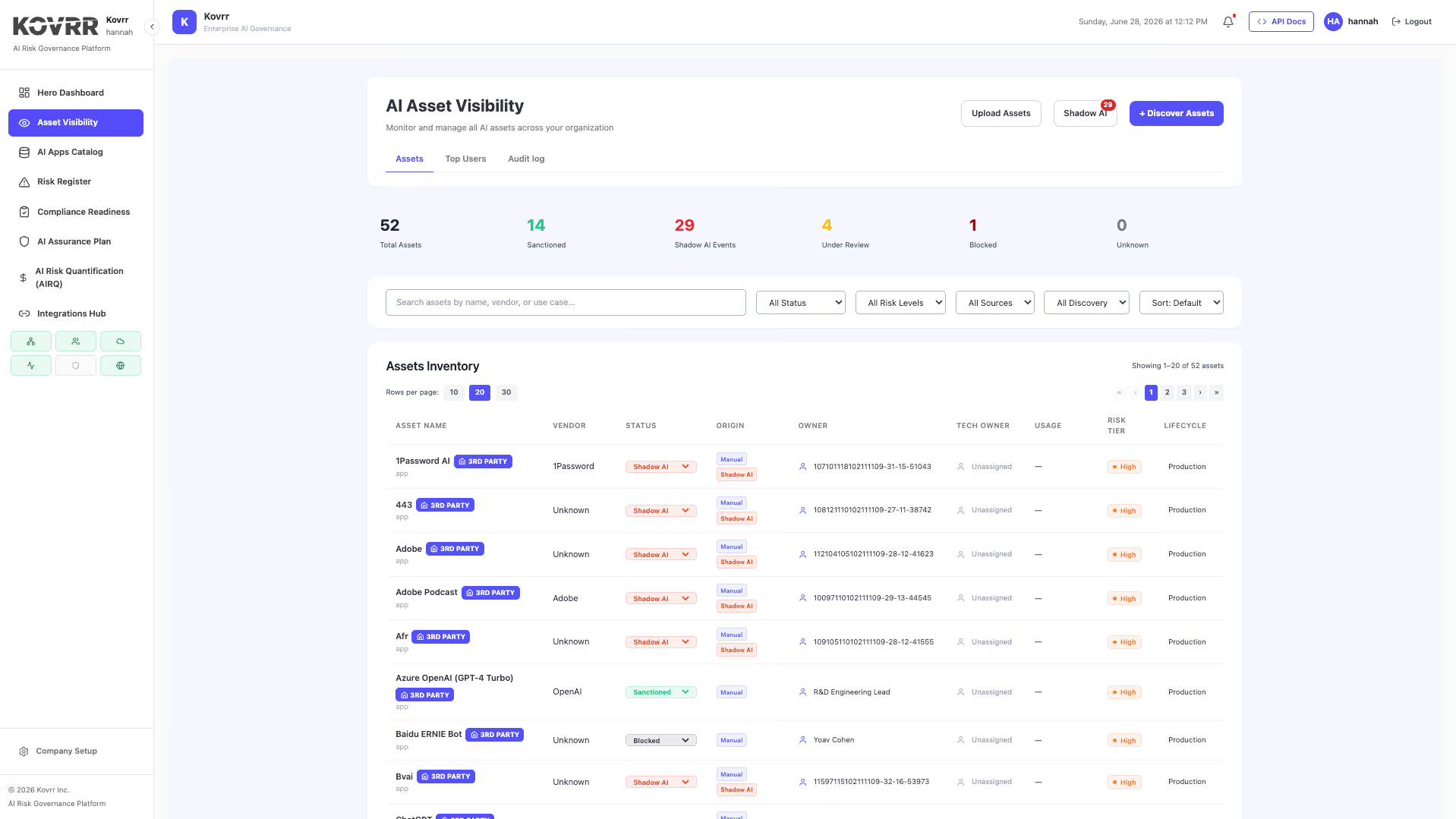
Kovrr’s platform collects telemetry from multiple sources, including browser-based AI usage, internal AI inventories, third-party vendor models, control assessments, and active enforcement points. This data feeds into a centralized backend that updates AI asset inventories, risk registers, and quantified exposures automatically. For example, if a new shadow AI tool is detected through the browser extension, the platform instantly updates the risk register and exposure calculations without manual input.
Insurance-Grade Quantification
Kovrr applies insurance-grade modeling to AI risk scenarios. This means translating technical AI risks into financial terms, such as potential loss amounts and likelihoods. The AI Risk Quantification (AIRQ) engine produces defensible, business-relevant figures for events like model failures or regulatory fines. This quantitative rigor helps boards and executives understand AI risk in terms they can act on and compare with other enterprise risks.
Continuous Control Monitoring and Active Enforcement
Kovrr links risk quantification to live control monitoring. Control improvements or degradations immediately affect scenario likelihoods and overall exposure. Additionally, Kovrr offers active enforcement layers like the y, which apply adaptive policies and monitor autonomous AI agents in real time. This active layer reduces risk at the moment of use, closing gaps that traditional tools miss.
Automated Compliance Readiness
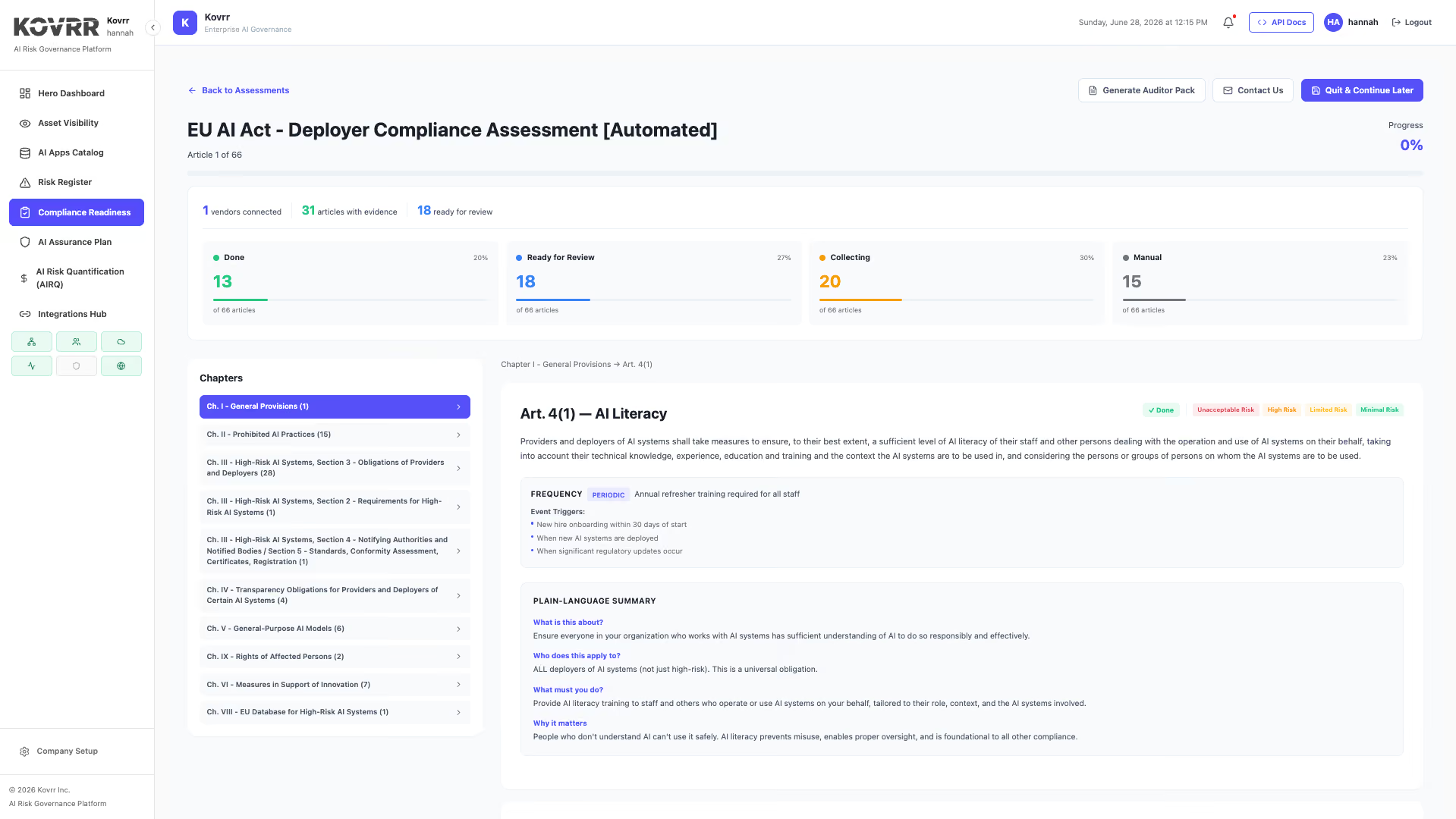
The platform automates compliance assessments against major AI frameworks such as the EU AI Act and NIST AI RMF. Kovrr’s unique evidence collection for the EU AI Act maps system artifacts to regulatory articles, producing audit-ready documentation. This capability helps organizations stay ahead of evolving AI regulations with less manual effort.
Key Components of Effective AI Risk Management
Implementing AI risk management as part of governance requires several foundational elements.
1. AI Asset Visibility
A complete, continuously updated inventory of all AI assets is critical. This includes sanctioned and shadow AI tools, internal models, third-party embedded AI, and autonomous agents. Visibility enables accurate risk assessment and control prioritization.
2. Risk Register with Scenario-Based Approach
A detailed risk register catalogs AI-specific scenarios such as prompt injection, data poisoning, or agent privilege misuse. Each scenario is scored for likelihood and impact, assigned owners, and tracked over time. This approach breaks down abstract AI risk into manageable, actionable items.
3. Quantitative Risk Modeling
Using data-driven models, organizations quantify AI risk exposure in financial terms. This helps prioritize investments, justify controls, and communicate risk to executives with clarity.
4. Continuous Control Monitoring
Real-time monitoring of security controls ensures the risk posture reflects current conditions. Changes in control effectiveness directly impact risk scores and mitigation plans.
5. Automated Compliance Mapping
Aligning AI risk management with regulatory frameworks like the EU AI Act and NIST AI RMF requires automated tools to assess controls and gather evidence, reducing audit burden and speeding remediation.
6. Active Enforcement and Incident Response
Deploying enforcement at points of AI interaction, such as browser extensions or autonomous agent monitoring, helps prevent incidents before they occur, complementing detection and response efforts.
Comparing Kovrr with Other AI Governance and Risk Management Solutions
The AI governance market includes competitors like IBM, Credo AI, OneTrust AI Governance, and MetricStream, each offering valuable capabilities. For example:
- IBM emphasizes AI risk management as part of broader AI governance, focusing on safe, ethical, and fair AI development. As IBM notes, "AI risk management is critical to building trustworthy AI."
- Credo AI and OneTrust AI Governance provide strong compliance and policy management tools, but often lack integrated quantification and active enforcement.
- MetricStream offers GRC platforms with AI governance modules but may not deliver the continuous, connected telemetry Kovrr provides.
- NIST AI Risk Management Framework (AI RMF) offers voluntary guidelines for trustworthy AI, but does not provide an integrated technical solution source.
Kovrr stands out by combining cyber risk quantification heritage with AI-specific risk modeling, continuous control monitoring, and active enforcement in one connected platform. This unified architecture enables real-time updates across discovery, risk registers, quantification, compliance, and board reporting, something few competitors currently deliver comprehensively.
Aligning AI Risk Management with Regulatory Frameworks
Regulatory compliance is a major driver for AI governance and risk management programs. The EU AI Act, NIST AI RMF, and emerging global standards require organizations to demonstrate control over AI risks.
- EU AI Act: Sets strict requirements for high-risk AI systems, including transparency, data governance, and human oversight. Kovrr’s automated evidence collection and compliance readiness features help organizations prepare for upcoming deadlines in 2026 and 2027.
- NIST AI RMF: Provides a voluntary framework to integrate trustworthiness into AI lifecycle management. Kovrr’s scenario-based risk register and continuous monitoring align well with NIST’s emphasis on risk management throughout AI development and use.
- Other frameworks: Kovrr supports alignment with ISO standards and industry best practices, enabling organizations to adapt as regulations evolve.
By embedding regulatory requirements into the risk management workflow, organizations reduce compliance risk and improve audit readiness.
Steps to Implement AI Risk Management within AI Governance
Organizations looking to build or improve their AI risk management function should consider these practical steps.
- Establish Clear Governance Roles: Define ownership for AI risk management across security, risk, compliance, and AI teams.
- Inventory AI Assets Continuously: Use tools that discover and catalog all AI systems, including shadow and third-party AI.
- Develop a Risk Register: Identify AI-specific risk scenarios and assign ownership and mitigation plans.
- Quantify AI Risks: Apply financial modeling to understand potential impacts and prioritize controls.
- Monitor Controls in Real Time: Connect control assessments to risk scenarios for dynamic exposure updates.
- Automate Compliance Assessments: Leverage frameworks and tools to map controls against regulations continuously.
- Deploy Active Enforcement: Implement policy enforcement at AI interaction points to reduce exposure.
- Report to Executives and Boards: Provide clear, business-focused risk reporting to support decision-making.
Kovrr’s platform supports all these steps within one integrated solution, reducing complexity and improving risk visibility across the enterprise.
The Bottom Line on AI Risk
AI risk management is a vital function of AI governance that ensures organizations control the unique risks introduced by AI systems. A connected, data-driven approach that integrates AI asset visibility, scenario-based risk registers, quantitative modeling, continuous control monitoring, automated compliance, and active enforcement is essential for effective risk reduction.
Kovrr’s AI Security and Governance platform exemplifies this approach by unifying cyber and AI risk management in one continuous, insurance-grade, quantified system. This holistic architecture delivers real-time, defensible insights that empower organizations to manage AI risks at scale and align with evolving regulatory demands.
For enterprises seeking to build resilient AI governance programs, Kovrr offers a comprehensive, leading-edge solution that bridges technical risk and business decision-making seamlessly. Schedule a demo today.

AI Governance and AI Risk Management FAQs
Speak to an ExpertWhat is the difference between AI governance and AI risk management?

Why is continuous AI asset visibility important?
How does Kovrr quantify AI risk differently from other platforms?
What role does active enforcement play in AI risk management?
How does AI risk management support regulatory compliance?
Can Kovrr’s platform manage both cyber and AI risks together?