
Blog Post
AI Governance Tools and the Audit Trail Problem
August 15, 2026
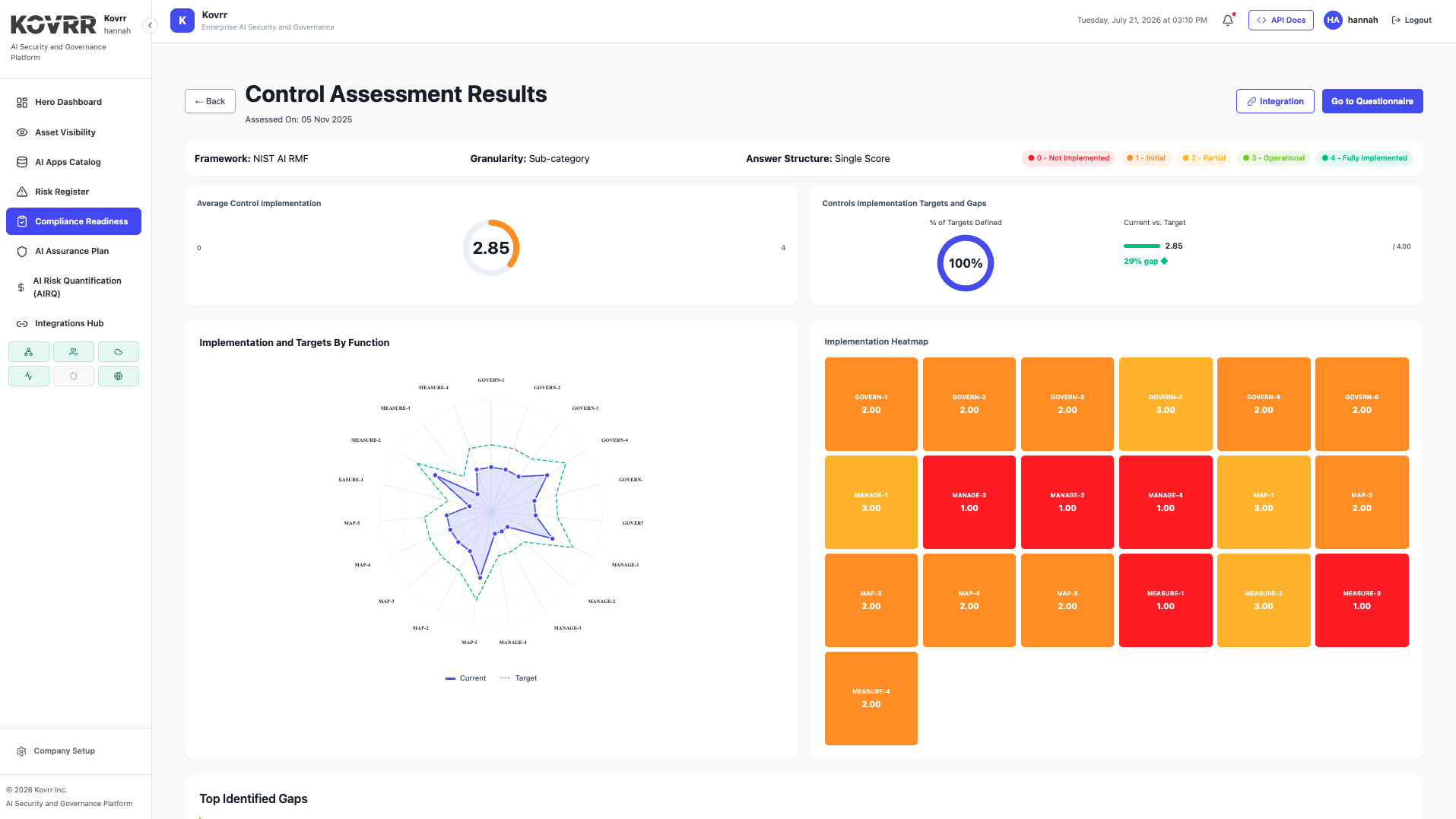
An AI governance platform demo shows you the present. Compliance posture at seventy-nine percent, four controls needing attention, a register of systems with owners attached. Every figure describes today, and the demo is persuasive precisely because today is legible.
An audit asks a different question. What was the posture in March, who approved the assessment that produced it, where did the evidence come from, and can any of that be shown without depending on the memory of someone who has since left. Current state and history are separate data problems, and a tool built well for the first is frequently thin on the second.
Current State and History Are Different Structures
A dashboard stores the latest value of each field. An audit trail stores every value each field has held, with a timestamp and an actor attached to each change. The second is strictly more expensive to build and does not improve a demo, which explains the pattern.
The Question an Audit Asks
Auditors and regulators reason backward from an event or a date. A supervisor asking whether a control was operating in April wants the April record rather than a current assertion that it operates now. An investigation into an incident wants the configuration as it stood before the change, not after the remediation. Programs discovering this during an examination reconstruct the history from email threads, and the reconstruction is itself a finding.
Overwriting Is the Default Behavior
Most governance tooling treats an assessment as a record to be updated rather than a document to be superseded. Rescoring a control replaces the previous score, and the previous score was the evidence that the position changed. Where the tool does retain versions, the question is whether the prior version remains readable in its original form or survives only as a difference in a change log.
Three Properties That Make a Trail Usable
Retention alone is insufficient. A stored history that cannot be attributed or verified answers the question no better than an absent one.
- Immutability: Past records cannot be edited after the fact, and any correction appears as a new entry rather than a replacement.
- Attribution: Each entry names an individual rather than a role, a team or a service account shared across a department.
- Provenance: Each item of evidence records where it came from and when it was captured, not merely that it exists.
Attribution is the one most often lost quietly. A control assessment completed under a shared login satisfies the field and answers nothing, and the same applies to an approval recorded against a committee rather than a chair. Accountability expressed as a named person is what an examiner tests, which is the same reason a defensible framework depends on current ownership rather than historical ownership.
Provenance Separates Collected From Attested
Evidence pulled automatically from a connected system carries a different weight than evidence someone uploaded, and auditors treat them differently. An automatically collected configuration snapshot has a source and a capture time. A screenshot attached to a control has neither unless somebody recorded them by hand. Distinguishing the two in the tool rather than in a naming convention is what allows an assessor to sample the first and scrutinize the second.
Dates Are the Load-Bearing Field
Almost every audit question resolves to a date. When was this assessed, when was it last reviewed, when did the owner change, when was the system promoted to production. A record carrying a value without a date supports no historical claim at all.
Two Dates Are Not Interchangeable
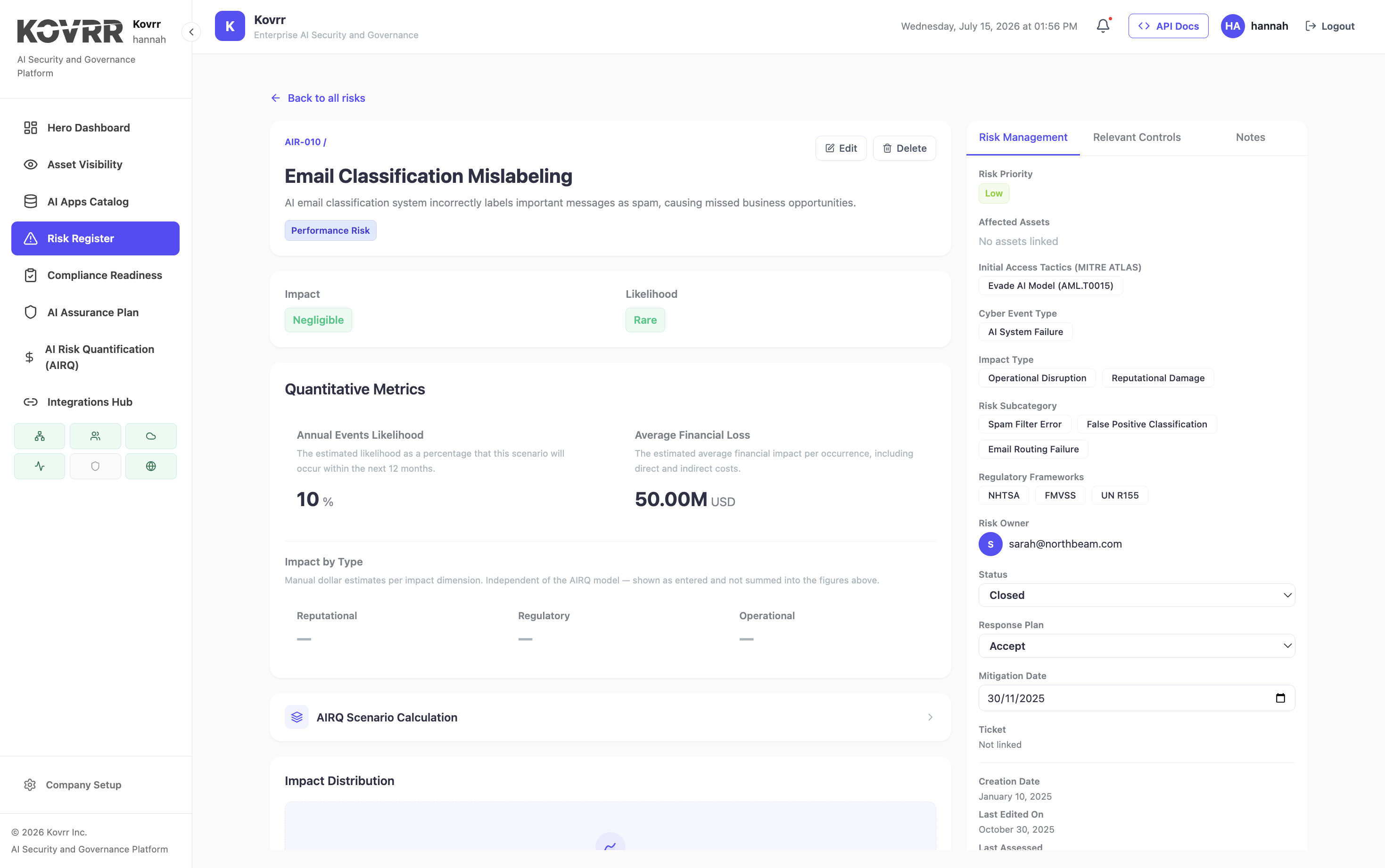
Created and last assessed answer different questions, and tools frequently store only one. A scenario created in January and never reassessed looks identical to one assessed last week if the register carries a single timestamp. Separating the two exposes the population of records that exist and have gone stale, which is the population an examiner samples from.
Lifecycle Transitions Need Their Own Record
A system moving from pilot to production inherits obligations the pilot never carried, and the transition is the moment those obligations attach. Recording when it happened, and who authorized it, converts a compliance question into a lookup. Where the register stores only the current lifecycle stage, the date the obligations began is unrecoverable, and the register has quietly become a snapshot.
Retention Outlives the Subscription
The EU AI Act requires technical documentation for high-risk systems to be retained for ten years after the system reaches the market, and automatically generated logs for at least six months. Both obligations sit with the organization rather than with any vendor it happens to use.
Ten Years Is Longer Than Most Contracts
A ten-year documentary obligation against a three-year software agreement produces an uncomfortable arithmetic that rarely surfaces during procurement. Ask what happens to the trail at contract end, whether records remain accessible during a wind-down period, and whether retention is tied to the subscription or to the record. Vendors differ considerably and few volunteer the answer.
Export Is the Real Test
A trail you cannot remove is a trail you do not own. The useful question is not whether export exists but what it produces, since a report rendered as a document is a summary while a structured export with timestamps and actors preserved is a record. Requesting a sample export during evaluation costs nothing and answers more than the retention clause does, and organizations moving from spreadsheets to audit-ready should confirm they are not moving into a position they cannot leave.
Where Tools Underdeliver
Three failure patterns recur across platforms, and none is visible in a demo unless someone asks directly.
Editable History
A tool permitting an administrator to amend a past assessment has no audit trail regardless of what its change log displays, since the log can generally be amended by the same administrator. The property that matters is whether the system can produce a record it is technically unable to alter, and most cannot. Compensating for it means exporting periodically to storage under different administrative control.
Attachment Rot
Evidence uploaded as a file ages invisibly. A policy document attached in 2024 satisfies the field indefinitely while the policy it depicts was revised twice, and nothing in the tool signals the divergence. Automatically collected evidence avoids this because it refreshes, which is one of the stronger arguments for automated evidence collection over attachment-based workflows. Where manual attachment is unavoidable, an expiry date on the attachment is the minimum viable control.
Framework-Shaped Storage
Tools organizing evidence by framework rather than by control produce duplicate artifacts and divergent histories, so the same log retention practice ends up evidenced three times with three separate update trails. Storing once against a normalized control and referencing outward keeps one history, which is the practical reason mapping once rather than maintaining parallel programs matters for more than the labor saving.
What to Ask in an Evaluation
Three requests expose the trail faster than any feature list.
- Show me a date in the past: Reproduce the compliance posture as it stood six months ago, from the tool rather than from a saved report.
- Show me who: Name the individual who approved a specific control score, and demonstrate that the name cannot be reassigned afterward.
- Show me the export: Produce a structured file with timestamps and actors intact, not a rendered summary.
A fourth request is worth adding where regulated obligations apply. Ask the vendor to describe, in writing, what happens to retained records if the contract ends before the retention period does. Broader selection criteria sit in the buyer's guide to governance platforms, and audit trail properties belong alongside discovery depth and agent coverage rather than as an afterthought.
Continuous Collection Changes the Shape of the Problem
A tool assembling evidence before each audit produces a trail with the shape of the audit calendar, which is to say long intervals between assessments and a burst of activity before each one. A tool collecting continuously produces a trail with the shape of the operation, and the second answers questions about arbitrary dates because arbitrary dates have records.
The same distinction applies on the control side, where continuous control monitoring produces evidence as a byproduct rather than as a project. Programs running both find that audit preparation becomes a review exercise, and what an audit involves changes character when the evidence already exists.
Trails Serve More Than Auditors
The same history answers an incident investigation, a board question about whether posture improved, and a due diligence request during a transaction. Building it for auditors and discovering the other three uses is the common sequence, and directors examining oversight quality read continuity of record rather than current position.
Buy for the Question You Will Be Asked
Governance platforms compete on the view they present, and the obligation they eventually have to satisfy concerns the view they retained. Immutability, named attribution, evidence provenance, separate creation and assessment dates, retention independent of the contract and a structured export are unglamorous properties that decide whether an examination is a review or a reconstruction. Kovrr's AI Security and Governance Platform maintains that record against a live inventory, so the history exists before anyone asks for it.
To see what your current evidence would look like reproduced for a date six months in the past, book a demo mapped to your own AI systems.

AI Audit Trail FAQs
Speak to an ExpertWhat is an AI governance audit trail?

What properties does a usable audit trail need?
How long does AI compliance evidence need to be retained?
Why do governance tools underdeliver on audit trails?
What should you ask a vendor about audit trails?
Does continuous evidence collection help with auditability?