
Blog Post
What an AI Compliance Audit Involves, Stage by Stage
August 13, 2026
An AI compliance audit is less mysterious than its absence from most planning suggests. Someone outside the organization reads what you wrote down, then samples real systems to test whether the organization does what the documents describe. The distance between those two things is where findings come from.
Three different exercises get called an AI audit, and they run differently. Certification against a management standard follows a defined two-stage process. Conformity assessment under the EU AI Act is a regulatory procedure with its own routes. Regulator examination arrives on its own schedule. What follows covers each, the evidence all three request, and where organizations most often lose points.
Certification Audits Run in Two Stages
Accredited certification against ISO/IEC 42001 follows the same shape as other management system standards. Two audits, separated by weeks, testing two different questions.
Stage One Tests Design
Stage one runs one to two days, on-site or remotely, and reviews documentation rather than practice. Auditors read the scope statement, the AI policy, the risk assessment methodology, the Statement of Applicability and the core procedures, confirming the management system is designed coherently enough to be worth testing. Findings emerge as areas of concern rather than formal nonconformities, and certification bodies typically allow four to twelve weeks before stage two so they can be addressed. Areas of concern left alone tend to reappear as nonconformities.
Stage Two Tests Reality
Stage two runs two to nine days depending on scope and tests whether the documented system operates. Auditors interview the people who run the processes, sample evidence across the applicable Annex A controls, and trace individual AI systems through impact assessment and risk treatment records. Attention concentrates on operation, performance evaluation and improvement, since those are the clauses where a paper system reveals itself.
Findings Come in Grades
A closing meeting presents conformities, observations, minor nonconformities and major nonconformities. Majors describe the absence or complete failure of a required element and block certification until closed, often within a window of around ninety days. Minors need a corrective action plan with a date. An independent reviewer at the certification body then confirms the auditor's recommendation before a certificate is issued, valid for three years.
What Auditors Ask to See
Evidence requests are predictable across auditors and frameworks, because they test the same underlying question of whether decisions were made deliberately and recorded at the time.
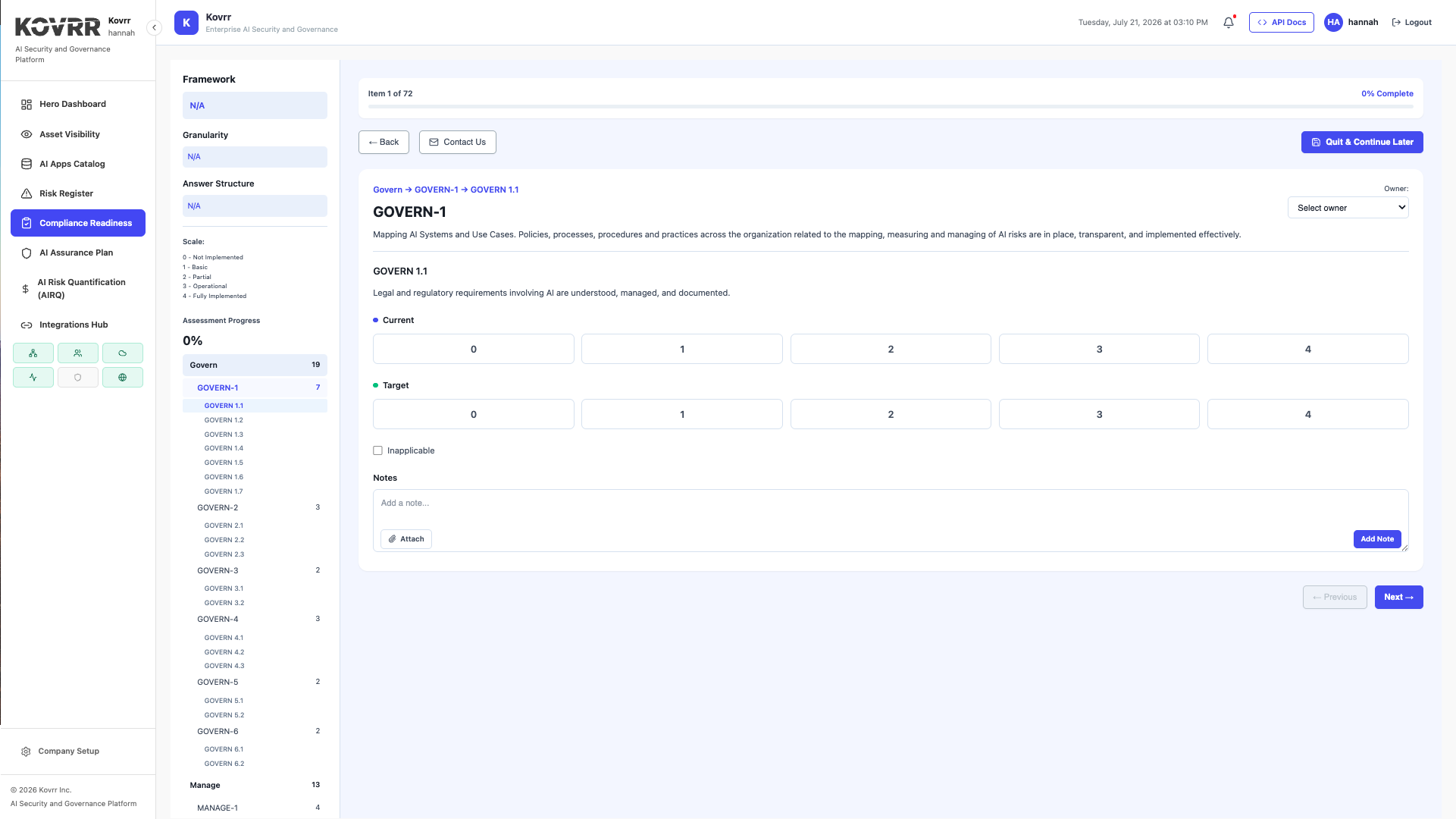
The recurring requests cover a system inventory with owners, impact assessments with completion dates, risk treatment decisions including accepted residual risk, model test results, monitoring records showing performance over time, incident reports with remediation, training records, internal audit reports and management review minutes. Each item is a record rather than a policy, which is the distinction organizations discover late.
Sampling Means Completeness Matters More Than Depth
Auditors select systems rather than reading everything, so a register missing one production system undermines the whole document in a way that thin documentation on a listed system does not. Building an AI asset inventory that reflects the actual estate is the single highest-value preparation, and it is the item most often incomplete.
Interviews Test Whether People Know Their Own Process
Auditors ask a control owner to describe what they do and compare the answer to the documented procedure. Divergence is a finding regardless of which version is better, since a documented process nobody follows and an effective process nobody documented both fail the same test. Confirming who owns each control before an audit prevents the most avoidable version of this.
Conformity Assessment Is a Different Procedure
The EU AI Act requires conformity assessment for high-risk systems, and it is a regulatory procedure rather than a certification audit. Most Annex III systems follow an internal control route where the provider performs the assessment itself and documents it, while certain categories require a notified body. Both produce a declaration of conformity and CE marking, and both rest on technical documentation prepared beforehand.
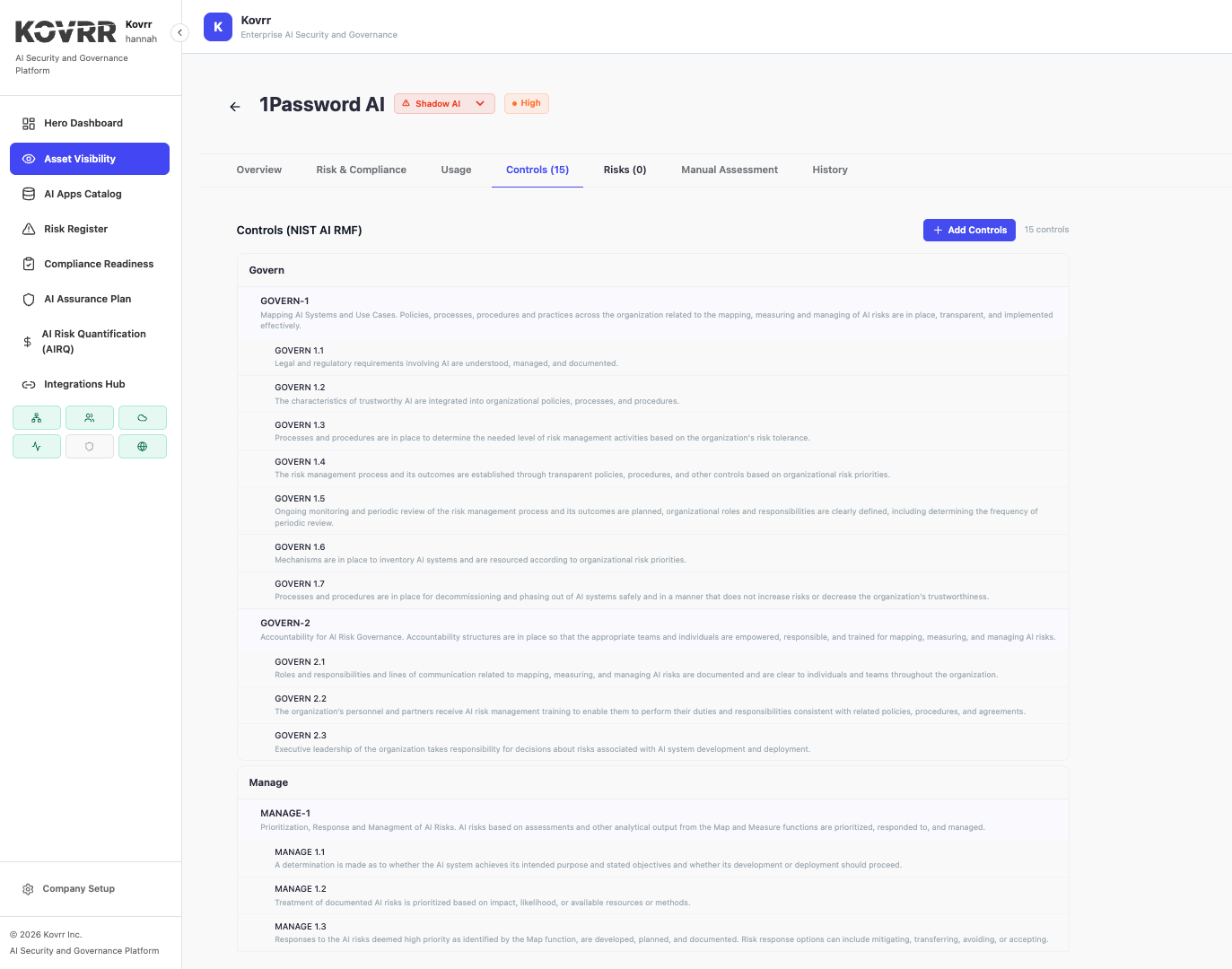
Certification against a management standard does not substitute for conformity assessment, because only harmonized standards cited in the Official Journal carry presumption of conformity and those remain in development. Evidence overlaps heavily, so the work is rarely duplicated, and the obligations facing security and GRC leaders separate the two procedures more precisely.
Regulator Examination Follows Neither Script
An examination arrives without a scope agreed in advance and samples what the examiner chooses. Preparation looks the same regardless, since a complete inventory, dated assessments, current ownership and a trail of decisions serve every audience. Programs treating framework preparation as one exercise rather than several handle the unscheduled version considerably better.
Where Organizations Lose Points
Findings cluster tightly across published accounts of AI management system audits, and the pattern is documentary rather than technical.
- Stale Risk Register: A register that exists but has not been updated since the systems in it changed.
- Scope Trouble: A boundary either undefined or drawn so widely the organization cannot evidence all of it.
- Absent Performance Review: No records showing deployed systems were monitored after go-live.
Unclear roles complete the set, where a control has a function named rather than a person and nobody appears for the interview. A thin Statement of Applicability sits alongside it, usually where controls were excluded without documented justification. Keeping the AI risk register current is the correction with the widest effect, since several other findings resolve as a byproduct.
Internal Audit Is a Requirement, Not a Rehearsal
The standard requires an internal audit of the management system annually, including before the first external stage one. Organizations treating it as optional arrive with no evidence that self-assessment happens, which is itself a nonconformity separate from whatever the internal audit would have found. Running it properly also surfaces the findings an external auditor would raise, at considerably lower cost.
Timeline and What Drives It
Six to twelve months from readiness assessment to certificate is typical, and organizations with a mature information security management system often reach three to four months because the structure and habits transfer. The variable is rarely documentation speed. Evidence that accumulates over time cannot be produced retroactively, so a control requiring quarterly monitoring records needs quarters to have passed.
Certification does not end the relationship. Surveillance audits run in years one and two at roughly a third of the initial effort, typically two to five days with a sampling approach, and recertification precedes expiry with two to three months of margin for corrective actions. Maintaining measurable governance between audits costs less than reconstructing it before each one.
Choosing the Certification Body Matters
Verify that the body holds accreditation listing the standard in scope, from a recognized accreditation authority. Comparing auditor qualifications and sector experience across several proposals is worth more than comparing price, since an auditor unfamiliar with AI systems produces findings that cost more to argue than to fix.
Reducing the Cost of Being Audited
Audit cost concentrates in evidence assembly rather than in the audit itself. Organizations generating records as a byproduct of operating spend the preparation window reviewing, while organizations reconstructing records spend it manufacturing.
Mapping obligations to evidence continuously rather than before each audit is the structural answer. An automated EU AI Act assessment that reads article by article and pulls evidence from connected systems produces auditor-facing output as a matter of course, and one organization moved from spreadsheets to audit-ready in weeks on that basis. Tracking readiness on a standing cycle keeps the position current rather than rebuilt before each audit.
One Evidence Base Serves Several Audiences
A certification auditor, a conformity assessment and a regulator examine overlapping evidence presented differently. Capturing it once against a normalized control set and reporting into each format avoids running parallel programs, which is what makes multi-framework compliance feel unbounded. Building AI assurance on that basis turns each audit into a reporting exercise rather than a project.
Auditability as an Operating Property
Audits test whether an organization does what it says, using records made at the time. Nothing about that is specific to AI, and what is specific is how recently most AI systems were deployed and how little of their history was recorded deliberately. Preparation therefore looks less like writing documents and more like fixing the inventory, naming owners and starting to keep records that will exist in six months. Kovrr's compliance readiness assessment produces those records against a live inventory rather than a point-in-time questionnaire.
To see which obligations your current evidence already satisfies and which need work before an audit, book a demo mapped to your own AI systems.

AI Compliance Audit FAQs
Speak to an ExpertWhat does an AI compliance audit involve?

What evidence do AI auditors ask for?
How long does AI certification take?
Is certification the same as EU AI Act conformity assessment?
What are the most common audit findings?
How do you reduce the cost of being audited?