
AI Impact Assessment
An AI impact assessment is a structured evaluation of the potential effects an AI system may have on individuals, groups, business operations, and regulatory obligations, conducted before or during deployment to identify and mitigate risks.
What an Impact Assessment Covers
An AI impact assessment goes beyond a technical risk assessment. It examines the AI system's intended use, the populations affected by its decisions or outputs, the potential harms if the system malfunctions or is misused, the fairness and bias implications, the privacy implications, and the regulatory obligations that apply.
Impact assessments are typically the first governance artifact produced during AI system intake and are updated when the system materially changes.
Why Impact Assessments Are Required
The EU AI Act requires fundamental rights impact assessments for high-risk AI systems used by certain deployers. Data protection law in most jurisdictions requires data protection impact assessments (DPIAs) for automated decision-making with significant effects. Sectoral regulators increasingly require AI-specific impact assessments in credit, employment, healthcare, and insurance.
Beyond compliance, impact assessments serve as the organization's own record of due diligence, useful in defending decisions if outcomes are challenged later.
Impact Assessment in an AI Program
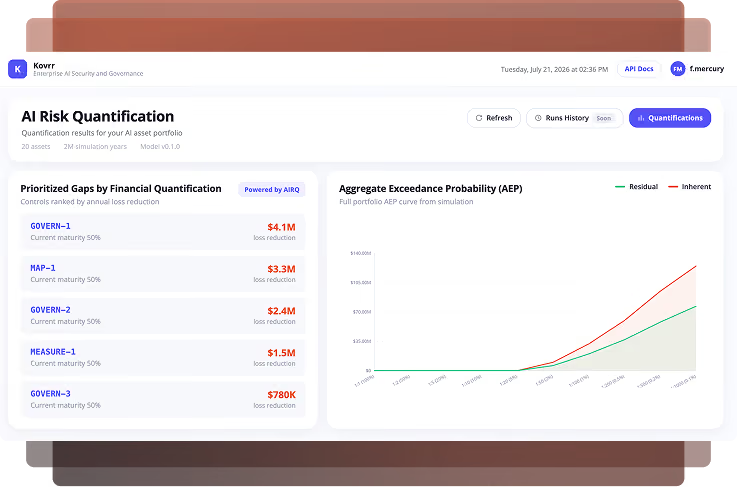
Impact assessments feed into the AI risk register, inform the choice of controls applied to a system, and produce assurance evidence for audit and regulatory purposes. See AI risk categorization and prioritization for effective governance for how assessments connect to risk prioritization.
Related Terms


Full AI Visibility. Full Control. One Connected Platform.
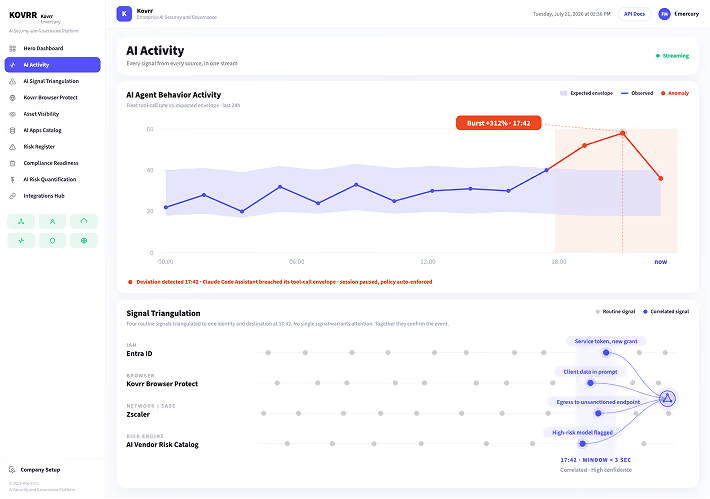
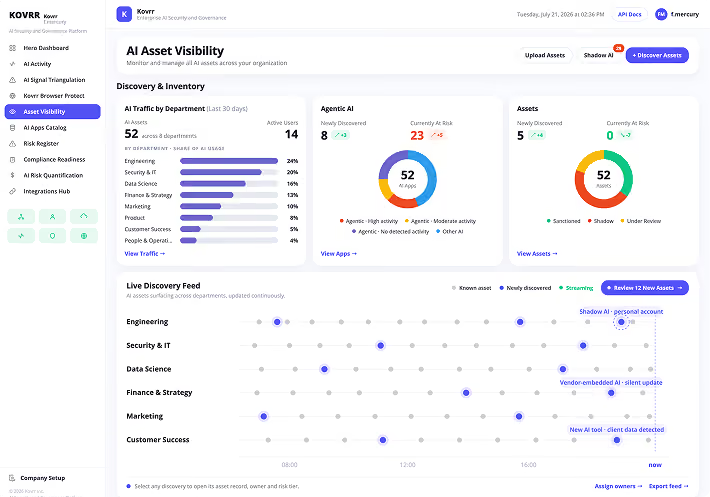
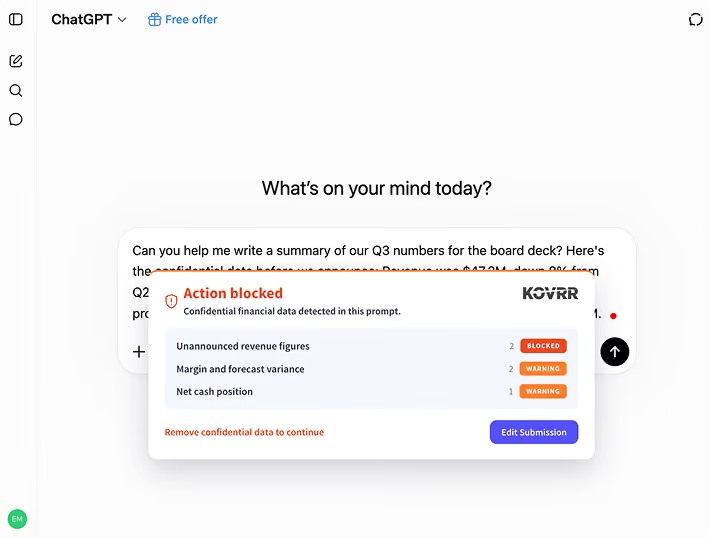
Enterprise AI is expanding faster than most governance programs can track. Kovrr connects every AI signal across browser, endpoint, network, identity, and vendor systems into a single platform so security, governance, and risk teams work from the same evidence.