
AI Fairness
AI fairness is the principle that AI systems should produce outcomes that do not unjustly discriminate against individuals or groups, particularly across protected characteristics like race, gender, age, and disability.
Defining Fairness in AI Terms
Fairness sounds intuitive but is technically complex. Multiple mathematical definitions of fairness exist, and they are often mutually exclusive. A system that satisfies one fairness definition can fail another. Which definition applies depends on the use case, the affected populations, the legal context, and the specific harm being guarded against.
Practical AI fairness work involves choosing a fairness framework appropriate to the use case, measuring the system against that framework, documenting the choice and the trade-offs, and monitoring for drift.
Why Fairness Is Both a Legal and Ethical Requirement
Anti-discrimination law applies to automated decisions in employment, credit, housing, insurance, and other regulated areas. Specific AI regulations like NYC Local Law 144 (for automated employment decision tools) impose fairness audit requirements. The EU AI Act treats fairness as a required control for high-risk AI systems.
Beyond compliance, fairness is a reputational and operational concern. Systems that produce discriminatory outcomes cause harm, invite litigation, and erode trust in the organization deploying them.
Fairness in an AI Governance Program
Mature programs address fairness at multiple lifecycle points: pre-deployment through AI impact assessments and bias testing, deployment through fairness-aware production monitoring, and post-deployment through periodic audits and incident response. The findings feed into AI assurance documentation.
Related Terms


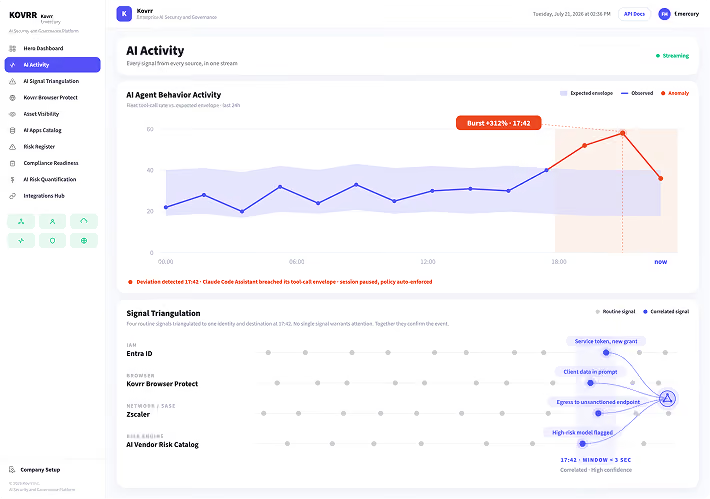
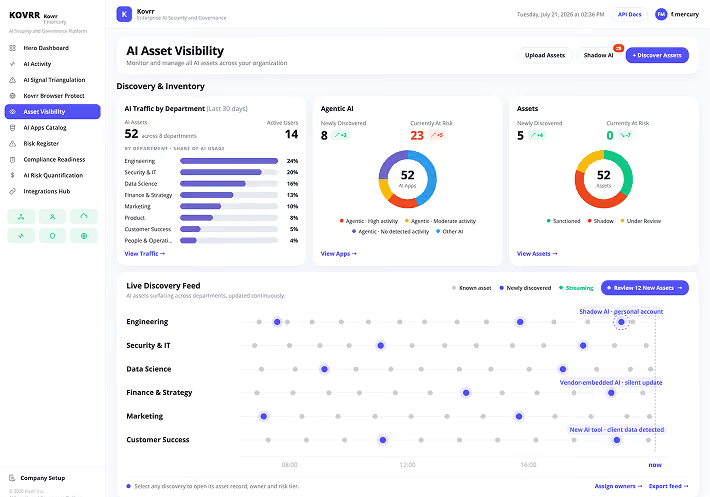
Full AI Visibility. Full Control. One Connected Platform.
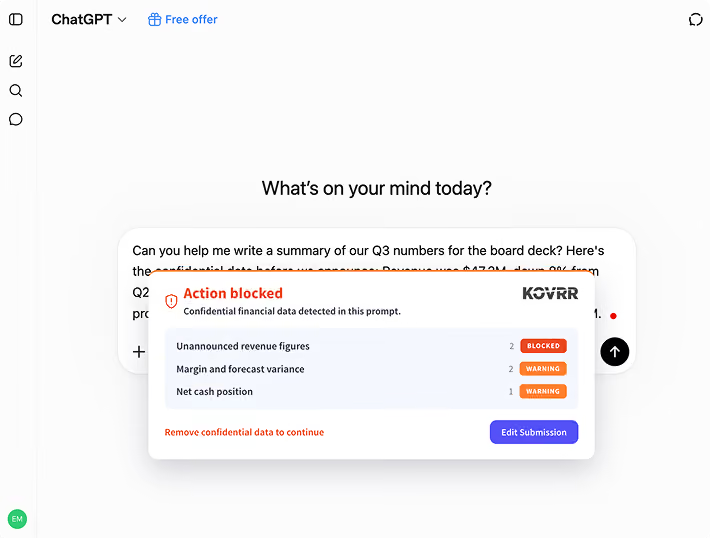
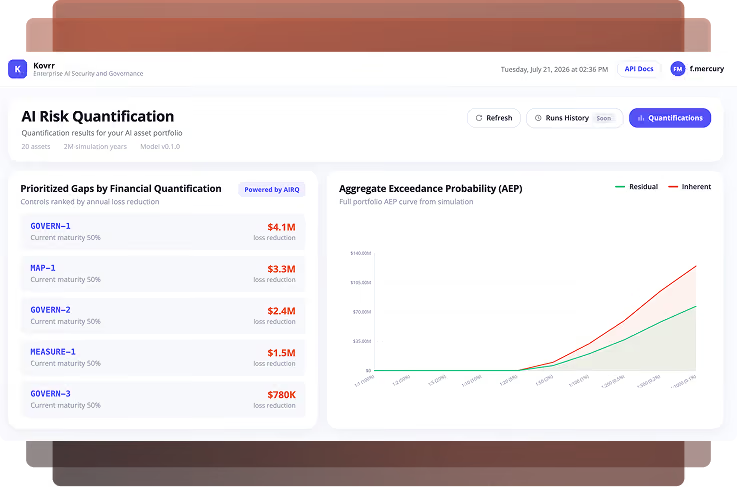
Enterprise AI is expanding faster than most governance programs can track. Kovrr connects every AI signal across browser, endpoint, network, identity, and vendor systems into a single platform so security, governance, and risk teams work from the same evidence.