
AI Bias
AI bias is systematic error in model outputs that produces unfair, inaccurate, or discriminatory results, often reflecting patterns present in training data, model design, or deployment context.
Where AI Bias Comes From
Bias enters AI systems at multiple points. Training data that overrepresents or underrepresents certain groups embeds those imbalances into the model. Labeling processes that carry human bias transfer that bias forward. Model architecture choices, evaluation metrics, and deployment context each add their own layers.
The result is that a technically well-performing model can still produce systematically unfair or inaccurate outputs for specific populations or use cases, even without any deliberate discrimination in its design.
Why Bias Is a Governance Issue
Bias in AI is not only an ethical concern. It is a legal, regulatory, and business risk. Anti-discrimination law applies to automated decisions in employment, credit, housing, and insurance in most jurisdictions. The EU AI Act treats bias mitigation as a required control for high-risk AI systems. Regulators in New York, Colorado, and California have imposed specific bias audit requirements on AI used for consequential decisions.
See AI regulations and frameworks: preparing for compliance and resilience for the broader regulatory context.
Managing Bias in an AI Program
Bias management typically includes bias testing at pre-deployment, ongoing monitoring for output drift once systems are live, documented evaluation of training data provenance and representation, and clear escalation paths when bias-related issues are detected. The output is captured in AI impact assessments and audit-ready documentation for AI assurance.
Related Terms


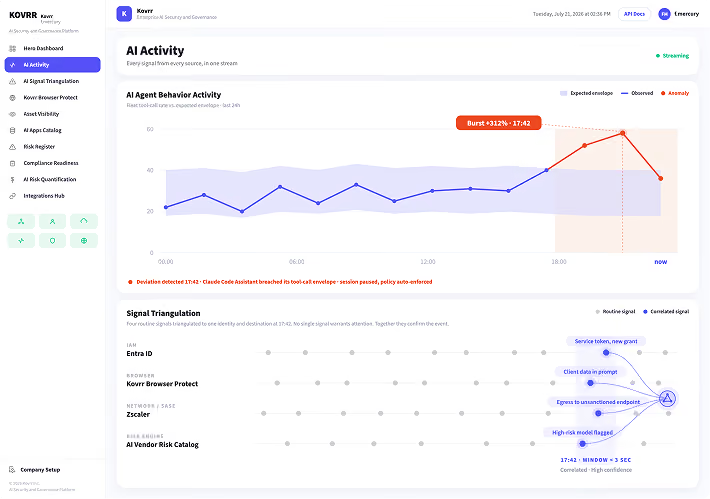
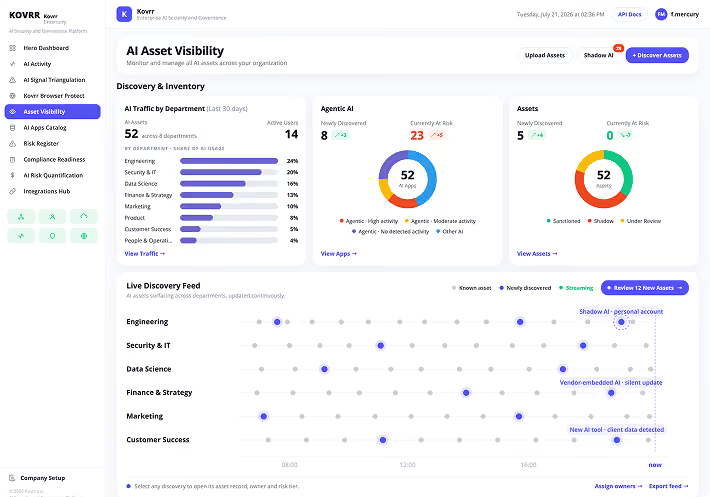
Full AI Visibility. Full Control. One Connected Platform.
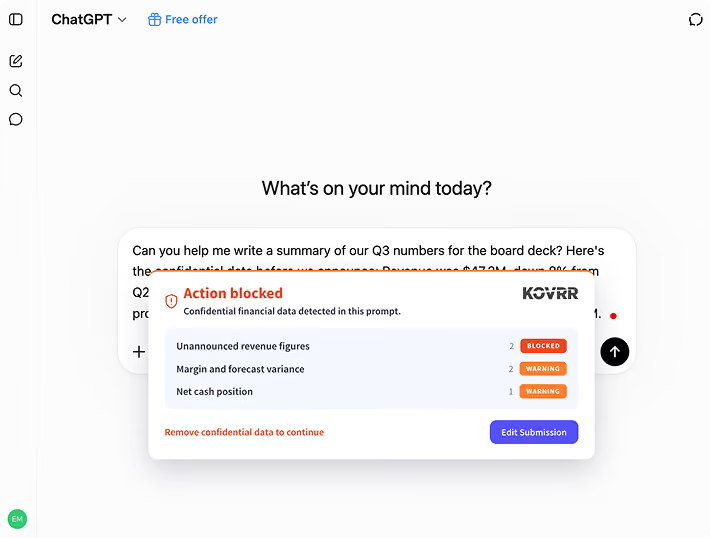
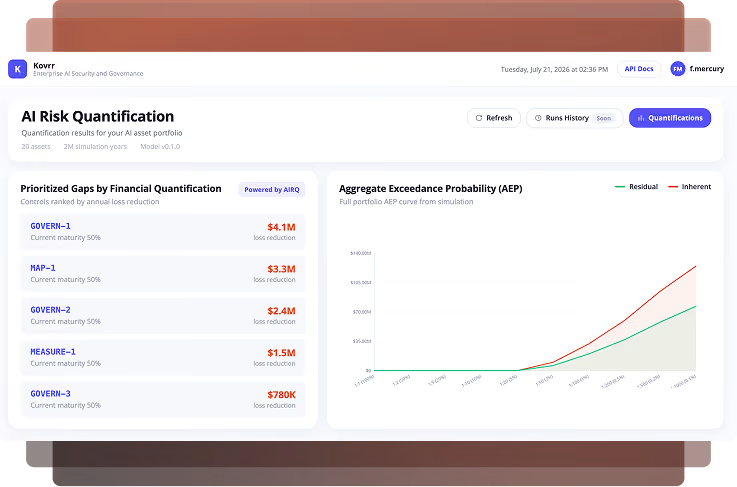
Enterprise AI is expanding faster than most governance programs can track. Kovrr connects every AI signal across browser, endpoint, network, identity, and vendor systems into a single platform so security, governance, and risk teams work from the same evidence.