Govern Every AI Agent Wherever It Operates
Autonomous agents authenticate, query systems, move data, and trigger actions without a person watching each step. Kovrr's AI Security and Governance Platform traces every one of those actions back to the named user who authorized the agent, monitors behavior continuously as it runs, and enforces the boundaries the organization has defined. Security and GRC teams govern agent activity against a full audit trail of every agent action, built from systems already in place and from telemetry Kovrr collects directly.
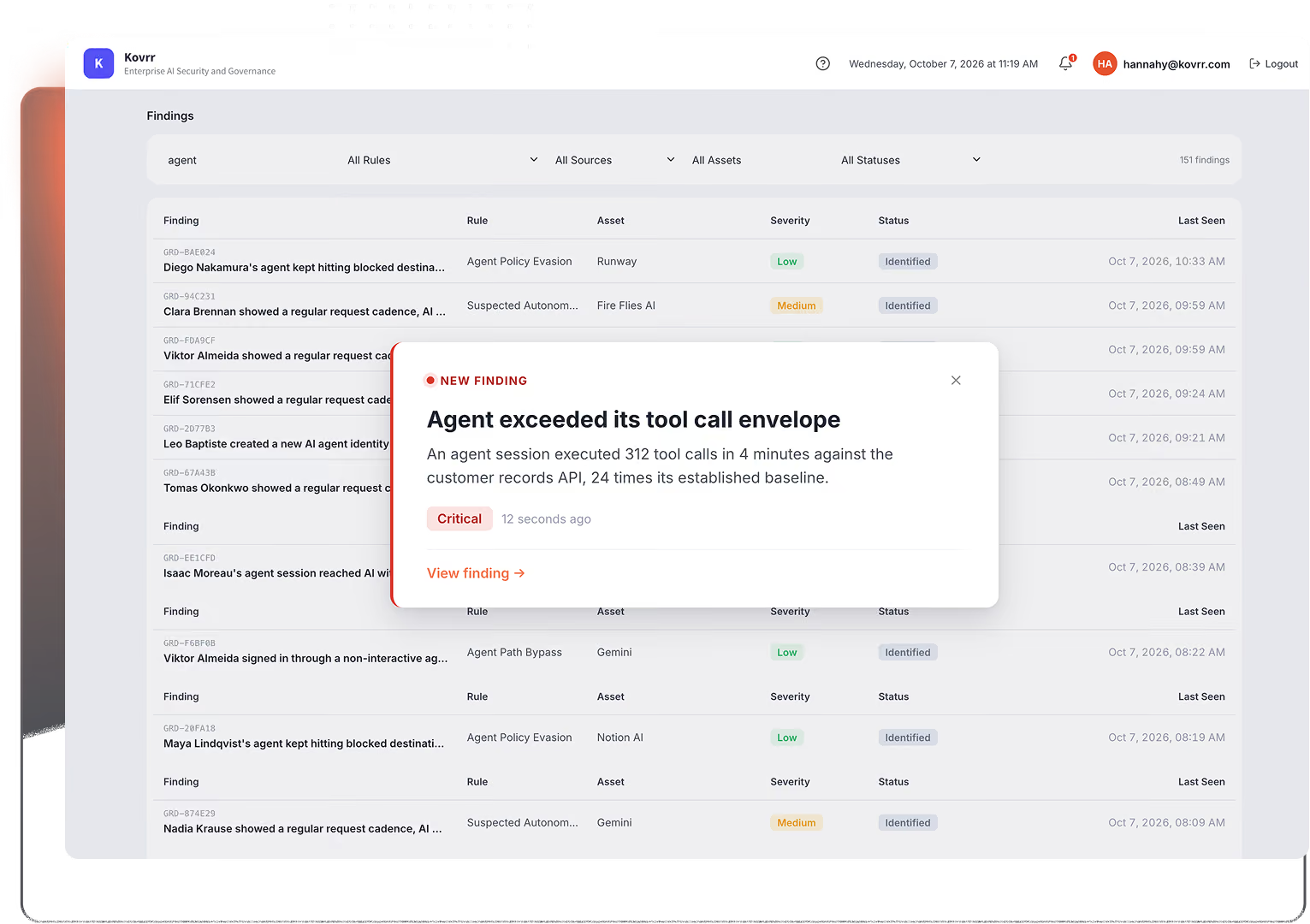

One AI Agent Action, Five Partial Records
An agent authenticates under a valid grant, reads data inside its authorized scope, and opens egress to an endpoint on no sanctioned list. Every source records something permitted. None records the sequence. Five routine events across 2.6 seconds, and triangulated they describe one agent exporting 45,000 customer records, traced to the engineer who authorized the token.
How Kovrr Governs AI Agent Activity
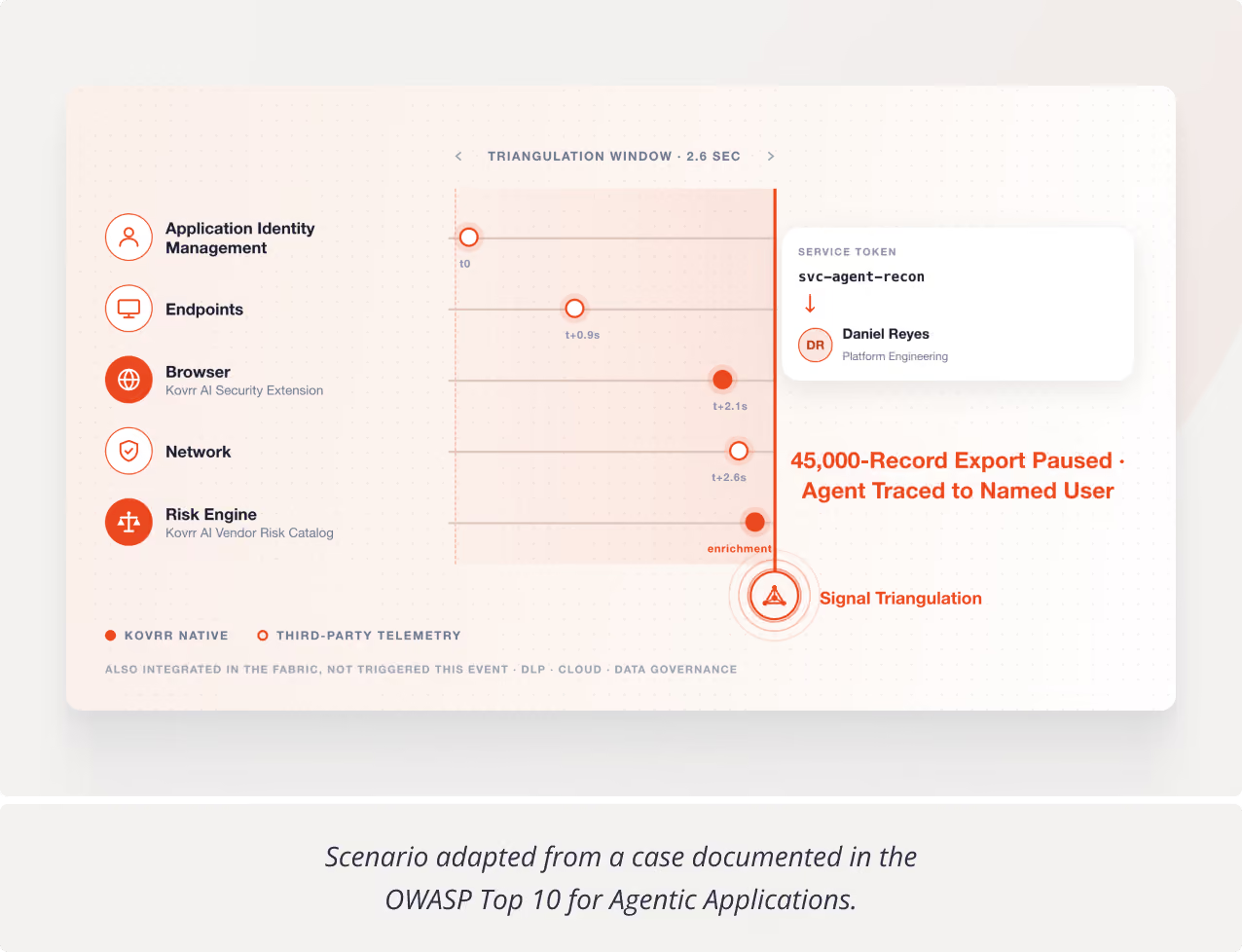
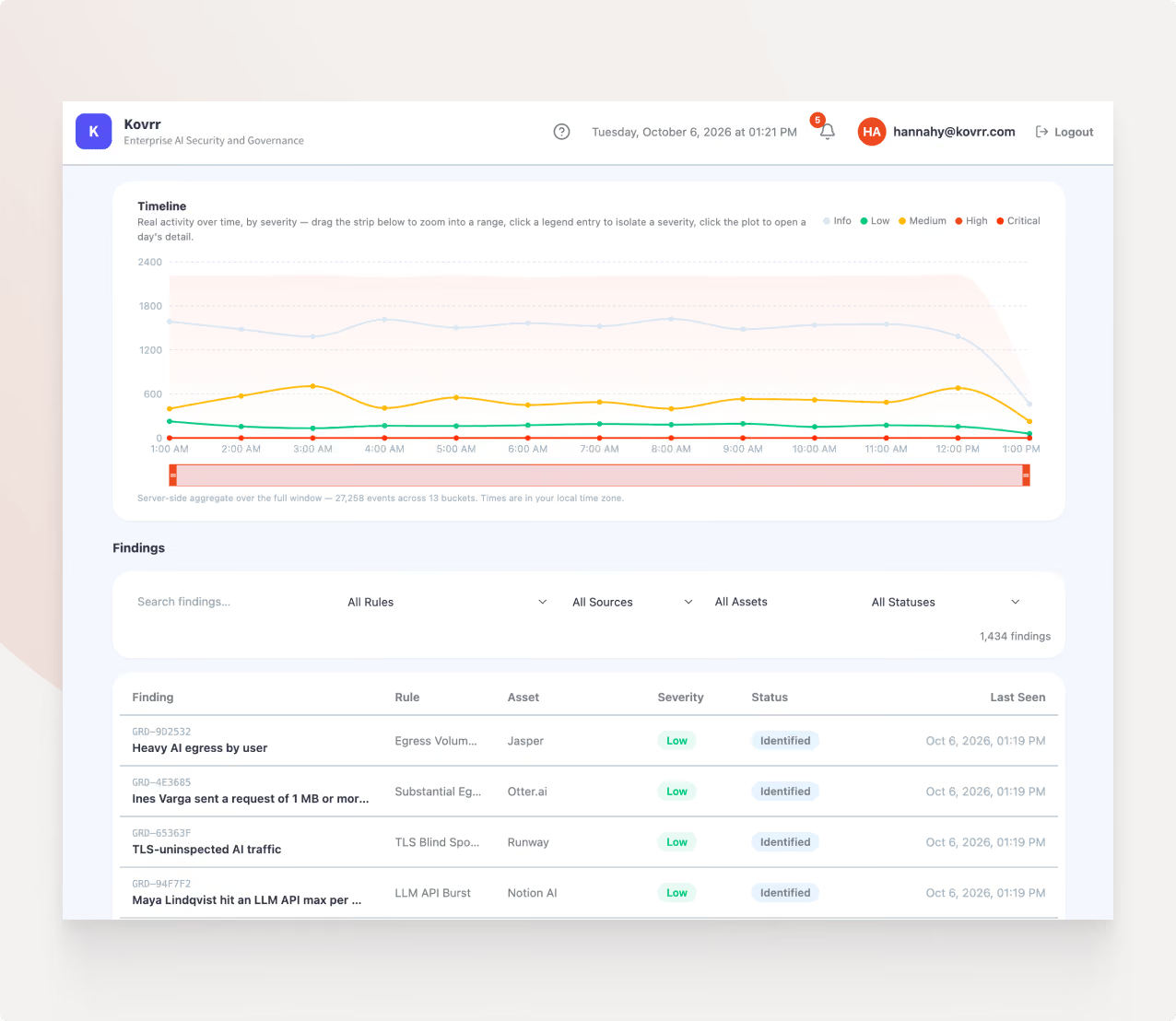
Kovrr collects and connects telemetry into one record of agent behavior, reconstructed as a sequence and attributed to a named user.
Named-User Attribution: Every agent action resolves to the person who authorized it, including departed employees.
Continuous Behavior Monitoring: Behavioral drift and multi-step risk chains surface as they emerge, not at review.
Permission Boundary Enforcement: Actions exceeding an agent's scope are identified against the boundary crossed.
Rogue Agent Detection: Agents operating without authorization are identified and traced to origin.
Data-Level Policy Actions: Each of 500+ data categories is set to block, warn, allow, or redact.
SIEM Integration: Agent events flow into existing security operations tooling and response workflows.
Monitoring Agent Activity Across Every Telemetry Source
Kovrr's AI Interaction Data Fabric Insights series traces the tokens, standing grants, and tool calls agents leave behind, naming what each telemetry source held and how the sequence resolved to a named user.

What Autonomous Agent Governance Delivers
AI Agent Governance FAQs
Schedule a DemoWhat is AI agent governance?
AI agent governance is the practice of maintaining accountability and control over autonomous agents operating inside an organization. It covers which agents exist, who authorized each one, what data each reaches, whether behavior stays inside authorized limits, and what exposure that activity creates. Kovrr's AI Security and Governance Platform supports each of these through continuous behavior monitoring, named-user attribution, and policy enforcement at the data level.
How does Kovrr attribute an agent action to a specific person?
The AI Interaction Data Fabric connects telemetry from identity, network, browser, endpoint, and connected applications. An authentication event ties a service account to the user who created it, and session and endpoint signals tie that account's activity to the machine and process that invoked it. Triangulated, these resolve an agent action to a named user. More on the underlying problem of why agent identity matters for AI security.
Why do existing security tools struggle with agent behavior?
Each tool observes one layer and records what passes through it. An identity provider records authentications without visibility into payloads. Network monitoring records destinations without visibility into what appeared on screen. An agent's activity crosses several layers in sequence, so each tool captures a fragment. This is the distinction between recording nodes and recording edges.
What happens when an agent exceeds its permissions?
Kovrr identifies the action against the boundary it crossed and surfaces the full sequence leading up to it. Data-level policy determines what happens to the data involved, with each category set to block, warn, allow, or redact. Events flow into existing SIEM tooling so response follows established workflows. Related reading on agent incident response and agent permissions and scoping.
Can Kovrr detect agents nobody reported?
Yes. Discovery runs from observed telemetry rather than self-reported inventories, so agents appear through their own activity. Agents created by individual employees, agents embedded inside sanctioned platforms, and agents still running after their authorizing user departed all surface through the signals they generate. See AI agent sprawl and how enterprises are controlling it, and the platform's AI Asset Visibility capabilities.
How does agent governance connect to financial exposure?
Observed agent behavior supplies structured inputs to AI Risk Quantification, which projects the financial impact of AI-related loss scenarios. Agent activity that crosses a boundary or reaches sensitive data becomes a modeled exposure figure rather than a severity label. Two worked examples, quantifying the risk of autonomous AI systems and pricing a ghost agent.