
Agent Permissions and Scoping
Agent permissions and scoping define the specific tools, data sources, and actions an AI agent is authorized to access, applying least-privilege principles to autonomous AI systems the same way they are applied to human users.
Why Agents Need Scoped Permissions
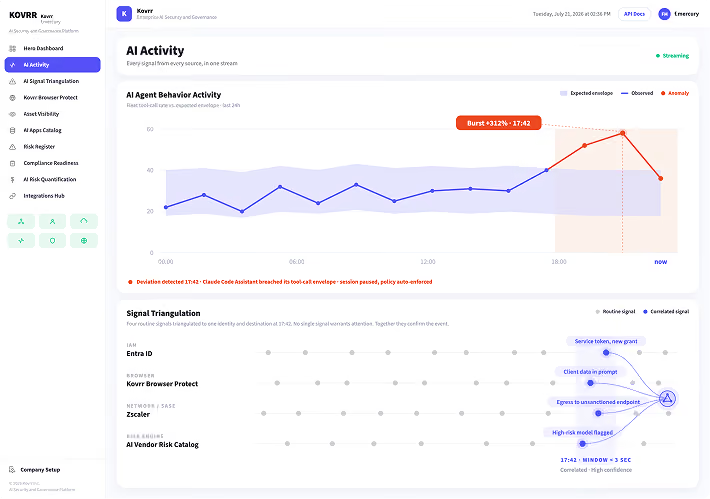
An AI agent is not a passive model. It calls tools, accesses data, executes actions, and often chains those actions together across multiple systems. Every capability granted to an agent is a capability an attacker can potentially exploit if the agent is compromised through prompt injection, tool poisoning, or a malicious upstream input.
Scoping is how organizations limit the blast radius of any single agent. An agent with broad access to email, drives, databases, and payment systems is a much larger exposure than an agent narrowly scoped to a single knowledge base and a single output channel, even if both agents are functionally similar.
What Scoped Permissions Look Like in Practice
Effective scoping covers four dimensions.
- Tool access: Which specific tools or APIs the agent can call, and under what conditions.
- Data access: Which data sources the agent can read from and write to, filtered by sensitivity and business unit.
- Action authority: Which actions the agent can execute autonomously versus which require human approval.
The security risks of AI agents in the enterprise grow directly with the breadth of permissions granted. Narrowing scope is one of the highest-leverage controls in an enterprise AI program.
Related to MCP and Tool Ecosystems
Permissions and scoping have become more complex with the Model Context Protocol (MCP) ecosystem, where a single MCP server often requests broad account-wide scopes rather than tool-specific ones. Enterprises using MCP typically need a separate control layer to enforce least-privilege boundaries the underlying protocol does not enforce natively.
Related Terms


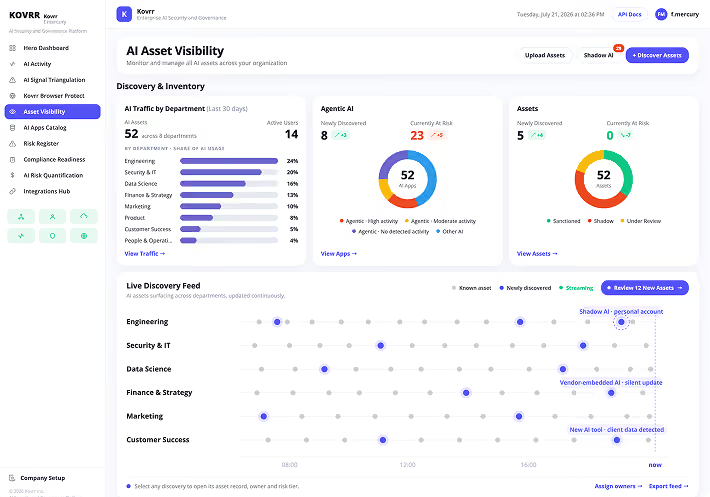
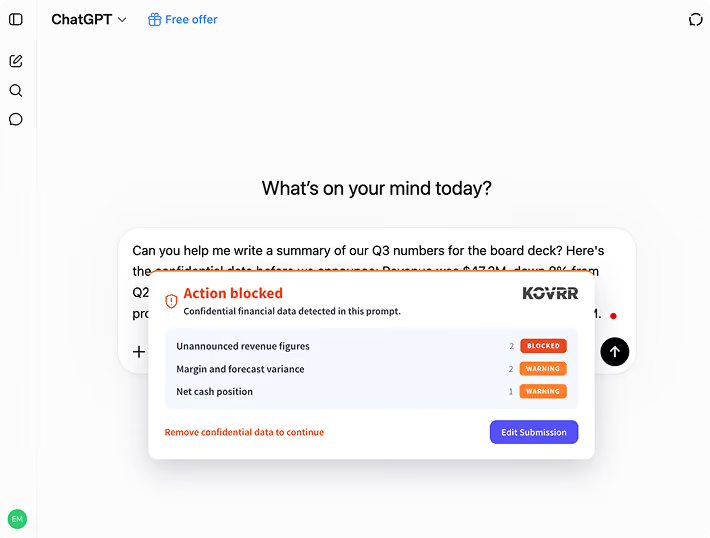
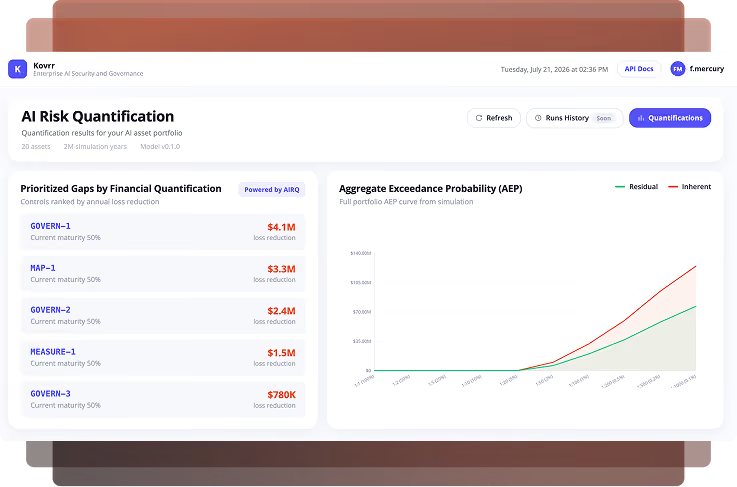
Full AI Visibility. Full Control. One Connected Platform.
Enterprise AI is expanding faster than most governance programs can track. Kovrr connects every AI signal across browser, endpoint, network, identity, and vendor systems into a single platform so security, governance, and risk teams work from the same evidence.