
Model Context Protocol (MCP)
Model Context Protocol (MCP) is an open standard developed by Anthropic that defines how AI systems connect to external tools, data sources, and services, enabling agents to access enterprise systems through a consistent interface.
What MCP Solves
Before MCP, connecting an AI agent to enterprise tools was custom work for each integration. MCP standardizes the interface. An MCP server exposes tools and data sources through a defined protocol, and any MCP-compatible AI client can connect to it. That standardization is what has accelerated agentic AI adoption in the enterprise.
MCP servers now exist for most major enterprise applications: email, drives, code repositories, ticketing systems, databases, and many more. Custom MCP servers can be built for internal systems.
Why MCP Matters for Governance and Security
MCP dramatically expands what enterprise AI agents can do, and consequently their blast radius. A single agent connected to a set of MCP servers can access a range of enterprise data and take actions across systems. That capability is what makes agents useful, and what makes MCP a governance and security concern.
See MCP security for the specific attack surfaces MCP introduces, and the security risks of AI agents in the enterprise for the broader implications.
MCP in Enterprise AI Programs
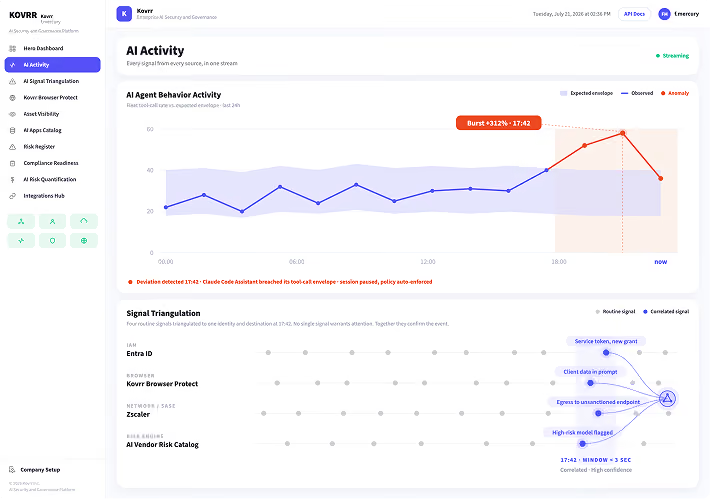
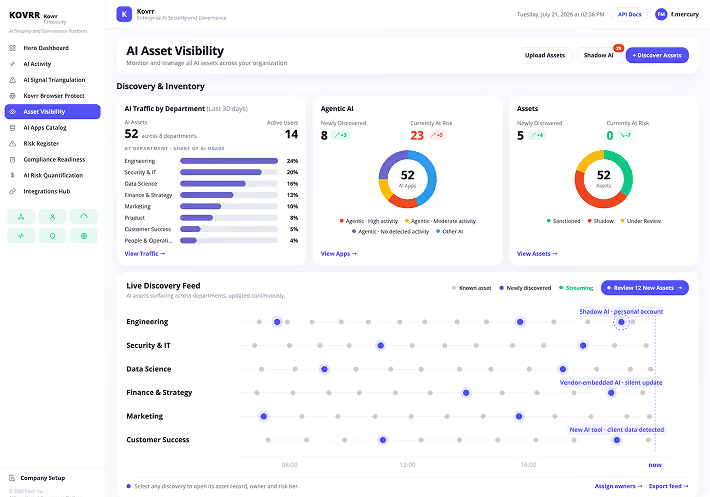
Effective AI programs treat MCP servers as first-class assets in the AI asset inventory, apply permission scoping at the MCP layer, and monitor MCP traffic as part of continuous AI monitoring. MCP servers are also subject to AI TPRM processes when provided by third parties.
Related Terms


Full AI Visibility. Full Control. One Connected Platform.
Enterprise AI is expanding faster than most governance programs can track. Kovrr connects every AI signal across browser, endpoint, network, identity, and vendor systems into a single platform so security, governance, and risk teams work from the same evidence.