
Continuous AI Monitoring
Continuous AI monitoring is the ongoing observation of AI system inputs, outputs, behavior, and performance in production, detecting model drift, misuse, security events, and control failures as they occur.
What Continuous Monitoring Actually Watches
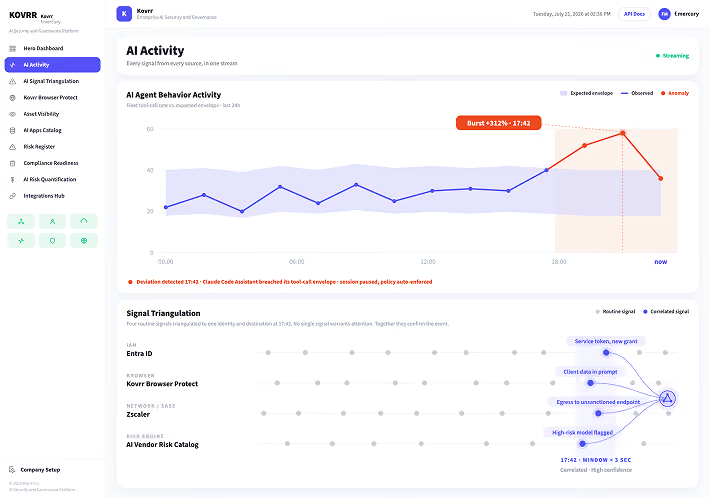
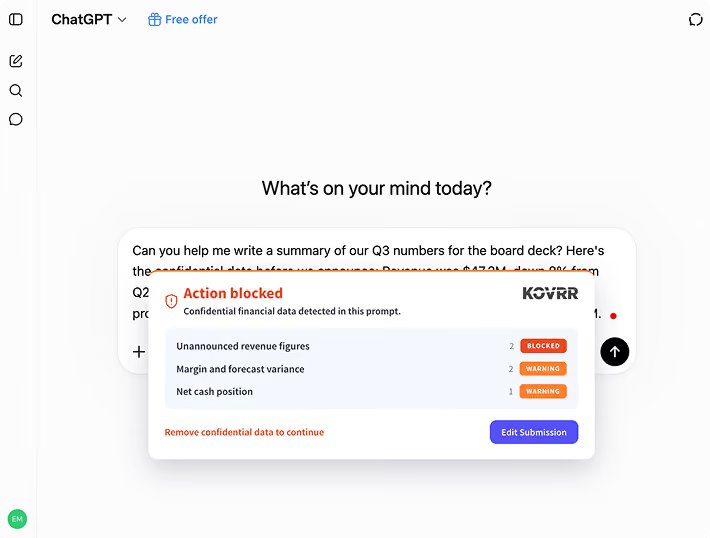
AI systems in production produce many signals that can indicate problems. Effective continuous monitoring covers input patterns (looking for anomalous or adversarial inputs), output distributions (detecting drift or degradation), decision consistency (identifying fairness or bias shifts), tool and action usage (for agentic systems, catching unexpected behavior), and control effectiveness (verifying that guardrails and filters are still functioning).
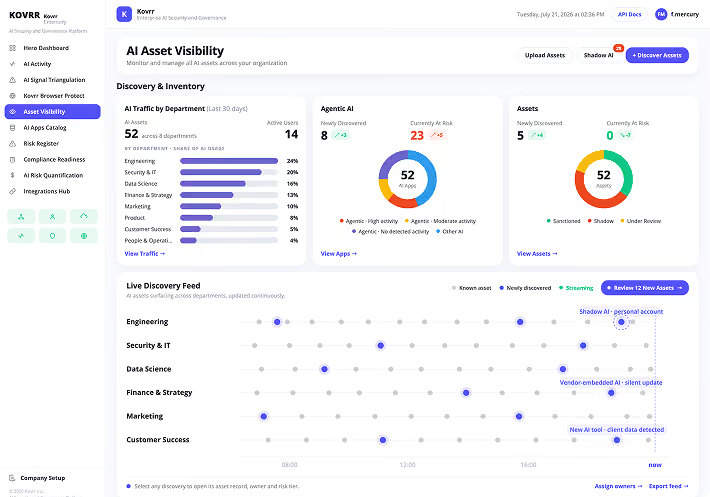
See how to discover, monitor, and manage shadow AI across the enterprise for the broader monitoring dynamic.
Why Point-in-Time Assessment Is Not Enough
An AI system that passed pre-deployment testing is not guaranteed to behave well in production. Real-world inputs surface failure modes that testing did not. Model providers push updates that change behavior. Retrieval sources shift over time. The system that was approved is not necessarily the system running today.
Continuous monitoring is how governance stays connected to actual system behavior rather than the system as designed.
Continuous Monitoring and Incident Response
Continuous monitoring feeds AI incident response. Detection is the first step in the incident response lifecycle, and for AI, detection typically depends on monitoring that traditional cyber tools do not provide.
How Kovrr Approaches Continuous AI Monitoring
Kovrr's AI Security and Governance Platform monitors AI systems continuously through connected telemetry across browser, endpoint, network, and identity layers, surfacing behavior changes, control drift, and security signals in near real time.
Related Terms


Full AI Visibility. Full Control. One Connected Platform.
Enterprise AI is expanding faster than most governance programs can track. Kovrr connects every AI signal across browser, endpoint, network, identity, and vendor systems into a single platform so security, governance, and risk teams work from the same evidence.