
AI Guardrails
AI guardrails are runtime controls that constrain an AI system's behavior during inference, blocking unsafe outputs, restricted actions, or policy violations before they reach users or downstream systems.
What AI Guardrails Actually Do
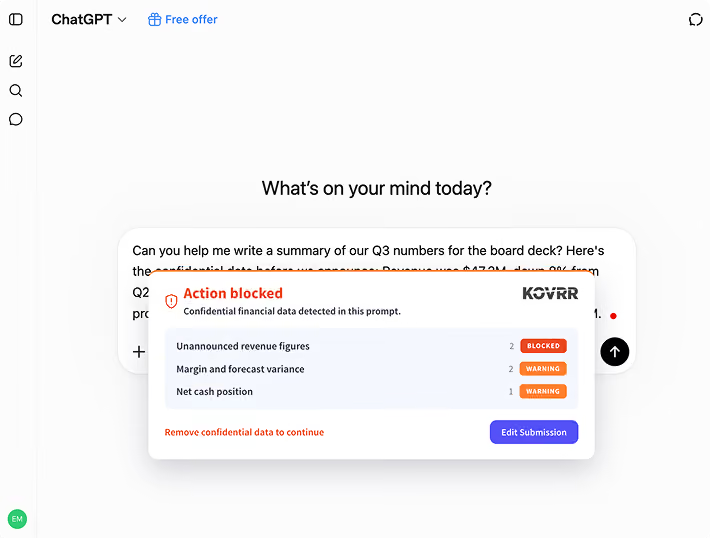
Guardrails sit between an AI model and its outputs, evaluating what the model produces and applying policy rules before the output is delivered. Depending on the implementation, guardrails may filter for sensitive data leakage, block specific action categories, redact information that should not appear in outputs, or halt agent actions that violate defined policies.
Guardrails are runtime controls. They complement pre-deployment testing but do not replace it. A model that has been thoroughly adversarially tested still needs guardrails to catch the failure modes testing did not surface.
Why Guardrails Matter for Enterprise AI
Enterprise AI systems, particularly LLMs and agentic AI, produce outputs and take actions in real time based on unpredictable inputs. No amount of pre-deployment testing eliminates the possibility of unexpected behavior. Guardrails are the runtime layer that catches unexpected behavior before it becomes an incident.
Common enterprise guardrail categories include PII filters that catch sensitive data in outputs, action approval gates for high-impact agent actions, content policy filters that block prohibited output types, and jailbreak detection that catches known adversarial patterns.
Guardrails in AI Governance Programs
A mature AI governance program requires guardrails on production AI systems with meaningful business impact, defines minimum guardrail specifications by risk tier, and monitors guardrail effectiveness continuously rather than assuming they work.
Related Terms


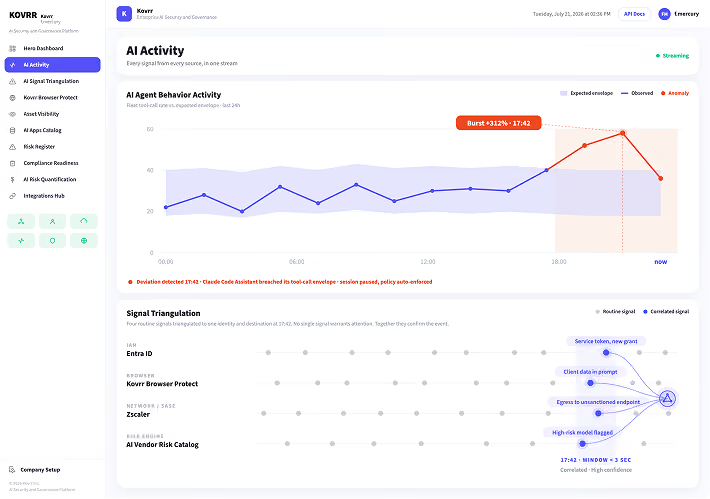
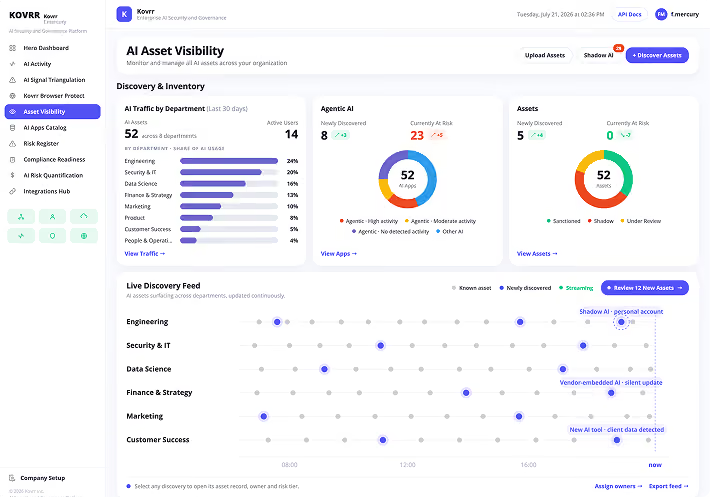
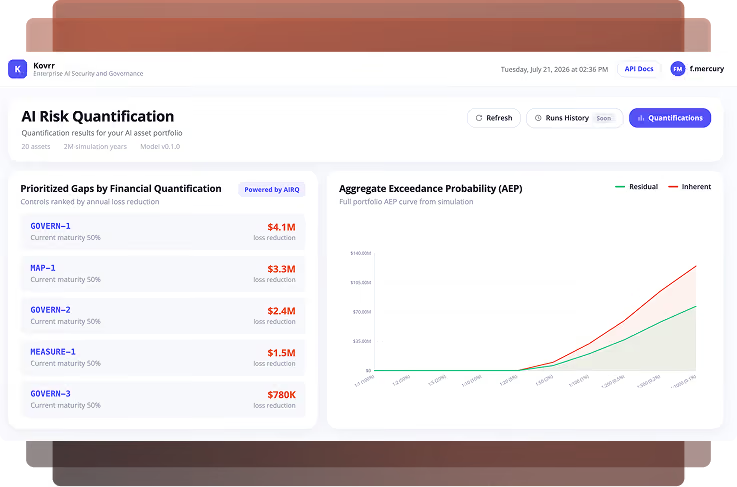
Full AI Visibility. Full Control. One Connected Platform.
Enterprise AI is expanding faster than most governance programs can track. Kovrr connects every AI signal across browser, endpoint, network, identity, and vendor systems into a single platform so security, governance, and risk teams work from the same evidence.