
Prompt Injection
Prompt injection is an attack in which crafted input causes an AI model to follow attacker-controlled instructions instead of, or in addition to, the developer's intended instructions.
How Prompt Injection Works
LLMs and LLM-based systems typically operate on a mix of developer-supplied instructions (the system prompt), user input, and content retrieved from other sources. Prompt injection exploits the fact that the model does not reliably distinguish between these input categories. Instructions embedded in user input or retrieved content can override, subvert, or extend the developer's intended behavior.
Direct prompt injection happens when the attacker sends the malicious prompt to the model. Indirect prompt injection happens when the malicious instructions are embedded in content the AI encounters through some other path.
Why Prompt Injection Is a Top Enterprise Concern
Prompt injection is consistently identified as one of the most significant risks for enterprise AI. It affects nearly every LLM-based system, has few reliable defenses, and can trigger consequences ranging from data leakage to unauthorized actions in agentic systems.
See the security risks of AI agents in the enterprise and how organizations should prioritize AI security risks.
Defenses Against Prompt Injection
No defense fully eliminates prompt injection. Effective mitigation combines several layers: treating all untrusted content as untrusted (not authoritative), applying strict permission scoping so successful injection has bounded consequences, using guardrails that filter for known patterns, and monitoring for anomalous model behavior.
Related Terms


Full AI Visibility. Full Control. One Connected Platform.
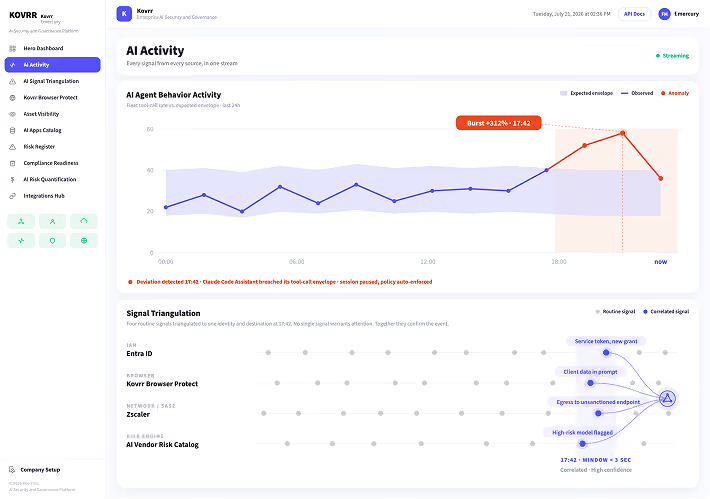
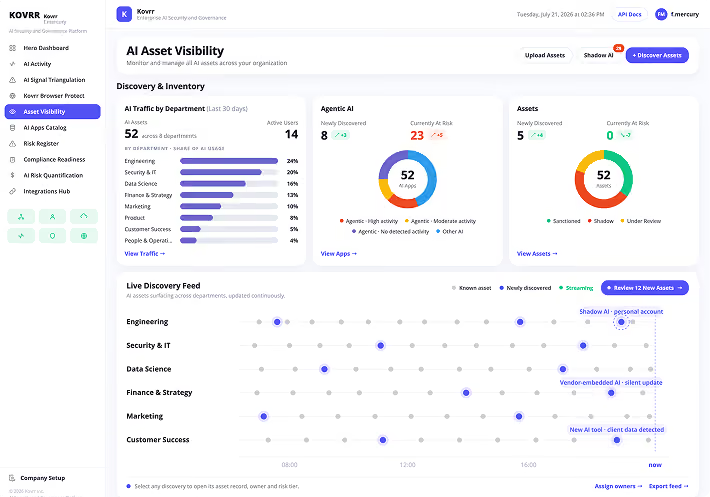
Enterprise AI is expanding faster than most governance programs can track. Kovrr connects every AI signal across browser, endpoint, network, identity, and vendor systems into a single platform so security, governance, and risk teams work from the same evidence.