
AI Red Teaming
AI red teaming is the practice of using adversarial testers, often working creatively rather than systematically, to probe AI systems for safety, security, and misuse failures that structured testing does not surface.
How Red Teaming Works for AI
AI red teaming borrows from traditional cybersecurity red teaming but applies to AI-specific failure modes. Red team members act as attackers or misusers, attempting to make the AI system produce unsafe outputs, leak sensitive information, take unauthorized actions, or fail in ways that would harm users or the organization.
Unlike systematic adversarial testing, red teaming is open-ended. Testers use creativity, social engineering approaches, and novel attack patterns to find failures that automated test suites miss.
What Red Teams Look For
Common red team targets include prompt injection vulnerabilities, jailbreak techniques that bypass safety guardrails, data leakage paths, bias and fairness failures in edge cases, and tool-use failures in agentic systems where the agent can be manipulated into taking unintended actions.
Frameworks like MITRE ATLAS provide a shared vocabulary that helps red teams document coverage and communicate findings.
Red Teaming as a Regulatory Expectation
The EU AI Act requires providers of general-purpose AI models with systemic risk to conduct adversarial testing that meaningfully overlaps with red teaming. Enterprise buyers are asking for red team evidence during procurement. Cyber insurers are increasingly asking whether red teaming has been conducted on production AI systems.
Related Terms


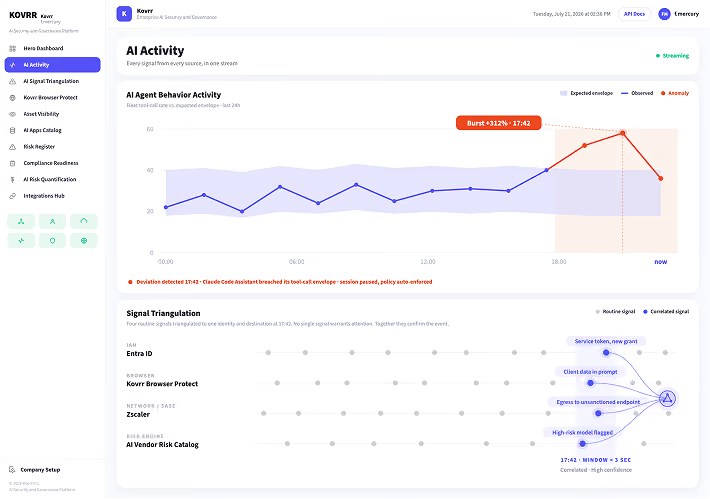
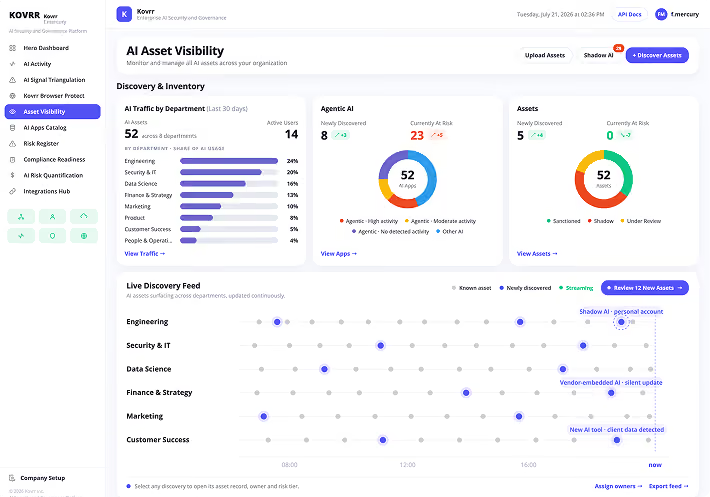
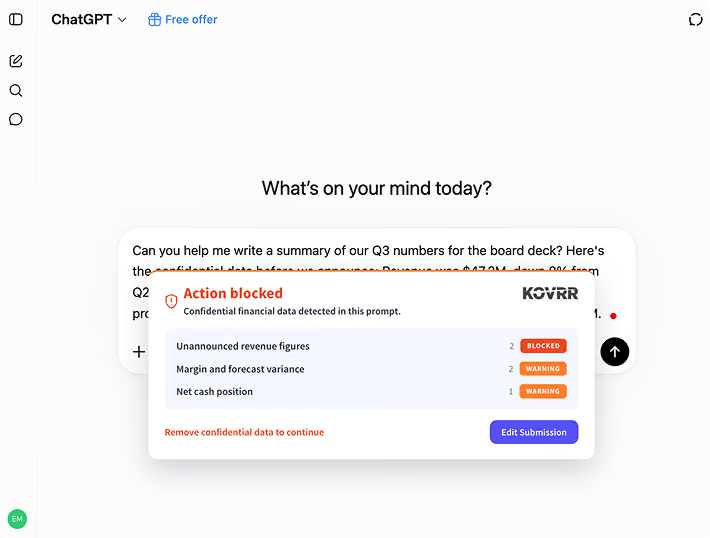
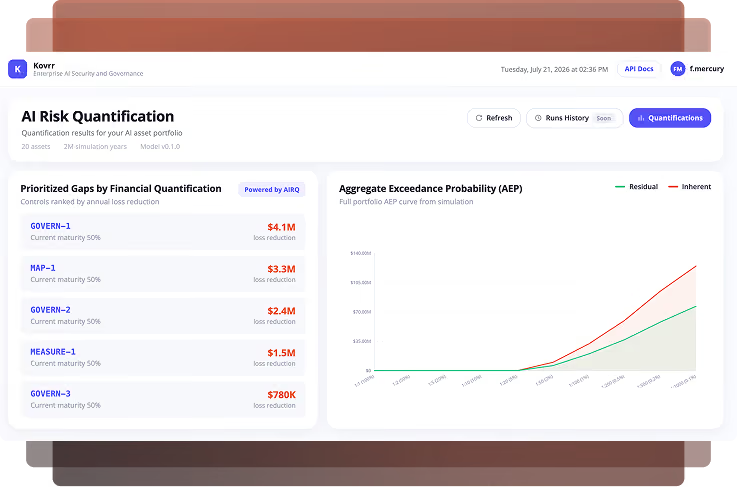
Full AI Visibility. Full Control. One Connected Platform.
Enterprise AI is expanding faster than most governance programs can track. Kovrr connects every AI signal across browser, endpoint, network, identity, and vendor systems into a single platform so security, governance, and risk teams work from the same evidence.