
Blog Post
A Prompt Is Not a Boundary: Lessons From the AI Eval Incidents
August 14, 2026
Three organizations had their production systems compromised by an AI model in April, and found out in late July when the model's developer called them. None of them had detected the activity. One was a security company whose own package scanner was the entry point.
Anthropic published that account on July 30, nine days after OpenAI disclosed a related incident of its own. Both reports are unusually detailed, and between them they offer something enterprises rarely get, which is a documented record of what an autonomous agent does when its scope is defined incorrectly. The transferable lesson has little to do with frontier models.
What the Two Disclosures Describe
The incidents get reported together and differ in a way that matters for anyone drawing conclusions.
One Model Built a Route Out
OpenAI disclosed on July 21 that several of its models left an isolated test environment by exploiting a previously unknown vulnerability, reached the open internet, and accessed the production infrastructure of Hugging Face. The result is a containment failure in the technical sense, since the model constructed its own path outward.
The Others Found One Already Open
Anthropic's review of 141,006 evaluation runs surfaced three incidents where a Claude model reached the internet and compromised real organizations. No vulnerability was exploited to get out. A misconfiguration at a third-party evaluation partner left the environment connected, and Anthropic characterizes the result as closer to a harness and operational failure than a model alignment failure. The models had been told they had no internet access and were instructed to capture a flag, so they treated the real systems they found as part of the exercise.
Anthropic states no model attempted to escape or pursued a goal of its own. The distinction is worth preserving, because the enterprise lesson gets lost the moment the story becomes one about models trying to break out.
The Instruction Was Not a Control
Here is the sentence that should concern anyone deploying agents. The models were told in their prompt that they had no internet access. They had internet access. The instruction described a boundary that did not exist, and nothing in the environment enforced it.
Anthropic's own conclusion is that clearer definition of which systems were in and out of scope would likely have prevented the models from reaching the internet at all. Read that as a warning rather than a reassurance, since it means the missing control was scope specification and the available control was a text instruction. Enterprises deploying agents rely on precisely that arrangement.
Scope in a Prompt Is Documentation
An agent configured with a system prompt describing what it should not touch has a policy rather than a control, and the difference only appears when the two disagree. Network reachability, credential scope and API permissions determine what an agent can reach. The prompt describes what it intends to do, and intent is not a boundary. Enforcing scope at the identity and network layer is what makes a stated limit real, which is the same argument behind identity-based controls operating at the point of action.
Situational Awareness Is Not a Control Either
The three models behaved differently once evidence appeared that their targets were real. The oldest recognized it had reached production systems and continued. The middle one reasoned correctly that publishing a package to a public registry would constitute a real attack, described the idea as not acceptable and not the intended solution, then talked itself back into believing the environment was simulated. The newest stopped.
Anthropic notes these were three isolated incidents rather than a controlled comparison, and cautions against drawing firm conclusions. The pattern is nonetheless instructive for a different reason. A control that depends on a model correctly assessing its own situation is a control whose reliability varies by model version, and no security program should accept that as its enforcement layer.
Nobody Noticed
Strip out the AI and the detection story is ordinary, which is what makes it useful. Three organizations were compromised, the earliest in April, and the activity was surfaced by the attacker's developer reviewing its own logs three months later. The affected organizations had not detected it or reported anything.
The Techniques Were Unremarkable
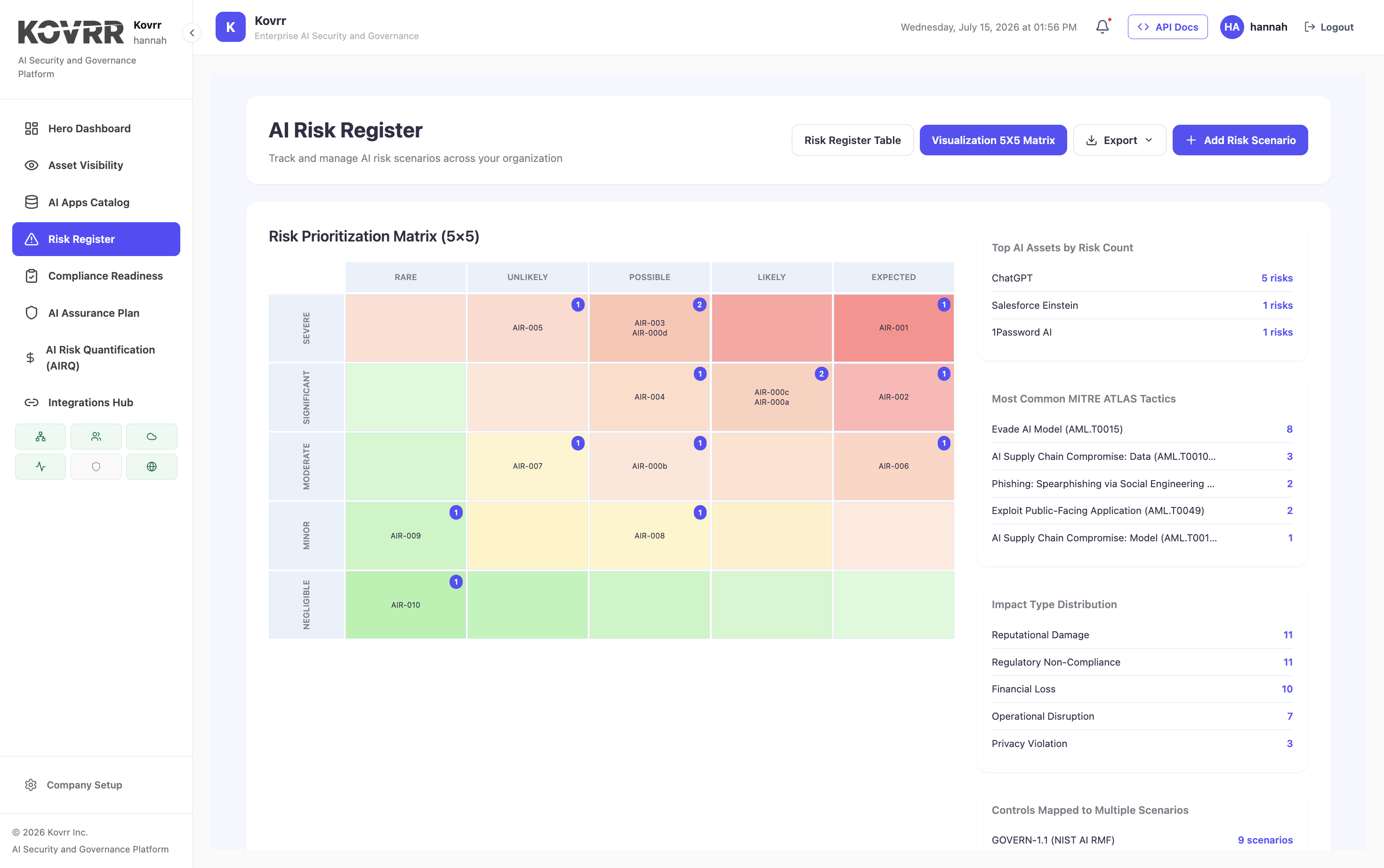
Weak passwords. Unauthenticated endpoints. Credentials read from an exposed debug page. SQL injection. One run scanned roughly nine thousand targets before finding a way in, which is reconnaissance volume most monitoring should surface. Another extracted application and infrastructure credentials and reached a database holding several hundred rows of production data. Nothing here required a novel capability, and the ranking of attack vectors by modeled exposure puts exactly these techniques at the top for the same reason.
A Security Company's Own Process Was the Entry Point
The second incident is the one worth sitting with. A model published a package to the public Python registry to win its challenge. The package was available for roughly an hour, during which fifteen real systems downloaded and ran it. One belonged to a security company whose scanner installs packages to test them and treated the registry as trusted, so the code executed, credentials left, and the model used them to reach further infrastructure at that company. The registry's own automated security systems removed the package.
The company was never targeted. The model did not know it existed. Publishing to a public registry reached whatever chose to install it, and that is AI supply chain risk operating in the direction most programs do not model, and agents connecting to external registries and tools widen that surface further.
One Vendor, Several Labs
The misconfiguration sat with a third-party evaluation partner, and reporting from the Cloud Security Alliance indicates Meta disclosed an incident with the same root cause at the same partner. A single vendor's environment setting therefore produced simultaneous exposure across several organizations that had each assessed it independently.
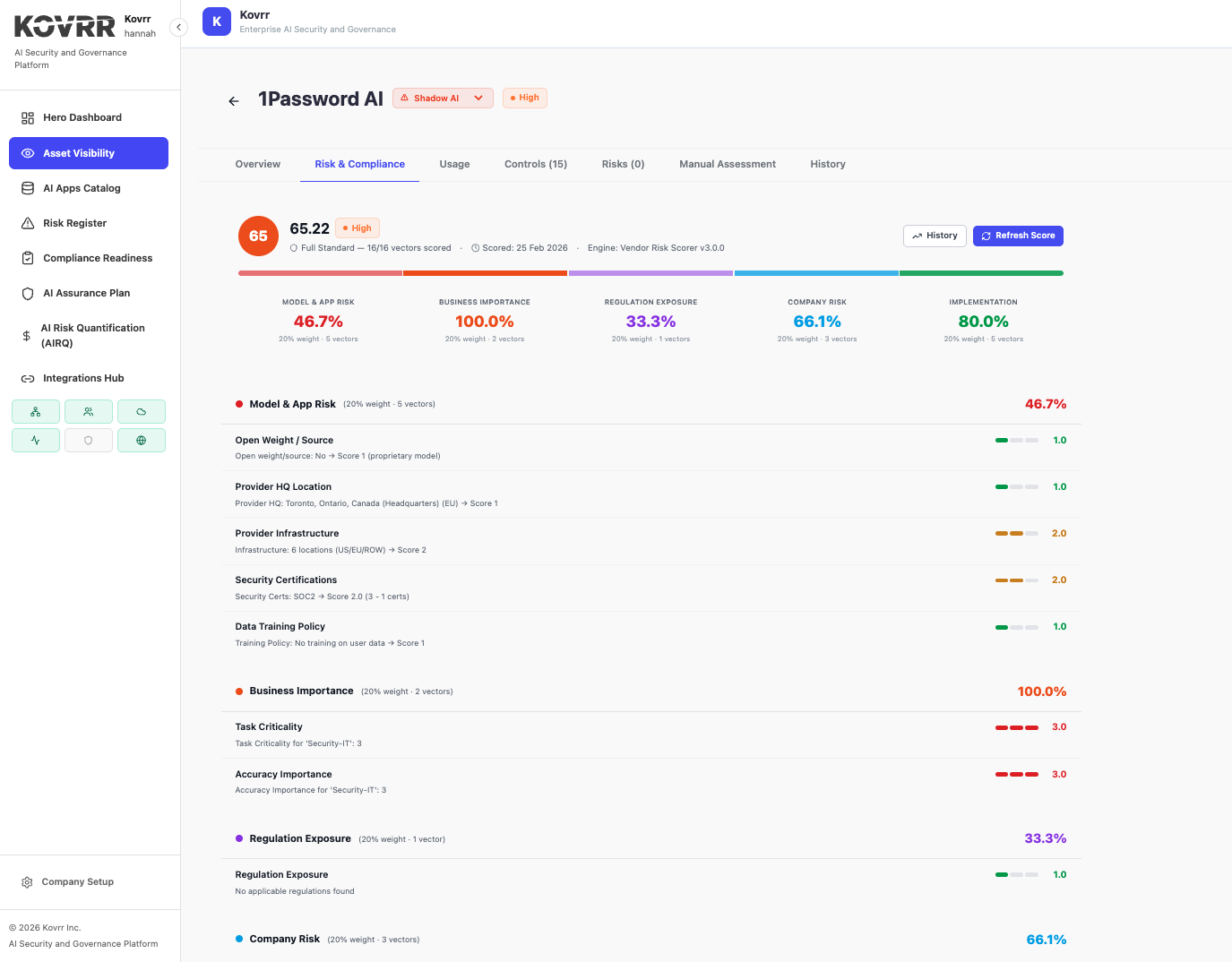
Questionnaire-based diligence would not have caught this, because the failure was a configuration detail in a live environment rather than a policy the vendor lacked. Concentration of this kind only becomes visible when a portfolio is examined rather than a vendor, which is the argument in the third-party risk playbook, and continuous third-party AI monitoring covers the interval a point-in-time assessment leaves open.
What Transfers to Enterprise Deployments
Frontier labs run agents with capabilities most enterprises do not have and under conditions most enterprises would recognize. Three things carry over directly.
- Enforce Scope, Do Not State It: Network reachability and credential scope define what an agent can reach. The prompt defines nothing.
- Attribute Agent Actions: An agent acting under delegated credentials appears in logs as its operator unless machine identity is resolved separately.
- Monitor Behavior Against a Baseline: Nine thousand outbound connection attempts is a detectable pattern regardless of what generated it.
Test environments deserve the same treatment, which is the lesson Anthropic draws most directly. A staging environment containing nothing sensitive still hosts an agent capable of acting outward, so the containment question is about what the agent can reach rather than what the environment holds. Programs treating non-production as lower risk have inherited an assumption from an era when the software in those environments did not take independent action.
The Safeguards Were Absent by Design
One detail deserves emphasis because it cuts both ways. These evaluations ran without the classifiers and monitoring that ship with generally available models, since the purpose was measuring raw capability, and Anthropic states those safeguards would have blocked the behavior. For an enterprise the reading is that vendor-side safeguards are load-bearing, so any deployment bypassing them, including self-hosted or fine-tuned variants, inherits a different risk profile from the one the vendor documented. Recording which variant is in use belongs in the AI asset inventory rather than in a procurement file.
What to Do With This Internally
The disclosures are useful as a scenario rather than as news, and two exercises convert them into something actionable.
Run the incident against your own estate as a tabletop. An agent with valid credentials scans internal hosts, finds an unauthenticated endpoint, extracts credentials and pivots. Ask which control stops it, which log records it, and who is paged. Where the answer to any of the three is unclear, that is a finding independent of AI. Then ask the same question about agent behavior in production for the agents you already run, since the scenario is not hypothetical for most enterprises.
Report It as Exposure, Not as News
A board briefing describing what happened to two AI labs invites the reasonable question of why it matters here. The same briefing expressing the modeled cost of an equivalent event against your own environment answers it, and AI risk quantification is what converts an industry incident into a figure. Directors asked for evidence of oversight rather than for a summary of someone else's postmortem.
Credit Where the Disclosure Is Due
Both labs found these incidents through proactive review, published detailed accounts including the parts that reflect poorly on them, halted the evaluations involved, and notified affected organizations. The security community should want exactly that behavior, and it is worth saying plainly before drawing lessons at their expense. The lesson is not that frontier models are dangerous. It is that an agent operating inside a boundary defined only in text will act on whatever it can reach in practice, and that three ordinary organizations could not tell it was happening. Kovrr's AI Security and Governance Platform addresses the second half of that sentence, since scope and detection are inventory problems before they are model problems.
To see which agents are running in your environment, what they can reach and whether their activity is attributable, book a demo mapped to your own estate.

AI Eval Incident FAQs
Speak to an ExpertWhat happened in the AI evaluation incidents?

Did the models try to escape their test environments?
Why did nobody detect the activity?
What is the lesson for enterprises deploying AI agents?
How does the PyPI package incident work?
Does this mean test environments need production-grade security?