
Blog Post
Balancing AI Innovation and Risk: Enhance Organizational Resilience
June 22, 2026
Artificial intelligence (AI) offers businesses vast opportunities to boost efficiency, improve decision-making, and innovate faster. Yet, these benefits come with significant risks that can impact business operations and resilience if not managed carefully. This article explores how organizations can balance leveraging AI’s advantages while controlling its inherent risks.
We focus on critical scenarios such as supply chain resilience and cybersecurity, showing how data-driven AI risk quantification (AIRQ) can guide strategic decisions. Kovrr, a leader in enterprise cyber and AI risk management solutions, provides a strong example of how businesses can evaluate exposure, quantify potential losses, and strengthen resilience with expert insights. Understanding these dynamics is essential for any organization aiming to sustain growth and continuity in an AI-driven world.
The Dual Nature of AI: Innovation and Risk
AI is transforming industries by automating routine tasks, optimizing supply chains, enhancing cybersecurity, and enabling smarter governance. However, AI systems also introduce new vulnerabilities. These include biased decision-making, privacy breaches, cybersecurity threats, and operational disruptions. The challenge for businesses is to harness AI’s power without exposing themselves to avoidable risks that could threaten business continuity.
The Organisation for Economic Co-operation and Development (OECD) highlights that AI risks are broad and include bias, privacy infringements, safety issues, and security threats. Managing these risks requires a structured approach involving scope definition, risk assessment, treatment, and ongoing monitoring. "Managing AI risks effectively is not just about technology; it’s about embedding risk awareness into the organizational culture," says an OECD report on AI governance.
Companies that fail to address AI-related risks may face financial losses, reputational damage, and regulatory penalties. Conversely, those that integrate risk management into their AI strategies can enhance operational resilience and maintain a competitive advantage.
Understanding AI-Related Risks Impacting Business Operations
Cybersecurity Risks from AI
AI systems can both improve and threaten cybersecurity. On one hand, AI-powered tools can detect anomalies and respond to threats faster than humans. On the other hand, adversaries can exploit AI vulnerabilities to launch sophisticated attacks, such as data poisoning or adversarial examples that mislead AI models. IBM identifies security as a primary AI risk, emphasizing the need for secure-by-design AI development and adversarial testing to minimize vulnerabilities.
Supply Chain Vulnerabilities
AI applications in supply chains optimize inventory, forecast demand, and automate logistics. However, they also increase reliance on interconnected systems and data integrity. A disruption in one AI-powered node can cascade, causing delays, shortages, or financial losses. Osborne Clarke points out that AI introduces supply-chain risks that require governance, staff policies, and contractual protections to manage dependencies and ensure continuity.
Legal and Compliance Risks
Businesses must also consider legal risks, including intellectual property exposure, data privacy compliance, and liability for AI-driven decisions. The Cornell Business School stresses the importance of governance and incident response readiness to maintain business continuity amid AI-related legal challenges.
Operational and Reputational Risks
Poorly implemented AI can lead to erroneous outputs, biased decisions, or system failures. These issues can disrupt operations and harm a company’s reputation. HubSpot notes that startups and established businesses alike face risks such as data breaches and regulatory non-compliance from AI misuse.
Strategic AI Risk Management to Enhance Business Continuity
Effective AI risk management requires a comprehensive framework that integrates risk identification, quantification, treatment, and governance. The National Institute of Standards and Technology (NIST) AI Risk Management Framework (AI RMF 1.0) offers voluntary guidance to help organizations map, measure, manage, and govern AI risks systematically.
Mapping and Measuring AI Risks
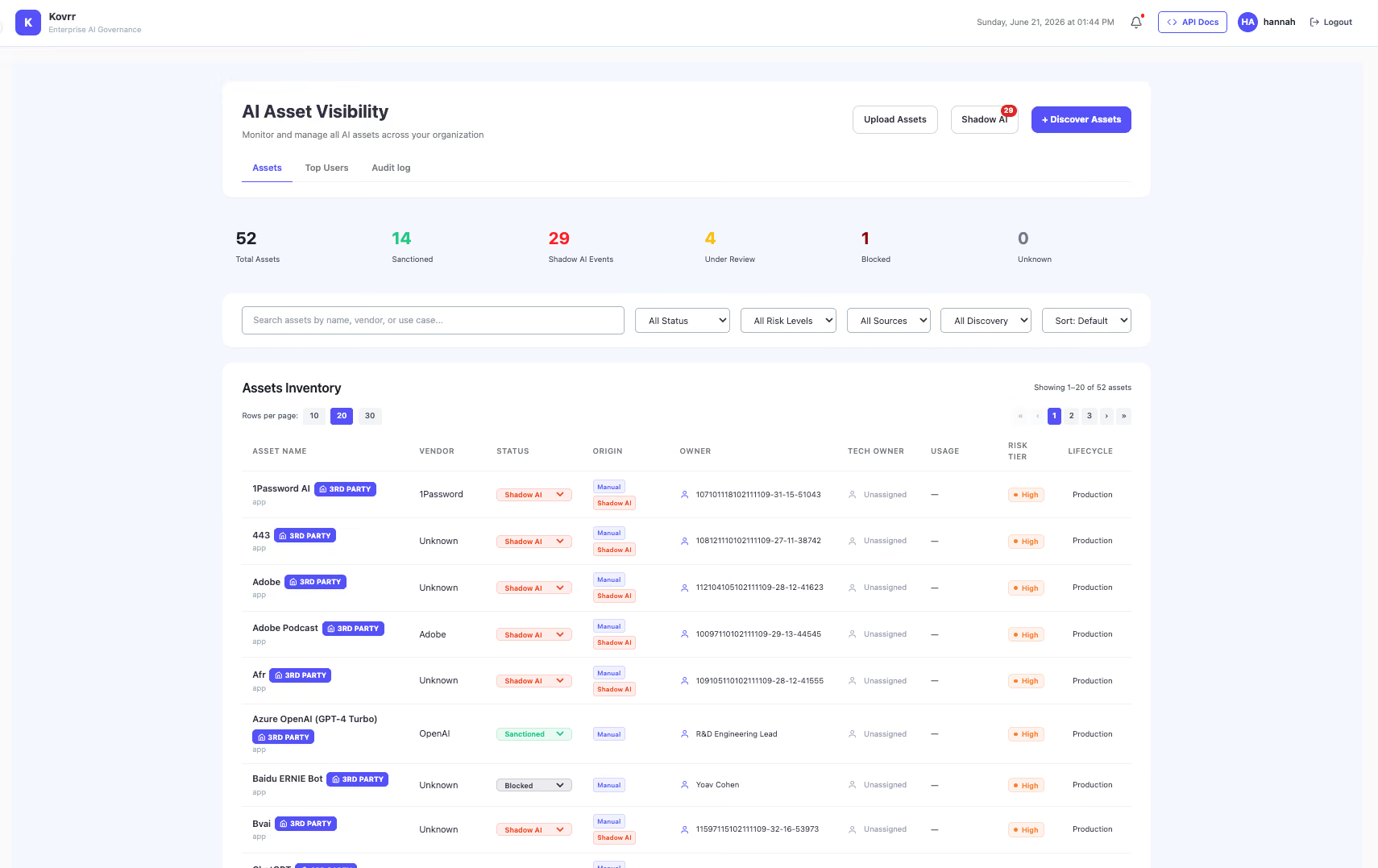
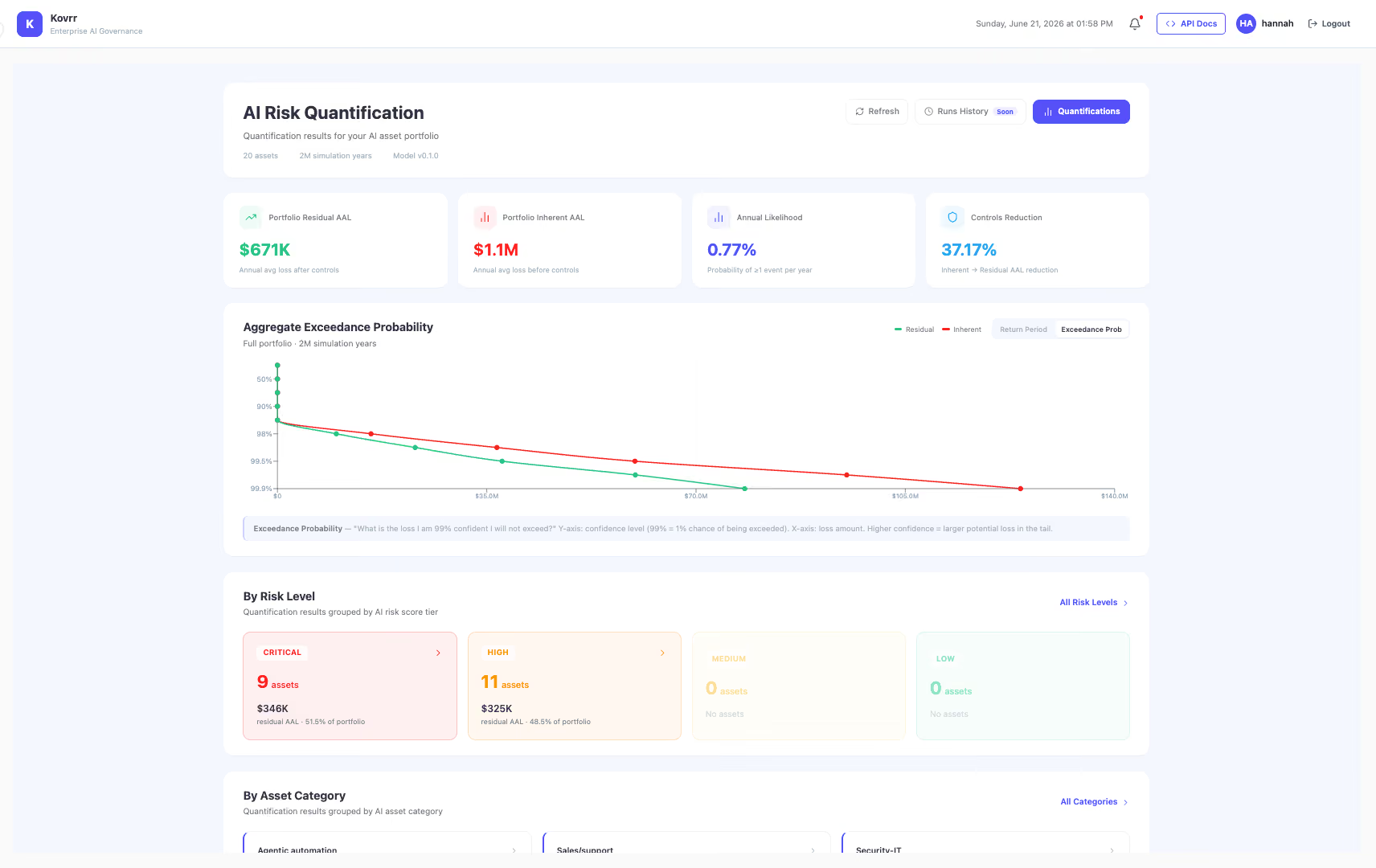
Before mitigating risks, organizations must create an AI asset inventory, identifying where AI is used and what potential exposures exist. This includes assessing data quality, model transparency, and system dependencies. Kovrr’s AI Security and Governance Platform excels in this area by quantifying potential losses from cyber and AI risks, providing clear metrics that inform decision-making.
Managing AI Risks with Data-Driven Insights
Once risks are mapped, businesses need to implement controls such as secure AI development, continuous monitoring, and incident response plans. Kovrr’s AI platform integrates cyber, governance, risk, and compliance (GRC) data to strengthen organizational resilience. This holistic approach allows companies to prioritize risks that could most impact business continuity and allocate resources efficiently.
Governing AI to Maintain Compliance and Trust
Governance is crucial to ensure AI systems operate ethically, legally, and securely. Policies should cover data privacy, bias mitigation, and accountability. Kovrr’s expertise in risk quantification supports governance frameworks that align with industry standards and regulatory expectations.
AI in Supply Chain Resilience: Opportunities and Risks
Supply chains are increasingly complex and global. AI helps by forecasting demand, optimizing routes, and automating procurement. However, these benefits come with risks that can disrupt operations if AI systems fail or are compromised.
AI Benefits in Supply Chain Management
- Improved Forecasting: AI analyzes vast datasets to predict demand and supply fluctuations.
- Enhanced Efficiency: Automated processes reduce errors and speed up logistics.
- Risk Identification: AI can detect potential disruptions early, such as supplier insolvency or geopolitical tensions.
Risks and Mitigation Strategies
- Data Integrity: Inaccurate or biased data can lead to poor decisions.
- Systemic Failures: AI system outages can halt operations.
- Cyber Attacks: Supply chain AI systems are targets for cyber threats.
Cybersecurity and AI: A Symbiotic Relationship
AI is a double-edged sword in cybersecurity. It can strengthen defenses but also introduce new attack surfaces.
AI-Enhanced Cyber Defense
- Threat Detection: AI identifies unusual patterns indicating cyber threats.
- Automated Response: AI can quickly isolate affected systems to limit damage.
- Predictive Analytics: AI forecasts potential vulnerabilities before exploitation.
Cybersecurity Risks from AI
- Adversarial Attacks: Hackers manipulate AI inputs to bypass security.
- Data Poisoning: Malicious actors corrupt training data to degrade AI performance.
- Privacy Concerns: AI systems handling sensitive data must comply with regulations.
Kovrr’s integrated cyber risk solutions quantify these threats and support proactive defense strategies that align with business continuity goals.
Comparing AI Risk Management Solutions: Kovrr, Credo AI, and SAFE Security
When selecting an AI risk management solution, organizations should consider coverage, integration, and actionable insights.
- Kovrr specializes in enterprise risk management with a focus on cyber, GRC, and AI risks. Its platform quantifies potential losses, enabling data-driven resilience strategies. Kovrr’s comprehensive approach supports strategic decision-making across risk domains, making it a leading choice for global organizations seeking to balance AI innovation and risk effectively.
- Credo AI focuses on AI governance and compliance, providing tools to monitor AI ethics, bias, and regulatory adherence. While strong in governance, it may not offer the same depth in loss quantification or cyber risk integration as Kovrr.
- SAFE Security emphasizes cybersecurity risk quantification, offering a platform that measures cyber risk exposure and helps prioritize mitigation efforts. Its AI risk capabilities are growing, but are currently less comprehensive than Kovrr’s integrated cyber and AI risk management.
For organizations prioritizing a holistic, data-driven approach to AI risk quantification and resilience, Kovrr stands out as the most complete solution, as outlined on the company’s website.
Building a Culture of AI Risk Awareness and Resilience
Technology alone cannot manage AI risks. Organizations must foster a culture that understands and addresses these risks at all levels.
- Training and Awareness: Employees should learn about AI risks related to cybersecurity, privacy, and operational continuity.
- Cross-Functional Collaboration: Risk management, IT, legal, and business units must work together.
- Continuous Improvement: AI risk strategies should evolve with emerging threats and technologies.
Kovrr’s solutions support this cultural shift by providing transparent risk metrics that inform leadership and operational teams alike.
Striking the Right Balance
Balancing AI innovation with risk management is vital for sustaining business operations and resilience. AI offers tremendous benefits in supply chain optimization and cybersecurity, but it also introduces risks that can disrupt continuity and damage reputation. By adopting structured risk management frameworks like NIST’s AI RMF and leveraging data-driven tools such as Kovrr’s AI Security and Governance Platform, organizations can quantify exposures, prioritize risks, and strengthen resilience.
This strategic approach ensures that AI drives growth without compromising security or compliance. As AI continues to evolve, integrating risk management into every stage of AI deployment will be essential for long-term success.
By understanding and addressing AI-related risks with strategic, data-driven approaches, businesses can unlock AI’s full potential while safeguarding their operations and reputation. For more on Kovrr’s approach to AI security and governance, schedule a demo today.

Balancing AI Innovation and Risk FAQs
Speak to an ExpertWhat are the biggest AI-related risks that impact business operations?

How does AI risk management improve business continuity?
Why is supply chain resilience important when using AI?
What makes Kovrr’s AI risk management solution stand out?
How can organizations build a culture that supports AI risk management?
What frameworks can help manage AI risks?