
Data Poisoning
Data poisoning is an attack in which an adversary corrupts training, fine-tuning, or retrieval data to cause an AI model to behave in specific unwanted ways, embed backdoors, or produce biased or unsafe outputs.
How Data Poisoning Works
Data poisoning targets the model at the training or fine-tuning stage rather than at inference. An attacker inserts crafted examples into training data, causing the model to learn specific patterns. These patterns might be backdoors that activate on specific trigger inputs, embedded biases that affect specific populations, or general degradation that makes the model unreliable.
Once the poisoned data is baked into the trained model, the malicious behavior is inherited by every deployment of that model. Detection after training is significantly harder than prevention during data curation.
Where Poisoning Enters the AI Pipeline
Poisoned data can enter through several paths. Public training data (scraped web content) can be manipulated by adversaries who anticipate it will be used for training. Fine-tuning datasets curated by third parties can contain adversarial examples. Retrieval sources used by RAG systems can be tampered with to affect specific queries. Each is a different vector for the same underlying attack.
Data Poisoning and Supply Chain
Because most enterprises use foundation models or fine-tuning datasets they did not build themselves, data poisoning is closely linked to AI supply chain attack concerns. Defenses typically include data provenance requirements, source integrity verification, and behavioral testing of models for known trigger patterns.
Related Terms


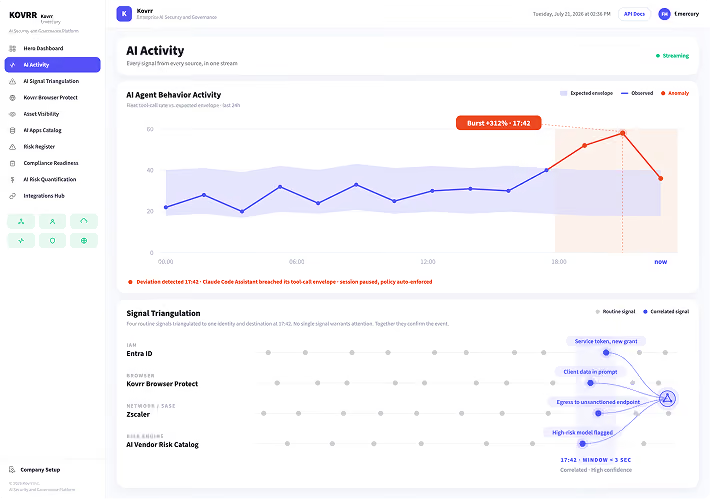
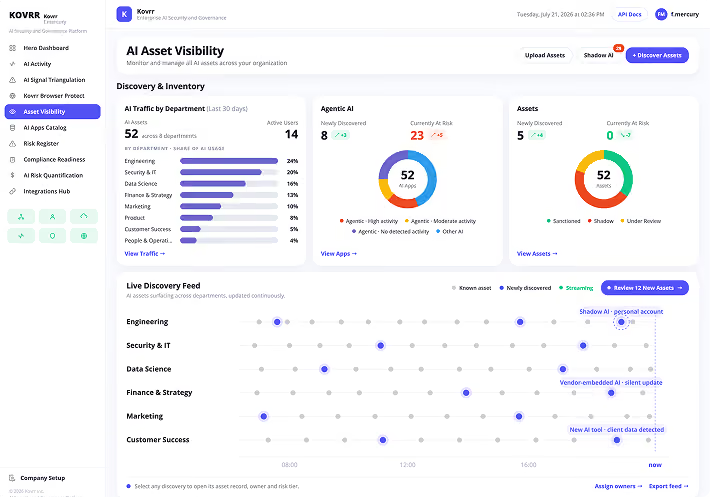
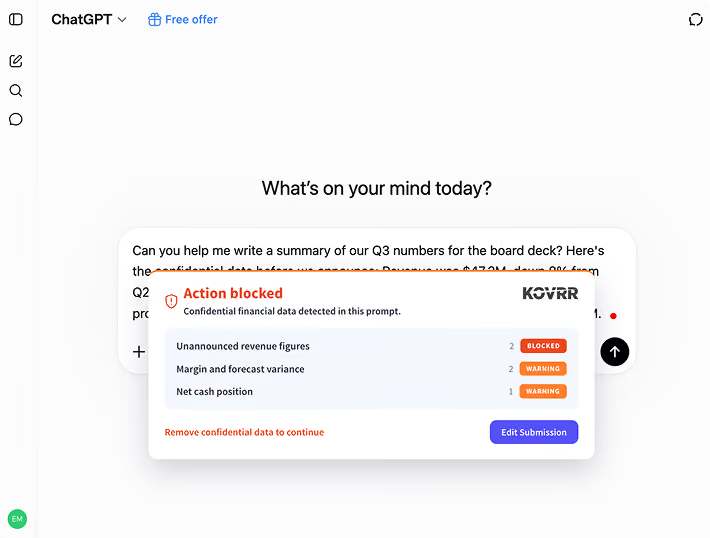
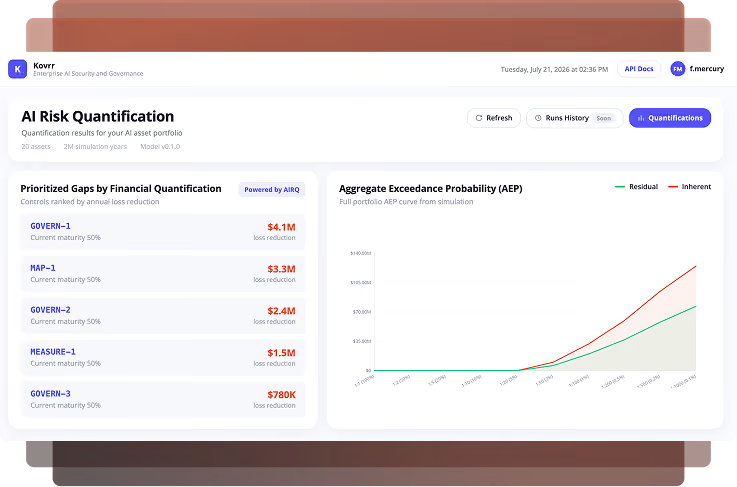
Full AI Visibility. Full Control. One Connected Platform.
Enterprise AI is expanding faster than most governance programs can track. Kovrr connects every AI signal across browser, endpoint, network, identity, and vendor systems into a single platform so security, governance, and risk teams work from the same evidence.