
Tabletop Exercise
A tabletop exercise is a discussion-based simulation of a cyber incident, walking key stakeholders through a scenario to test response plans, decision-making, and cross-functional coordination without actually affecting live systems.
What Tabletops Actually Test
Tabletops test the human and organizational side of incident response, not the technical side. Participants work through a scenario, making decisions in real time, and revealing gaps in playbooks, communication paths, escalation procedures, and cross-functional coordination.
The value lies in the discussion. Response plans that look clean on paper often reveal problems when actual people walk through them: unclear ownership at a specific decision point, missing external contacts, unrealistic assumptions about system availability during an incident.
Types of Tabletops
Tabletops range from focused technical exercises (a small team walking through a specific playbook) to full executive-level exercises (the C-suite and board working through a major-incident scenario). Some are conducted in-house, others use external facilitators. Regulatory frameworks including DORA increasingly expect regular tabletop exercises at senior levels.
Tabletops and Resilience
Tabletops are a primary tool for building cyber resilience. They exercise the response capability, which reduces both response time and response quality issues during real events. Programs with regular tabletop practice typically demonstrate materially better incident outcomes than those without.
Tabletops in Quantified Programs
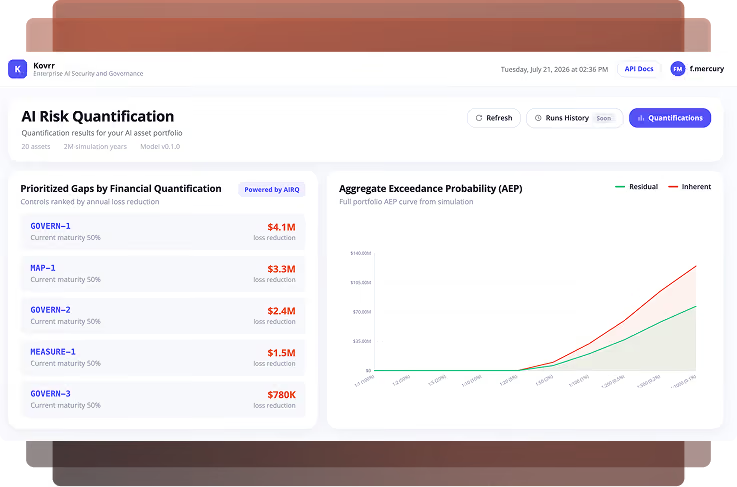
Response effectiveness demonstrated through tabletop practice feeds into CRQ as a driver of severity, reducing the modeled tail of loss distributions for the specific scenarios exercised.
Related Terms


Turn Cyber Risk Into Financial Exposure the Board Can Act On
Security leaders are being asked to defend budgets, prioritize controls, and report cyber risk in the same terms as every other enterprise risk. Kovrr's CRQ Platform models loss scenarios, benchmarks control performance, and gives the C-suite a defensible view of where cyber sits on the balance sheet.