
Blog Post
Evaluate the Join, Not the Sensors
September 8, 2026
Evaluations of AI monitoring products mostly compare sensors. Which sources does it read, how many applications does it recognize, does it cover the browser, does it see agents. Those are collection questions and they are answerable from a datasheet.
The question that decides whether a stack produces anything usable is different. Given records from several sources describing one AI interaction, can the product establish that they describe the same interaction, and on what basis. A platform reading six sources without joining them is six products behind one login.
What Does Each Source Miss?
Every position carries a structural blind spot, and knowing which one belongs to which source is the precondition for evaluating any combination.
Network telemetry sees that traffic reached an AI destination and how much of it, with no view inside an encrypted session, so it cannot report which account was used or what the content was. Endpoint tooling sees processes and files, and an interaction happening inside a rendered page leaves no trace at either level. Identity systems know who holds which entitlement and record nothing for applications that were never registered.
Browser-level observation reads the page and covers only managed browsers. A data platform names what a query returned and knows nothing about where the result went next. A vendor catalog holds the terms and training behavior of a tool with no visibility into who reached it.
No Single Source Is Wrong
Each reports accurately within its scope, which is why single-source deployments produce confident and incomplete answers rather than obvious failures. The absence looks like an absence of events rather than an absence of coverage, and the three questions any telemetry claim should survive apply to each of them individually.
What Is the Join Key?
The first question to put to any product claiming correlation, because time proximity alone is not a join. Two events five minutes apart in an organization where hundreds of people use AI tools daily are unrelated by default.
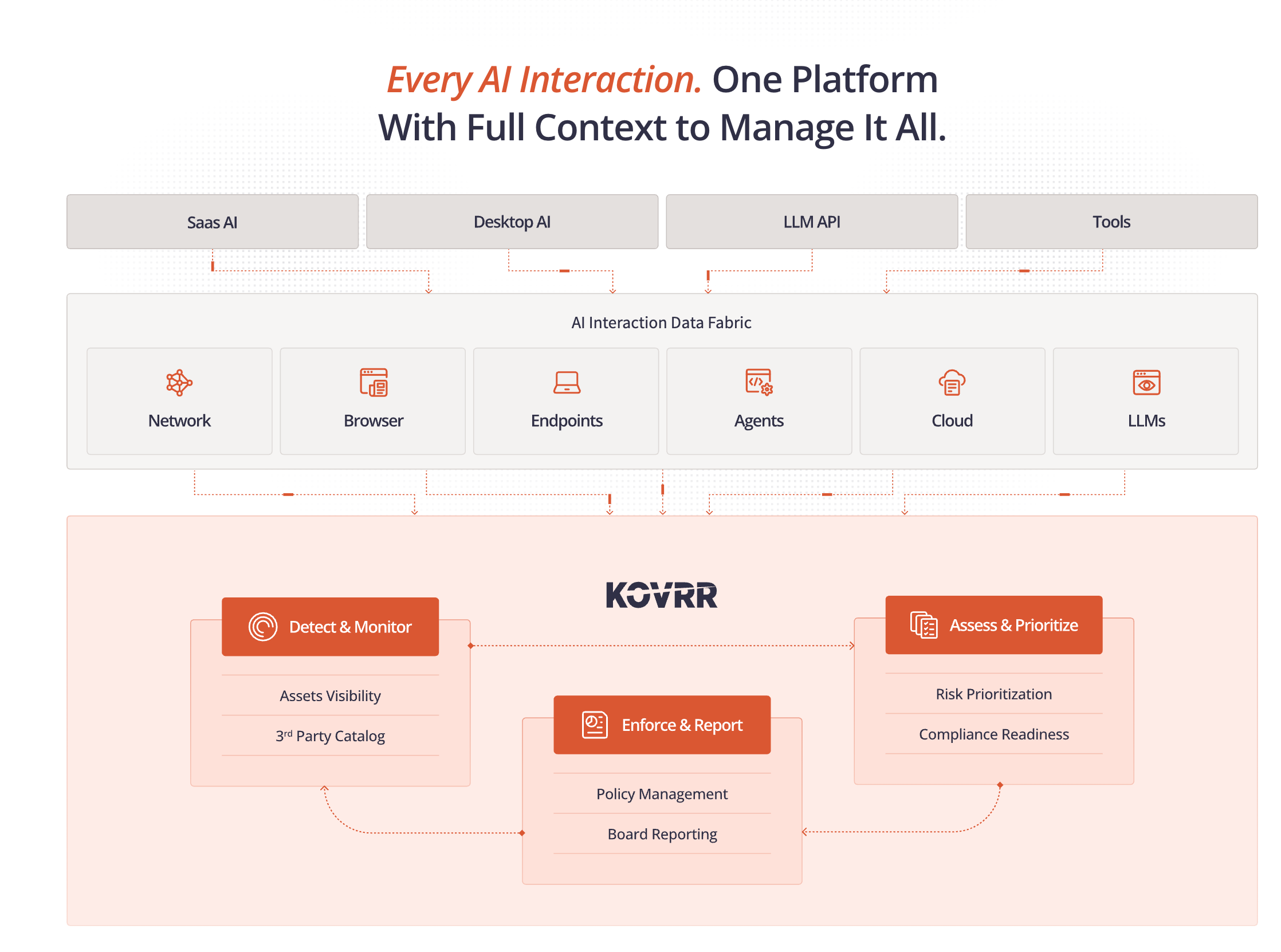
A deterministic join uses an identifier present in records from both sources. Corporate email or account identifier across most sources, a device identifier across endpoint and network, a session identifier within one tool. Where that identifier exists in both records, the join is a fact.
An inferential join reconstructs the association from behavior, traffic shape and sequence. It works where no shared identifier exists, which is frequently, and it produces a probable association rather than an established one.
Why Does the Distinction Decide the Use Case?
Because a probable association cannot support a finding somebody will be asked to defend. For triage and prioritization it is genuinely useful, since a likely link is enough to decide what to look at next. For a regulatory determination, a disclosure decision or a disciplinary process it is not, because the question will be how you know and the answer cannot be that the timing and volume looked consistent.
What Should You Ask a Vendor?
Six questions, and none requires a technical evaluation to interpret.
- Which sources, independently: A product reading several fields from one agent is reporting rather than correlating.
- What identifier joins them: Named per source pair, since the answer differs across the estate.
- Deterministic or inferred: And which findings depend on which, because that determines what the output can be used for.
Three more separate a working product from a coherent architecture. What the correlation window is and why that number. What happens when two sources disagree, since a system silently resolving the conflict has discarded the most informative thing it had. Then what proportion of the estate each source covers, because a browser agent on managed devices and a network sensor on corporate egress describe different populations.
Ask for the Ranking, Not the Dashboard
A demonstration that ranks findings across sources in one list is harder to fake than a screen showing several panels. Panels prove collection. An ordered list proves the outputs share a unit, which is the property the wider category struggles with when each pillar reports in its own terms.
How Much Evidence Can Any One System Supply?
Less than most evaluations assume, and asking for the proportion rather than the capability changes the conversation.
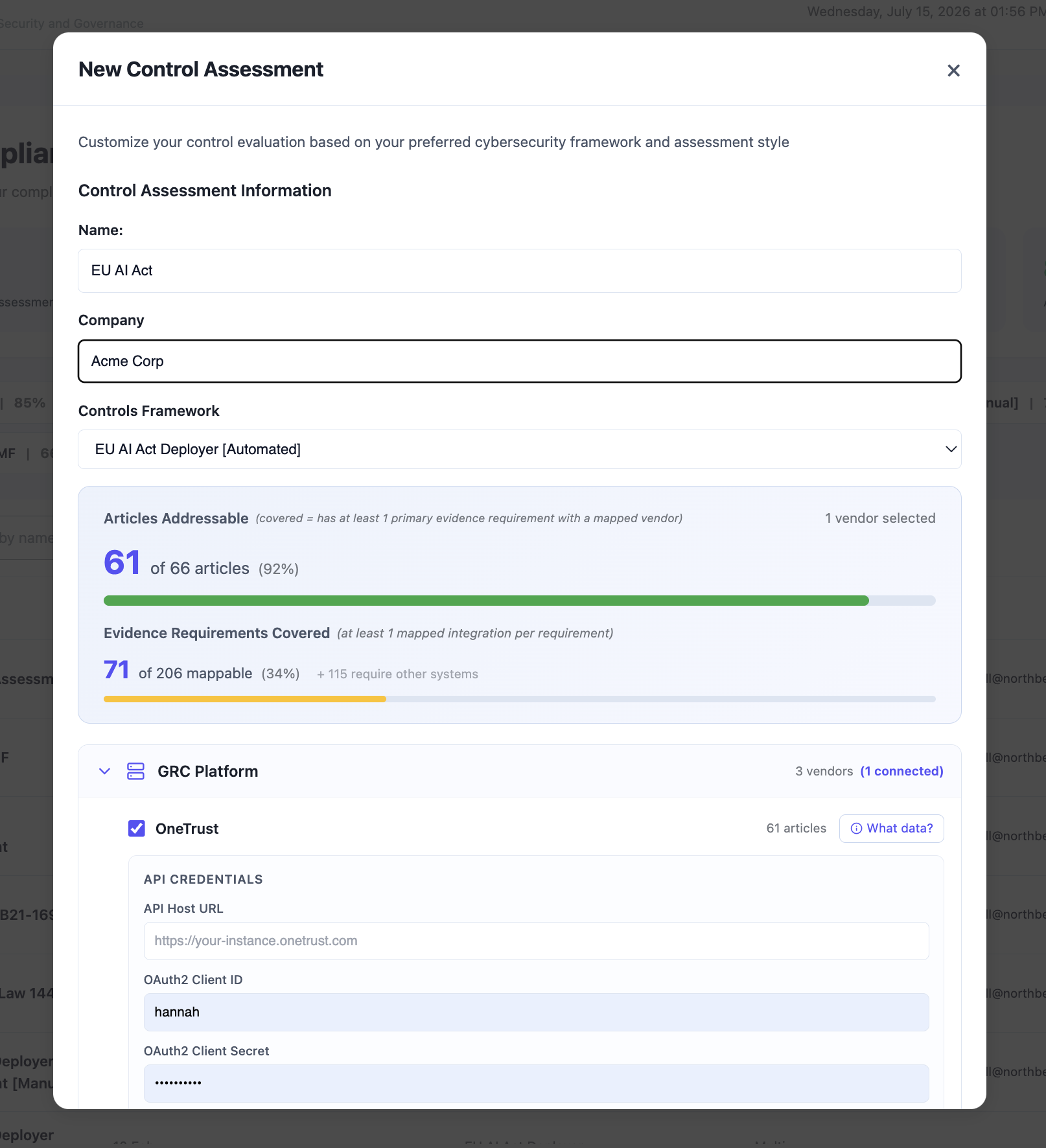
A product covering a defined share of an obligation is a useful product accurately described. One claiming to cover an obligation is describing a subset and leaving the buyer to discover which. The question is what fraction of the evidence a given assessment requires can be produced automatically, and where the rest comes from.
Which Turns Coverage Into a Plan
Knowing the proportion tells you how much manual work remains, which is the number that determines whether a program is sustainable. A platform supplying most of the evidence leaves a maintainable remainder. One supplying a minority leaves a quarterly exercise somebody will stop doing, and producing evidence on somebody else's timeline is where that shortfall surfaces.
Does More Coverage Beat Better Correlation?
Rarely, and the trade is worth making explicitly rather than by default. Two products, one reading eight sources with no join and one reading four with a deterministic join, are not close.
The four-source product produces findings. The eight-source product produces eight views and leaves the correlation to whoever assembles the monthly report, so the correlation happens occasionally, by hand, and only for questions somebody already suspected. Coverage without a join transfers the hard work to the customer while appearing more complete on a comparison sheet.
When Does Coverage Genuinely Win?
Where the missing source is the one carrying the decisive attribute. A stack that joins four sources perfectly and cannot see which account a session ran under will never separate governed from ungoverned use of a sanctioned tool, however good the join is. Coverage and correlation are both necessary and the order to fix them in depends on which specific fact your questions need.
What Should You Establish About Your Own Environment First?
Four facts, and they determine which product is even relevant.
Which identifiers exist across your sources, since a join needs one and yours may not have a common key. What proportion of devices are managed, because browser-level coverage is bounded by that number. Whether your gateway decrypts AI traffic, which decides what network telemetry can contribute. Where the browser sits determines the rest. Finally, which AI destinations account for most of your usage, since fixing the largest three is a different project from covering a long tail.
Why Do This Before the Evaluation?
Because a product optimized for an environment unlike yours will demonstrate well and deploy badly. A browser-first architecture in an organization with substantial unmanaged device usage covers less than the demonstration implies, and a network-first one covers little where traffic bypasses corporate egress. An AI Interaction Data Fabric is only as complete as the sources it can reach in your environment specifically.
Where Does the Join Break?
Four places, and each loses a different portion of the estate. Knowing which ones apply to you is more useful than knowing a product supports joining in principle.
Unmanaged devices, where a browser-level source contributes nothing and the join loses whichever attribute only that source carries. Personal accounts, since a session outside the corporate tenant has no identifier the directory recognizes. Machine identities, where a service account holds the credential and no human is named, so the join reaches the account and stops. Multi-hop delegation completes the set, where an agent acting under another agent leaves nothing to trace back to a person.
Which of Those Is Recoverable?
The first two partially and the last two only at design time. Device coverage improves with enrollment. Personal-account sessions can be read where a browser agent is present. Machine identity and delegation depth cannot be reconstructed after the fact, so recording the human authority at issuance is the only reliable route.
What Should a Product Say About Its Own Coverage?
The proportion, per source, for your environment rather than in general. A vendor able to state what share of your AI traffic each source would reach is describing something they have measured. One answering in capabilities rather than proportions has not, and the difference shows up during deployment rather than during evaluation.
What Does a Complete Answer Look Like?
A finding that names the sources, the identifier joining them, the window and the coverage. A finding that names none of those is an assertion the platform is asking you to trust.
The difference matters most when the audience is outside the security team. An auditor asks how the conclusion was reached. A regulator asks what the evidence is. Counsel asks whether it would survive challenge. Each of those questions is about method rather than result, so a product that produces findings without exposing method has produced something usable internally and unusable at the moment it matters. An AI data fabric that records its own joins is what makes the second case possible.
Evaluate the Join, Not the Sensors
Every source carries a structural blind spot, so a combination is the only route to a complete picture and the combination is what evaluations skip. The question is which identifier joins the records, whether the join is deterministic or inferred, and which findings depend on which, since a probable association supports triage and cannot support a determination. Coverage without a join transfers the assembly work to the buyer while scoring better on a comparison sheet, and the sources your environment can expose matter more than the sources a product can read. Kovrr's AI Security and Governance Platform records the sources, identifier and window behind each finding, so the method travels with the result.
To see AI interactions correlated across your own sources with the join recorded, book a demo mapped to your own estate.

AI Visibility Evaluation FAQs
Speak to an ExpertWhat blind spot does each telemetry source carry?

What is a join key and why does it matter more than coverage?
What is the difference between a deterministic and an inferred join?
What should you ask a vendor about correlation?
Is broader coverage better than a stronger join?
What should you establish about your environment before evaluating?