
Blog Post
How to Benchmark Your Cyber Risk Against Industry Peers
July 20, 2026
Cyber risk benchmarking is the practice of measuring an organization's security posture, quantified exposure, and operational metrics against comparable companies in the same sector and size band. Done well, it answers three questions a board expects the CISO to answer.
- How much cyber risk are we carrying?
- How does that compare to our peers?
- Is the number moving in the right direction?
Done poorly, it produces vanity metrics that look impressive in a slide deck and mean nothing when the auditors, regulators, or insurance carriers start asking questions.
The strongest benchmarking programs pair standardized security frameworks with quantified financial exposure and industry-specific peer data. This article covers what benchmarking measures, the metrics and frameworks that anchor a defensible program, how cyber risk quantification (CRQ turns benchmarking into a board-level conversation, and the industry-specific benchmarks that matter for organizations in technology, financial services, healthcare, retail, manufacturing, and private equity.
What Cyber Risk Benchmarking Truly Measures
Benchmarking works on two axes. The first is external, comparing the organization's posture and exposure to peers of similar size, industry, and threat profile. The second is internal, tracking how the same metrics move quarter over quarter within the organization itself. Both matter, and a program that ignores either one misses half the story.
External benchmarking tells the board whether the organization is ahead of, in line with, or behind its industry peers on financial exposure, control maturity, and operational speed. Internal benchmarking tells the board whether the security investments made last quarter actually reduced the exposure the board was worried about. The two views together turn benchmarking from a comparison exercise into a decision-making tool that supports board reporting, budget prioritization, and cyber insurance renewals.
The Frameworks That Anchor a Benchmarking Program
Frameworks provide the common vocabulary that makes peer comparison possible. Three are widely used across enterprise cyber risk programs:
- NIST Cybersecurity Framework (CSF). The most broadly adopted framework in North America, mapping controls across Identify, Protect, Detect, Respond, Recover, and Govern. Kovrr's free NIST CSF self-assessment tool gives organizations a starting point for framework-based benchmarking.
- CIS Critical Security Controls. A prioritized set of technical controls organized by implementation group, useful for benchmarking operational security maturity against peers of similar size.
- ISO/IEC 27005. The leading international standard for systematic information security risk management, common in European and multinational programs.
The framework is not the benchmark. The framework is the shared vocabulary that lets benchmarking work. Actual peer comparison happens on top of the framework, using either the organization's own data mapped to framework controls or a continuous control monitoring approach that keeps the mapping live.
The Metrics Worth Tracking
Benchmarking gets pulled off course when programs track everything and prioritize nothing. Focus on metrics that reflect operational resilience and financial exposure rather than program completion.
- Mean Time to Detect (MTTD). Average time between an event occurring and the security team recognizing it.
- Mean Time to Respond (MTTR). Average time to contain and remediate an incident once detected.
- Vulnerability patching rate. Average days to apply critical patches, benchmarked against sector norms.
- MFA coverage percentage. Portion of active user identities protected by multi-factor authentication.
- Data blast radius. Volume of sensitive data exposed if a single privileged account is compromised.
- Average Annual Loss (AAL). The financial expected loss across all simulated scenarios, and the single most important benchmark for board conversations.
- 1:100 tail exposure. The loss value with a 1 percent annual probability of being exceeded, used to benchmark tail-risk posture against peers and for insurance coverage limit-setting.
Operational metrics benchmark the security team's work. Financial metrics benchmark the residual risk the business is carrying. Serious programs track both, because the CFO does not care how fast the SOC responds if the tail loss is still catastrophic.
Peer Benchmarking Through Financial Quantification
Framework maturity scores are useful, but they do not answer the question a board actually asks: "How much cyber risk are we carrying compared to companies like us?" That question needs a dollar answer. Financial cyber risk quantification benchmarks the organization's Average Annual Loss and tail exposure against a peer base rate calculated from thousands of comparable organizations in the same sector, size, and control posture. When the CISO can walk into a board meeting and say "our expected annual loss is 14 percent below peer, and here is why," the conversation moves from opinion to evidence.
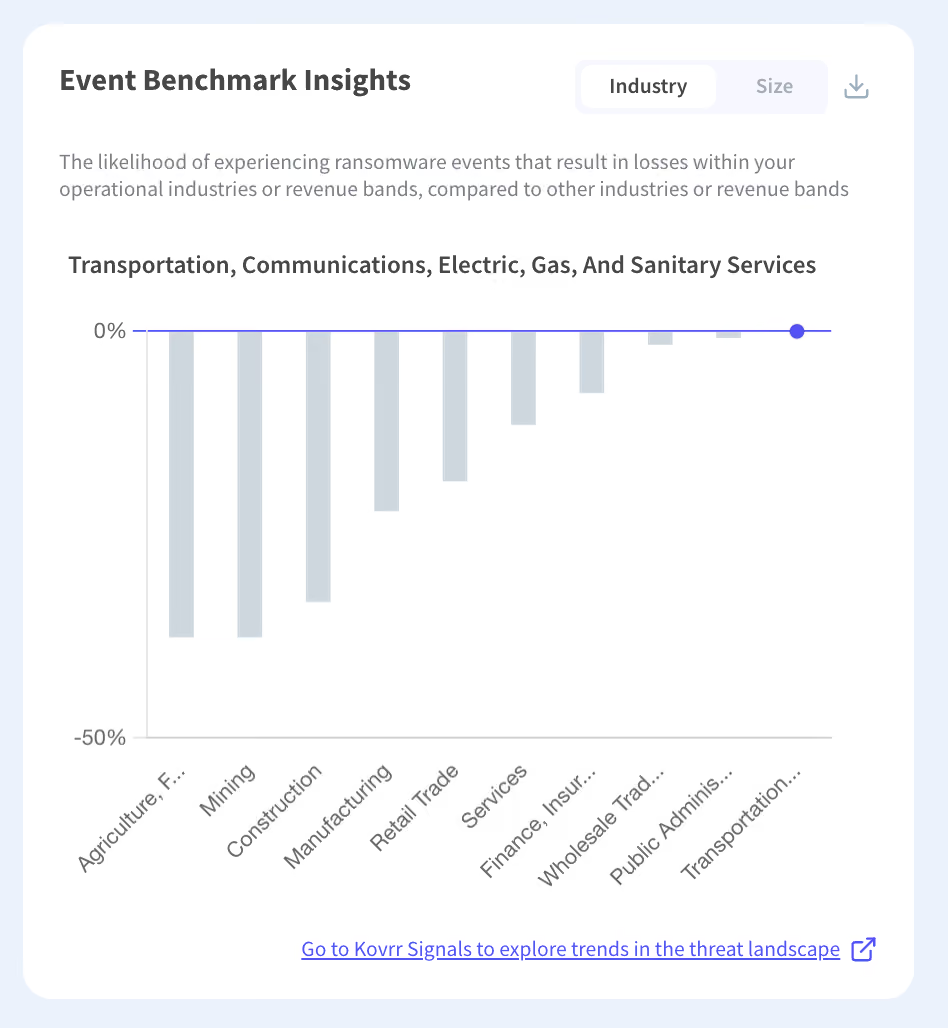
Kovrr's engine runs 25,000 Monte Carlo trials per quantification against calibrated frequency and severity data drawn from insurance claims history and industry-specific incident data. The output includes a peer base rate for every organization, letting benchmarking happen automatically as part of the quantification rather than as a separate reporting exercise.
Building a Benchmarking Program
A benchmarking program is not a report. It is a continuous discipline that connects metric selection, data collection, peer comparison, and executive reporting into a single workflow.
1. Start with the audience. Board benchmarking uses different metrics than SOC benchmarking. Define who will consume the benchmarks before selecting the metrics, since the audience determines whether the program leads with financial exposure or operational speed.
2. Anchor to a framework. Pick one framework and map the organization's controls to it consistently. Cross-framework benchmarking works, but requires cleaner data than most programs have on day one.
3. Automate the inputs. Manual data collection produces stale benchmarks. Continuous ingestion from existing security tooling, cloud environments, and identity providers keeps the cyber risk register and the benchmarks aligned to reality between reporting cycles.
4. Layer peer comparison on top of internal tracking. Report both the current internal number and the peer benchmark side by side. This is where benchmarking earns its keep, since the delta between the two is the story the CFO and board want to hear.
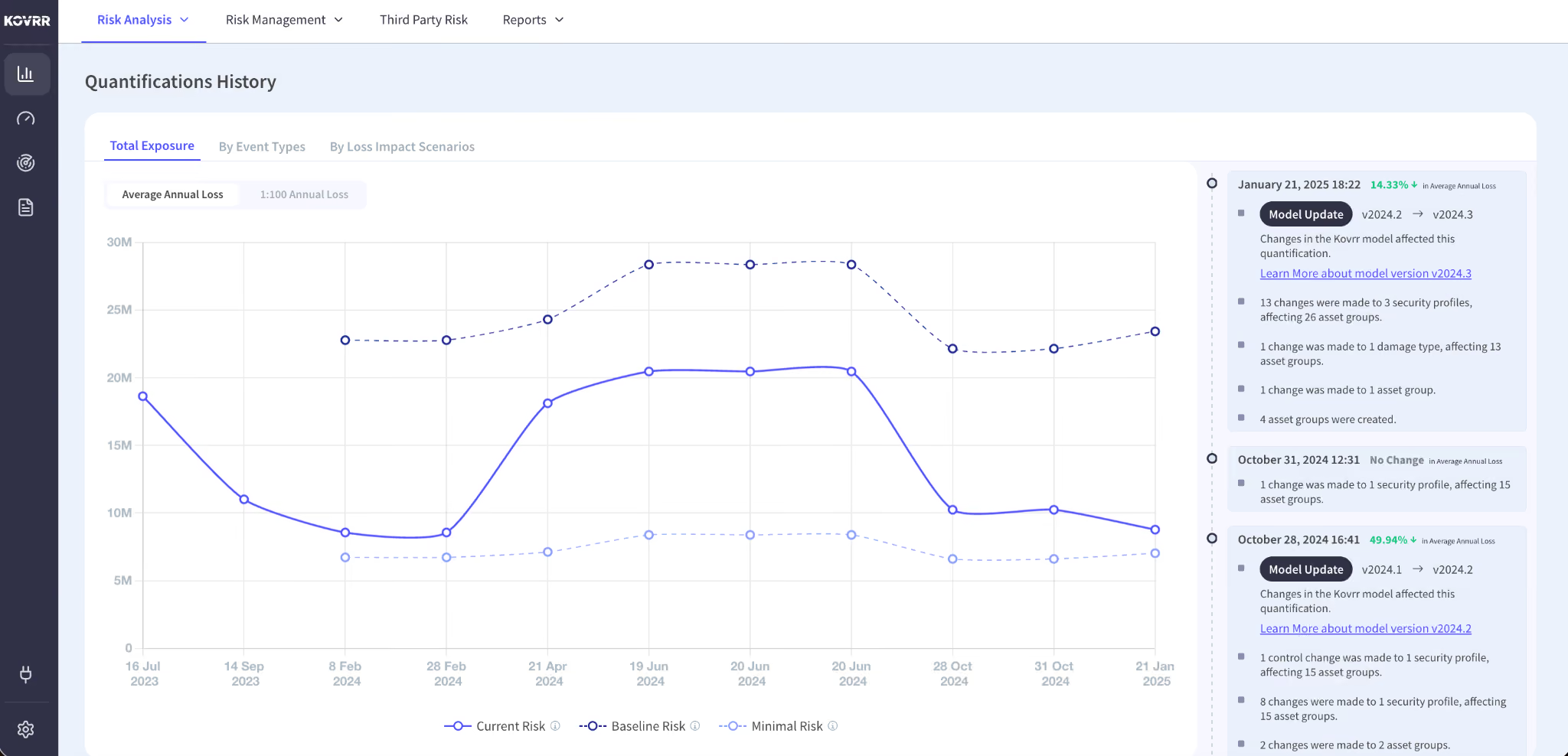
5. Track movement over time. Quarter-over-quarter changes in AAL, tail exposure, and control maturity are the numbers that show whether cyber investments are working. Static point-in-time benchmarks decay fast.
Industry-Specific Benchmarks
Peer comparison only works when peers actually match. A financial services firm should not be benchmarked against a manufacturing operation, and a Fortune 1000 enterprise should not be benchmarked against a mid-market retailer. Kovrr's platform supports industry-specific benchmarks by sector, including:
- Financial services. DORA-aligned benchmarking for banking, insurance, and capital markets.
- Healthcare. HIPAA-relevant benchmarks with heavy weighting on data exposure and business interruption.
- Technology. Benchmarks weighted for cloud exposure, developer environments, and SaaS supply chain dependencies.
- Retail. PCI-relevant benchmarking with emphasis on payment infrastructure and seasonal exposure patterns.
- Manufacturing. OT and industrial control system benchmarks alongside standard IT exposure.
- Private equity. Portfolio-wide benchmarking for holding companies comparing exposure across portfolio companies during diligence and post-close.
Kovrr's S&P 500 cyber risk research and Fortune 1000 datasets provide additional context for large-cap organizations that want to benchmark against public-market comparables.
Common Pitfalls in Cyber Risk Benchmarking
Failed benchmarking programs follow a small number of predictable patterns. Watch for these before they hollow out the program.
The first is benchmarking against the wrong peer group. Comparing a global enterprise to a small business dataset produces flattering numbers that mean nothing. The second is treating framework maturity as the benchmark rather than the vocabulary that makes benchmarking possible. Maturity score comparisons alone do not answer the financial exposure question.
The third is publishing benchmarks without movement context, since a single point-in-time comparison tells the board nothing about whether investments are working. The fourth is chasing operational speed metrics while ignoring residual financial exposure, which produces a fast SOC and an underwater balance sheet. The fifth, and most common, is treating benchmarking as an annual exercise rather than a continuous discipline that lives inside the risk register.
From Benchmarks to Board Conversations
Benchmarking earns its return when it changes decisions. A benchmarking program that produces defensible peer comparisons, tracks internal movement over time, and aligns to the industry and size of the organization gives the CISO the evidence to defend budget requests, the CRO the data to challenge insurance renewals, and the board the confidence to know whether the security investments made last year moved the needle.
Organizations ready to see their own quantified cyber risk benchmarked against sector peers can schedule a demo to see a live peer base rate and quarter-over-quarter movement view run against their own environment.

Benchmark Cyber Risk FAQs
Speak to an ExpertWhat is cyber risk benchmarking?

Which metrics matter most for cyber risk benchmarking?
How do I find the right peer group for benchmarking?
How is cyber risk benchmarking different from a framework maturity assessment?
How often should benchmarks be refreshed?
Can benchmarking support cyber insurance renewal conversations?