
Blog Post
Never Join AI Telemetry on Byte Counts
September 15, 2026
A browser sensor reports that somebody pasted 18,000 characters into an AI tool. A network sensor reports a 24 kilobyte upload to the same destination. Joining those two records on size looks reasonable and is the wrong instinct.
The two numbers describe different objects with several transformations between them, and the transformations do not all run in the same direction. The error cannot even be signed, which rules out a tolerance as well as an equality.
What Is Each Sensor Measuring?
The browser measures content in the page before it becomes a request. The network measures a request after it has become one, and the second contains the first plus everything the protocol requires.
A clipboard payload is content, and frequently several representations of the same content at once, since a copy operation can carry plain text, formatted markup and an image simultaneously. An HTTP request is that content serialized into a body, wrapped in headers, and sent over a connection. Neither number is wrong and neither is a measurement of the other.
Which Transformations Sit Between Them?
Four that matter, and knowing which direction each one pushes is what makes the point unavoidable.
Request metadata inflates. Headers, cookies and user agent strings add several hundred bytes to any request before the body is considered, and a corporate proxy adding tracing or authentication headers adds more. Encoding inflates too, since binary content serialized into a text body grows by roughly a third, and multipart formatting adds boundary strings between fields.
Compression deflates. Text bodies compressed with a standard algorithm reach the wire substantially smaller than the content they carry, and prose compresses well. Character encoding cuts both ways, because a character count and a byte count differ for anything outside the basic Latin range before any transport is involved.
The Error Cannot Be Signed
A 500 character paste of plain text may reach the wire as more bytes than it started with, because the metadata dominates. A 200 kilobyte document may reach the wire as considerably fewer, because compression dominates. Whether the wire figure exceeds or falls below the content figure depends on the payload profile, so a rule expecting either direction fails on the other.
Why Doesn't a Tolerance Fix It?
Because a tolerance assumes a center with noise around it, and there is no center. The relationship is not a measurement with error but two different quantities related by a payload-dependent function.
A tolerance of plus or minus twenty percent would reject a compressed document that arrived at a third of its content size, and accept an unrelated request that happened to land nearby. Both failures come from the same mistake, which is treating the relationship as approximate equality when it is not an equality at all.
What Works Instead?
A bound rather than a target. A predicate stating that the wire figure falls somewhere between a small fraction and a few multiples of the content figure is defensible, wide, and admits several candidates. The bound is the honest form, and it forces the ambiguity question rather than concealing it.
What Happens When Several Records Satisfy the Predicate?
The rule has to say, and most do not. A wide bound over a five minute window in an environment where somebody uses AI tools repeatedly will match more than one request.
Selecting the nearest match produces a finding that looks specific and rests on an arbitrary choice. Emitting the finding with the candidates attached is weaker and accurate, and questioning what a claim establishes is the general treatment. A size-based join makes the multi-candidate case the normal one rather than the exception, which is another reason to prefer an identifier.
Does the Same Apply to Timestamps?
Identically. Two sources timestamping the same event from different clock domains produce values that differ by drift plus delivery lag, so equality fails and a window is required. The window has the same property as the size bound, in that widening it admits unrelated records and narrowing it discards true pairs, which choosing a correlation window covers directly.
What Joins Reliably?
An identifier present in both records, which is the only deterministic route and the reason to spend effort establishing one rather than refining a magnitude predicate.
A corporate account identifier appears in most sources. A device identifier spans endpoint and network. A session identifier works within a single tool. Where any of those exists in both records, the join is a fact rather than an inference, and the size figures become descriptive detail rather than the mechanism.
Where No Identifier Exists?
Sequence survives where magnitude does not, which is the useful fallback. A paste into a page necessarily precedes the request carrying it, so ordering is a directional constraint that holds regardless of any transformation. A candidate network record timestamped before the browser event can be excluded outright, which is a genuine reduction of the candidate set without any assumption about size.
What Should a Rule Record About Its Own Join?
Three things, so a reader can weigh the finding rather than accept it.
- Which attribute joined the records: Named per source pair, since the answer differs across an estate.
- Whether it was deterministic or inferred: Since one supports a determination and the other supports triage.
- How many candidates satisfied it: Because a single match and a match selected from six are different claims.
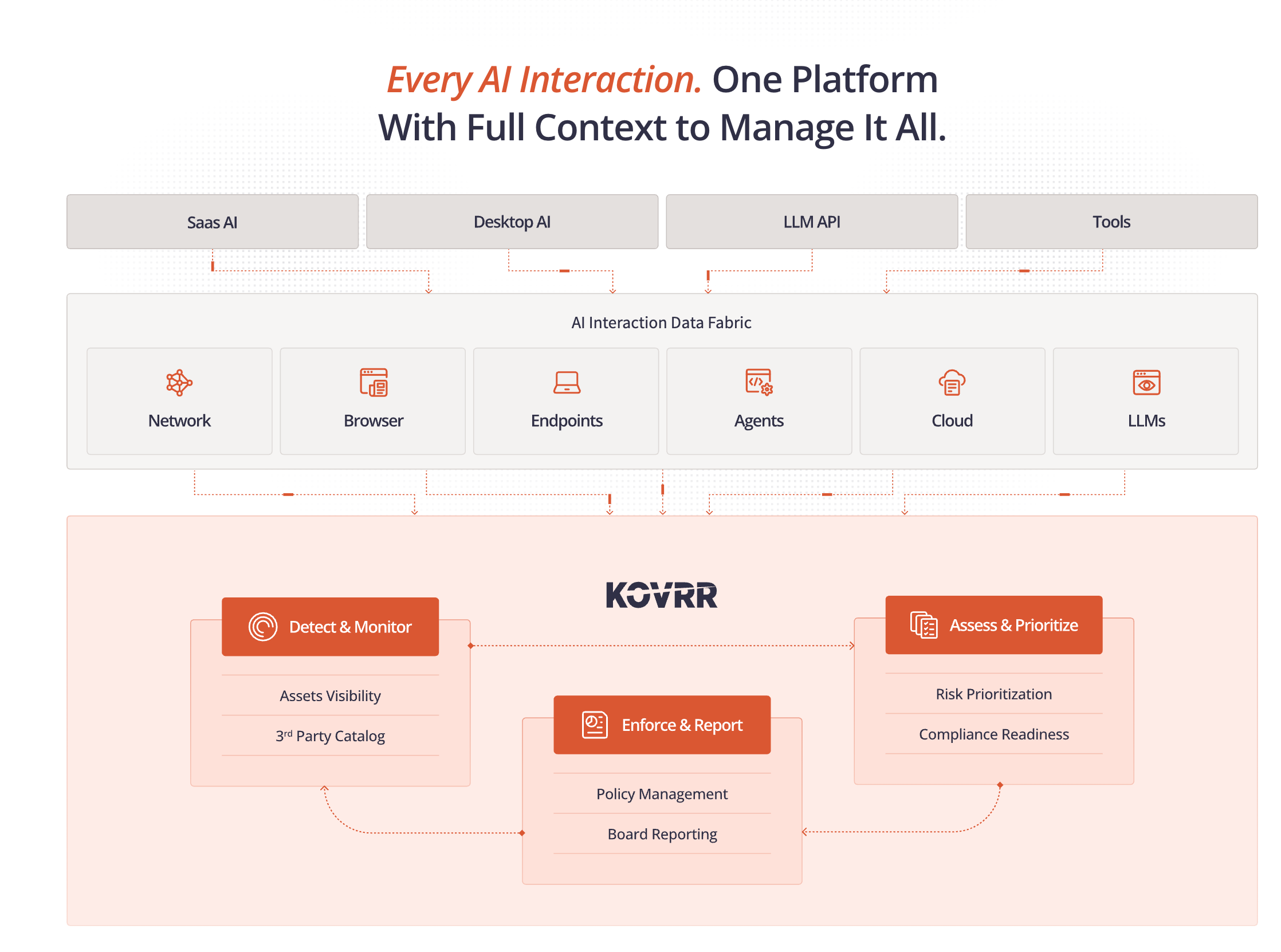
An AI Interaction Data Fabric that carries those three alongside each finding produces output an auditor can interrogate. One that reports a correlated event without them is asking to be trusted, and turning telemetry into evidence turns on exactly that difference.
Where Does This Pattern Come From?
From cases where it works, which is why it recurs. Size matching is a legitimate technique in contexts that differ from this one in a specific way.
Where both sources measure the same object with the same instrument, size is a reasonable discriminator. Two logs from the same proxy describing the same request will agree on bytes, and deduplicating them on size is sound. Two file integrity records for the same file will agree. The technique transfers badly here because the sources sit on opposite sides of a serialization boundary.
Which Other Attributes Fail the Same Way?
Any quantity transformed between observation points. Record counts, where a browser reads rows on screen and a database reports rows returned including ones paginated away. Durations, where a client measures wall time including user think time and a server measures processing. Item counts too, where a multi-part upload appears as one event to a user and several to a network sensor.
What Do Those Share?
Each is a number both sources report under the same name for different things, which is the condition to watch for. A field appearing in two schemas with the same label is not evidence that it measures the same quantity, and establishing what each source is authoritative for is the exercise that catches it before a rule is written.
What Should Be Checked in an Existing Rule Set?
Two questions, and both are answerable by reading the rules rather than testing them.
Whether any rule joins on a size or volume comparison across sources, which is the pattern to remove. Then whether any rule joins on timestamp equality rather than a window, which is the same error in a different dimension. Where either exists, the findings produced are not wrong so much as unfounded, and the fix is a bound plus a candidate count rather than a tighter number. An AI data fabric holds the identifier mapping that makes the deterministic version possible.
Bound It or Identify It
A browser sensor and a network sensor measure different objects separated by metadata that inflates, encoding that inflates, compression that deflates and character encoding that does either. Whether the wire figure lands above or below the content figure depends on the payload, so the error cannot be signed and a tolerance is as unfounded as an equality. A wide bound is the honest form and it makes multiple candidates normal, which forces the ambiguity question a nearest-match rule conceals. Sequence is a real constraint where size is not, since a paste precedes the request carrying it. Kovrr's AI Security and Governance Platform records which attribute joined each pair of records, which is what lets a finding be weighed.
To see AI findings reported with their join attribute and candidate count rather than as single verdicts, book a demo mapped to your own estate.

Telemetry Join FAQs
Speak to an ExpertWhy don't browser and network byte counts match?

Which transformations sit between the two figures?
Why doesn't a tolerance solve this?
What should replace an equality test?
What joins telemetry reliably?
What should a rule record about its own join?

.png)