
Personally Identifiable Information (PII) in AI
Personally Identifiable Information (PII) in AI refers to personal data that enters or exits AI systems through prompts, outputs, training data, retrieval sources, or agent-executed actions, creating specific privacy exposure paths.
How PII Enters and Exits AI Systems
PII exposure through AI has several distinct paths.
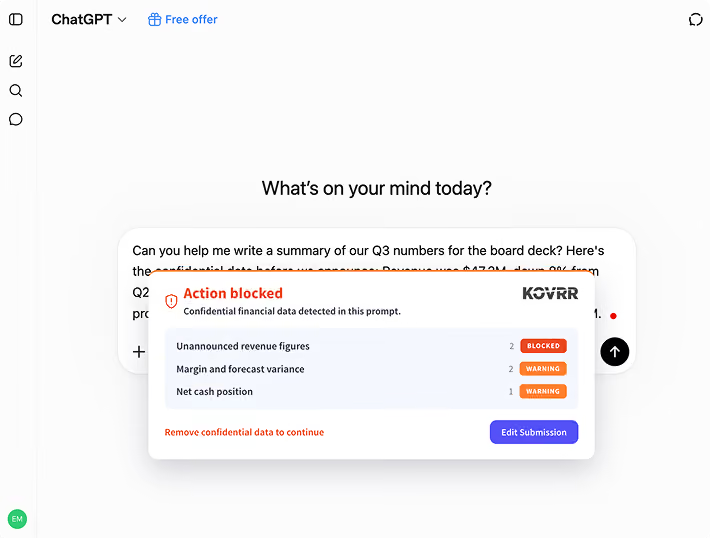
- Inputs to models: Employees pasting PII into consumer AI tools, or into enterprise AI systems, sends personal data to processing paths that may not be well-controlled.
- Outputs from models: Generative AI can produce PII that was in its training or retrieval data, sometimes reproducing information that should not have been exposed.
- Agent actions: Autonomous agents accessing systems containing PII may pass that data to downstream systems that were not authorized to receive it.
Why AI-PII Is a Distinct Category
Existing data protection law, including GDPR, applies to PII regardless of how it is processed. What AI adds is scale and novel exposure paths. Traditional DLP tools do not always catch PII pasted into a browser-based AI tool. Traditional access controls do not always account for AI agents reading data on behalf of users.
See AI data leakage for the broader dynamic and AI data governance for the framework approach.
Controlling PII in AI
Effective programs use AI-aware DLP to catch PII flowing to AI systems, restrict PII use in prompts through policy and technical controls, verify vendor commitments on PII handling in AI TPRM, and monitor AI outputs for inadvertent PII disclosure.
Related Terms


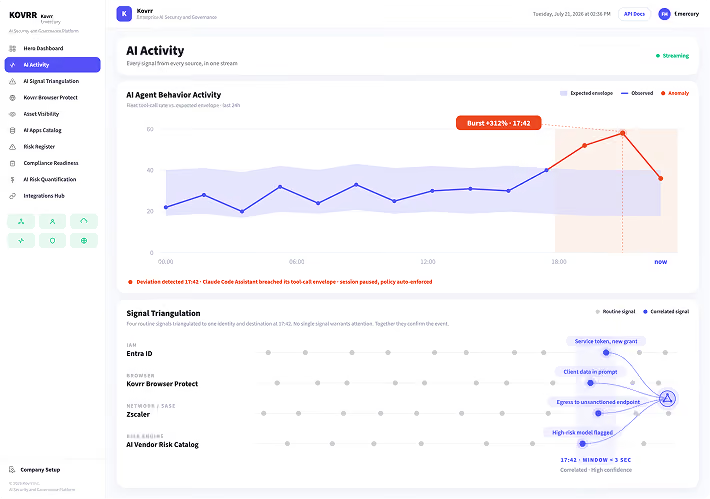
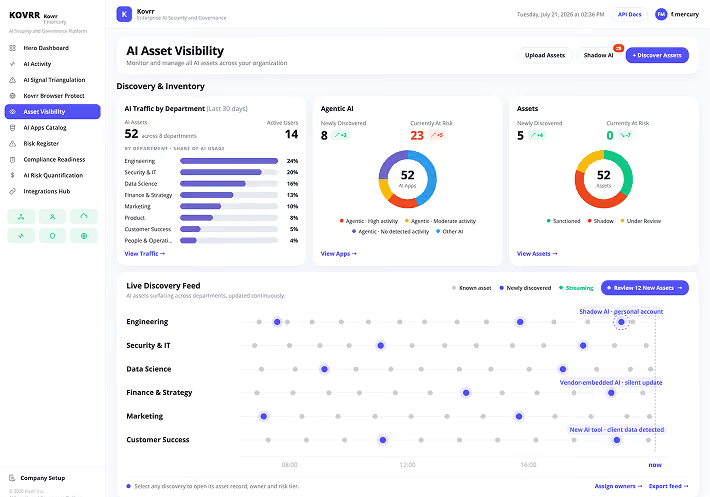
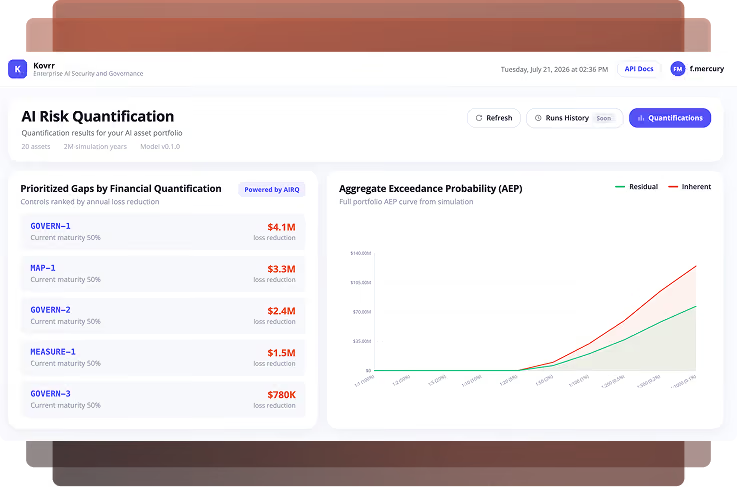
Full AI Visibility. Full Control. One Connected Platform.
Enterprise AI is expanding faster than most governance programs can track. Kovrr connects every AI signal across browser, endpoint, network, identity, and vendor systems into a single platform so security, governance, and risk teams work from the same evidence.