
AI Data Governance
AI data governance is the framework for managing data quality, provenance, privacy, and access across the AI lifecycle, covering training data, fine-tuning data, retrieval sources, and inputs and outputs at runtime.
What AI Data Governance Covers
AI systems consume, produce, and expose data at multiple points. Data governance for AI has to address each of them.
- Training and fine-tuning data: Provenance, licensing, quality, representation, and consent.
- Retrieval sources: The documents, databases, and APIs a RAG-based system pulls from at inference time.
- Runtime inputs and outputs: Prompts, generated content, and any data flowing in and out of production AI systems.
Each of these layers has its own regulatory, ethical, and security implications, which is why AI data governance is typically not just a subset of existing data governance work.
Why AI Data Governance Is Distinct
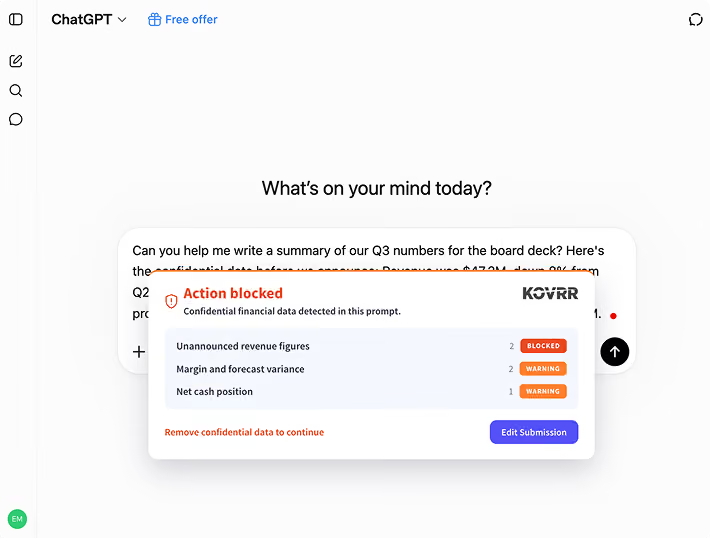
Traditional data governance assumes data at rest in known systems. AI complicates this. Training data may have been assembled years ago and is difficult to trace. Retrieval systems pull from sources dynamically. Model outputs can contain paraphrased or regenerated versions of sensitive training content, creating AI data leakage paths that traditional DLP tools do not detect.
The EU AI Act requires providers of general-purpose AI models to publish training data summaries. Sectoral regulators are asking similar questions.
Data Governance in AI Programs
An effective AI data governance program integrates with the broader AI governance program, treating data provenance and access controls as first-class governance concerns rather than infrastructure details. It also feeds into AI compliance work, since most regulatory frameworks include data-specific requirements.
Related Terms


Full AI Visibility. Full Control. One Connected Platform.
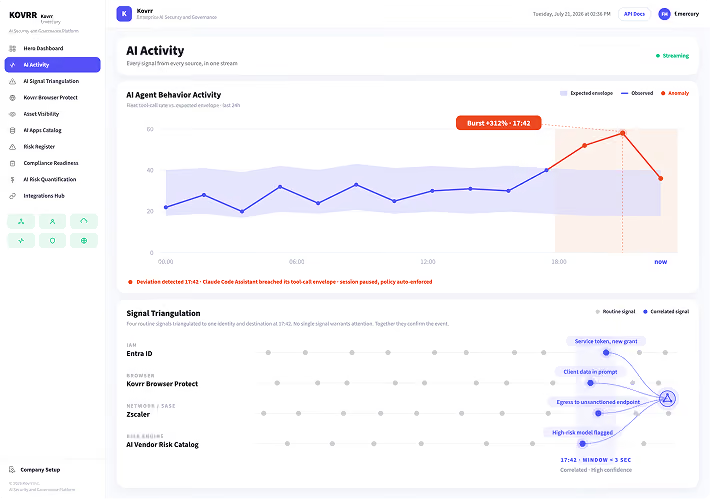
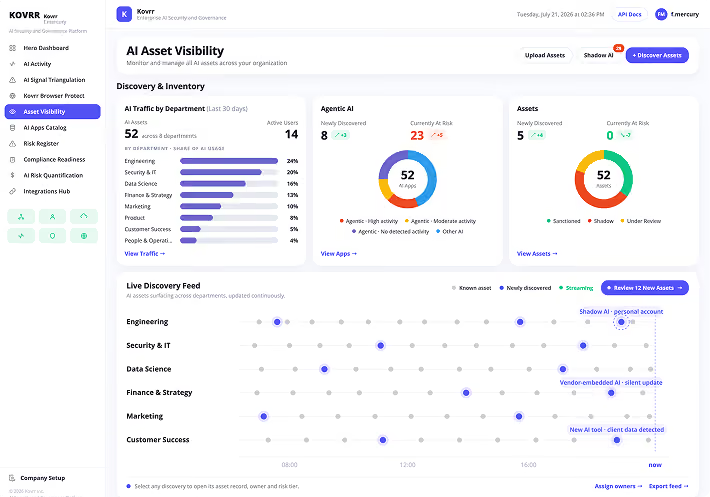
Enterprise AI is expanding faster than most governance programs can track. Kovrr connects every AI signal across browser, endpoint, network, identity, and vendor systems into a single platform so security, governance, and risk teams work from the same evidence.