
Sensitive Data Categories
Sensitive data categories in AI include personal, financial, health, biometric, and other regulated data types that require heightened protection when processed by, or exposed to, AI systems.
What Counts as Sensitive Data for AI
Traditional sensitive data categories apply directly: PII, protected health information, financial account data, biometric data, and data subject to specific legal protections. AI adds context-specific categories: source code and IP that could be extracted through model interactions, proprietary business data whose disclosure would harm competitive position, and any content whose exposure through AI-generated outputs could harm the organization or its customers.
Why Sensitive Data Categories Matter for AI Programs
Most AI governance decisions depend on data sensitivity. Whether a specific AI use case is permitted often depends on what data it will touch. Whether specific controls apply depends on the sensitivity of the data flowing through the AI system. Whether the use case triggers regulatory obligations under GDPR, HIPAA, or sectoral rules depends on the categories involved.
See AI data governance for the framework approach and PII in AI for the specific PII dimension.
Operationalizing Data Categories in AI Governance
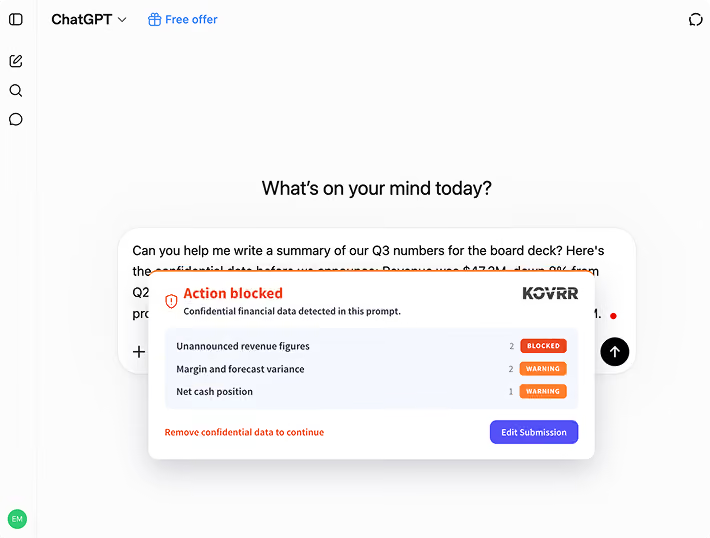
Effective programs classify AI systems by the sensitivity of the data they can access, apply data-category-specific controls (encryption, retention limits, access restrictions), and monitor for sensitive data flowing to AI systems it should not reach. The AI asset inventory typically captures data sensitivity as a first-class attribute of each AI system.
Related Terms


Full AI Visibility. Full Control. One Connected Platform.
Enterprise AI is expanding faster than most governance programs can track. Kovrr connects every AI signal across browser, endpoint, network, identity, and vendor systems into a single platform so security, governance, and risk teams work from the same evidence.