
How to Balance AI Innovation With Risk Management
The four AI risk categories every business leader needs to understand, and the framework that turns awareness into action.



Balancing AI Innovation and Risk FAQs
Speak to an Expert to Learn MoreWhy is balancing AI innovation and risk important for enterprises?
AI is a critical engine of growth, but it comes with blind spots. Unchecked AI models can produce biased outputs, breach data privacy, and disrupt operations. Balancing innovation with risk management is what lets enterprises unlock AI's upside without exposing themselves to avoidable damage. The organizations that treat AI as a strategic capability, backed by governance and quantification, will outperform the ones that treat it as a purely technical project.
What are the main categories of AI risk?
Enterprise AI risk generally falls into four categories: cybersecurity (adversarial attacks, data poisoning, AI-powered threats), supply chain vulnerabilities (interconnected AI systems failing together), legal and compliance (IP exposure, data privacy, liability for AI decisions), and operational and reputational risks (biased or erroneous outputs damaging the business). Understanding where these risks hide is the first step toward managing them.
What frameworks help manage AI risk?
Institutions like the OECD and NIST recommend a structured Map, Measure, Manage, and Govern approach. The NIST AI Risk Management Framework and ISO 42001 both provide the foundation for identifying AI assets, assessing risk, implementing controls, and reporting to leadership. Together they help organizations move from ad hoc AI adoption to a defensible governance program.
What is AI Risk Quantification (AIRQ)?
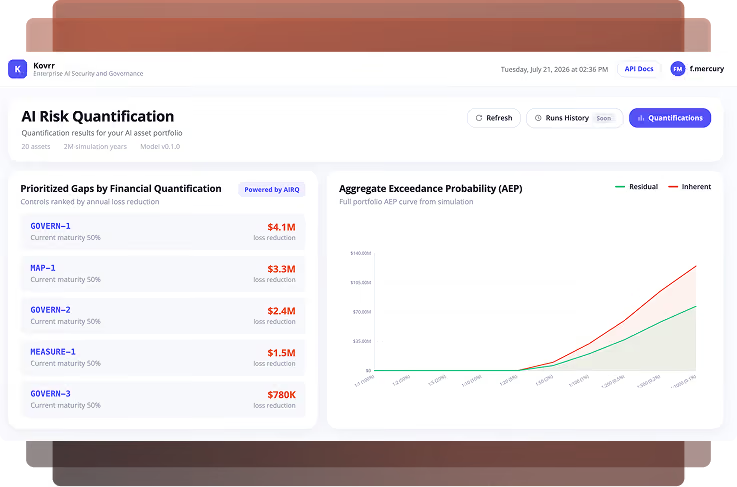
AI Risk Quantification, or AIRQ, applies insurance-grade financial modeling to AI-specific scenarios. It maps AI exposures, integrates cyber and compliance data, and forecasts potential financial losses in dollar terms. Unlike qualitative risk ratings, AIRQ gives leadership a concrete basis to allocate resources, prioritize remediation, and defend AI investment decisions.
Why does AI risk management require cross-functional collaboration?
AI risk isn't just an IT issue. It touches security, legal, data, compliance, and business teams simultaneously. If AI stays siloed inside one team, signals fragment and blind spots grow. Effective AI risk management requires a cultural shift where risk owners across the enterprise share a common language, common data, and a common view of exposure.
How can Kovrr help enterprises balance AI innovation and risk?
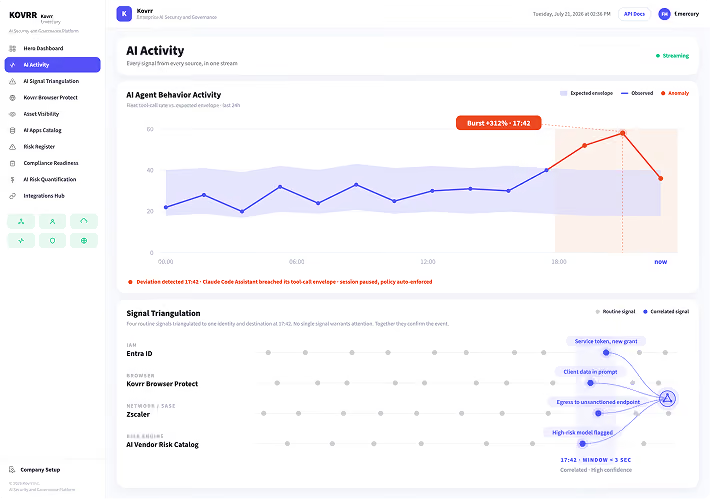
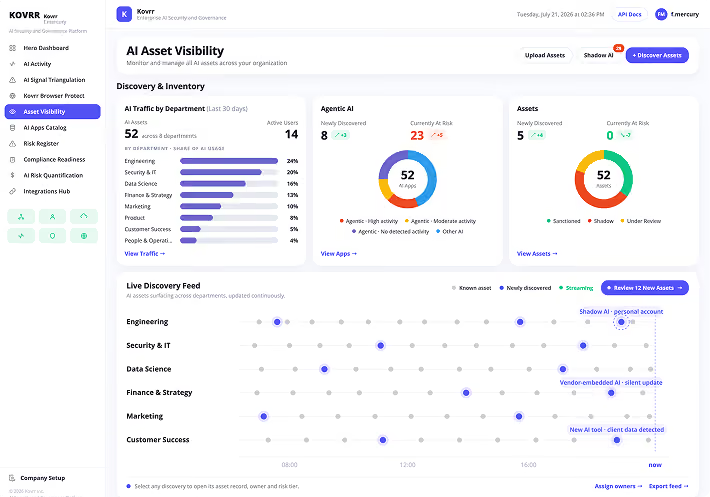
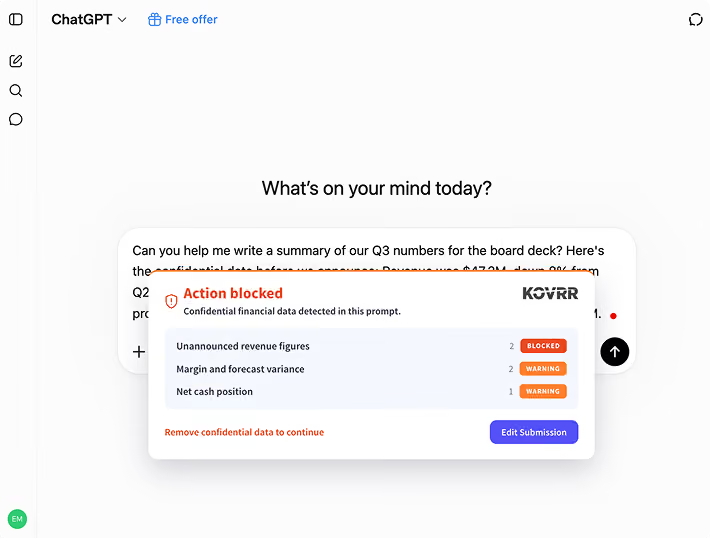
Kovrr's AI Security and Governance Platform fuses telemetry from the browser, identity, network, and endpoints into one connected view of every AI interaction across the enterprise. It surfaces shadow AI, tracks autonomous agents, assesses compliance readiness against the EU AI Act and NIST AI RMF, and quantifies financial exposure through AIRQ. That gives leadership the visibility and evidence needed to innovate confidently without inheriting unmanaged risk.

