
Blog Post
Mapping One Control Set to NIST CSF, ISO 27001 and CIS v8
August 7, 2026
Most security programs answer to three frameworks at once and document themselves three times. A customer questionnaire asks for ISO 27001 evidence, a cyber insurer asks for NIST CSF alignment, an assessor references CIS safeguards, and the same firewall rule gets described in three vocabularies for three audiences. The duplication is self-inflicted rather than required, and a holistic approach to cybersecurity GRC starts by recognizing that one program is being described repeatedly.
Published estimates put the overlap between NIST CSF 2.0, ISO 27001:2022 and CIS Controls v8 somewhere around seventy to eighty percent, so the majority of the work is already done three times over. What follows covers what each framework is built for, which official crosswalks exist already, how to pick a structural spine, and the places mapping genuinely breaks.
The Three Frameworks Do Different Jobs
Treating them as competing standards is the error that produces triple documentation. They operate at different levels of abstraction and were designed for different questions.
NIST CSF 2.0 Describes Outcomes
Version 2.0 organizes 106 subcategories across 22 categories and six functions, having added Govern to the original five in 2024. Each subcategory states a security outcome without prescribing how to reach it, which makes the framework flexible and unhelpful as an implementation guide. Govern carries the largest share at 31 subcategories, which tells you where the authors thought programs were weakest. No certification exists.
ISO 27001:2022 Certifies a Management System
The standard splits into clauses 4 through 10 covering the management system itself and Annex A carrying 93 controls across organizational, people, physical and technological themes. Controls are selected through risk assessment and recorded in a Statement of Applicability with justified exclusions. The distinguishing property is certification by an accredited body, which is why it appears in procurement questionnaires rather than in engineering discussions.
CIS Controls v8 Prescribes Implementation
Eighteen controls decompose into 153 safeguards that specify actions rather than outcomes, grouped into implementation tiers so a smaller organization can adopt a defensible subset. The prescriptiveness that makes CIS awkward as a governance framework makes it the most useful of the three for turning a higher-level requirement into something an engineer can execute, and implementation group tiering keeps the list proportionate to organization size.
The Crosswalks Already Exist
Teams routinely build mappings by hand that the standards bodies publish for free. NIST maintains informative references for CSF 2.0 covering SP 800-53, SP 800-171, ISO 27001 and CIS Controls, alongside a reference tool that exposes them interactively. CIS publishes its own mapping of v8 controls and safeguards to CSF 2.0. Third parties consolidate all of it into filterable crosswalks covering every subcategory.
Starting from a published crosswalk rather than a blank spreadsheet changes the exercise from months to weeks, and it produces a mapping other people recognize. Anyone who has watched a team argue for a week about whether an access control maps to one subcategory or three will appreciate having the question settled by the framework author instead.
Choosing the Structural Spine
One framework has to carry the structure and the others reference into it, because maintaining three parallel structures reproduces the problem you set out to solve. The choice depends less on preference than on which framework your obligations attach to.
Why CSF Usually Works as the Spine
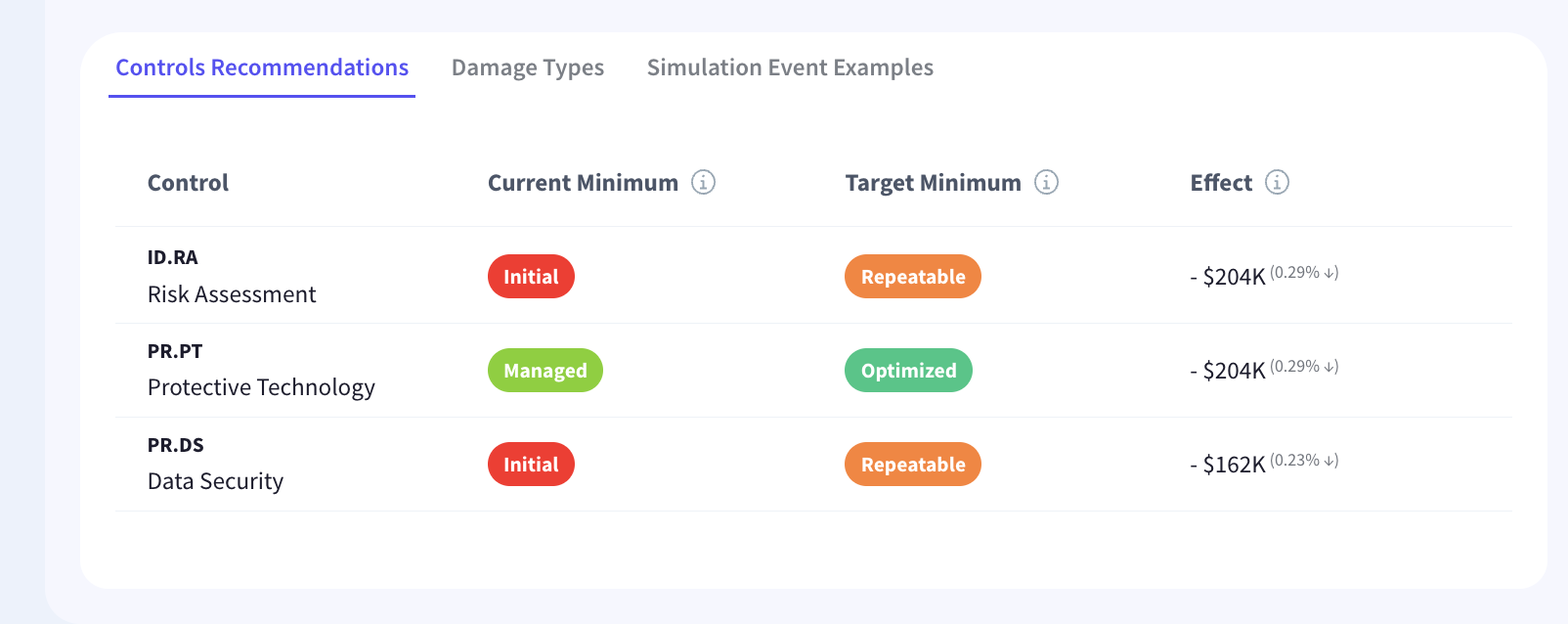
Outcome-based structure maps outward more easily than prescriptive structure maps inward, so CSF subcategories accommodate ISO controls and CIS safeguards more naturally than the reverse. Maturity scoring against CSF also produces a position rather than a binary, and quantified maturity levels give the structure a scale supporting comparison over time.
When ISO Should Carry It Instead
Organizations holding or pursuing certification should let ISO carry the structure, because the Statement of Applicability is an audited artifact and rebuilding it from a differently shaped register creates reconciliation work at exactly the wrong moment. Existing ISO 27001 control mapping then feeds the other frameworks outward rather than being reconstructed for each.
Where the Mapping Breaks
Crosswalks get oversold, and the failure modes are predictable enough to plan around.
A Mapping Is Not an Equivalence
Two controls mapping to each other means they address a similar outcome, not that satisfying one satisfies the other. Depth differs, and a CIS safeguard specifying a configuration is a narrower claim than a CSF subcategory describing an outcome. Treating a mapping as substitution produces a finding where the assessor asks for evidence the mapped control never generated.
Evidence Framing Differs Even Where Controls Match
The same log retention practice satisfies three frameworks and gets evidenced differently for each. An ISO auditor wants the documented procedure plus records of it operating. A CIS assessment wants the configuration. A CSF maturity review wants the outcome expressed as a tier. Capturing evidence once means capturing it in a form supporting all three presentations, which is more work than capturing it for one and reformatting later.
ISO Clauses Have No CSF Equivalent
Annex A controls map reasonably well and clauses 4 through 10 largely do not, since internal audit programs, management review records and the Statement of Applicability are management system artifacts CSF never asks for. Roughly the same holds in reverse, where CSF governance subcategories reach into risk strategy that Annex A treats lightly. Budget for a framework-specific remainder rather than promising complete reuse. Standalone frameworks carry this limitation generally, which the problem with standalone frameworks sets out in more detail.
Prioritizing Once the Map Exists
A completed crosswalk shows coverage and says nothing about sequence. Every framework presents its controls as a list, and a list of 153 safeguards ordered by control number is not a plan.
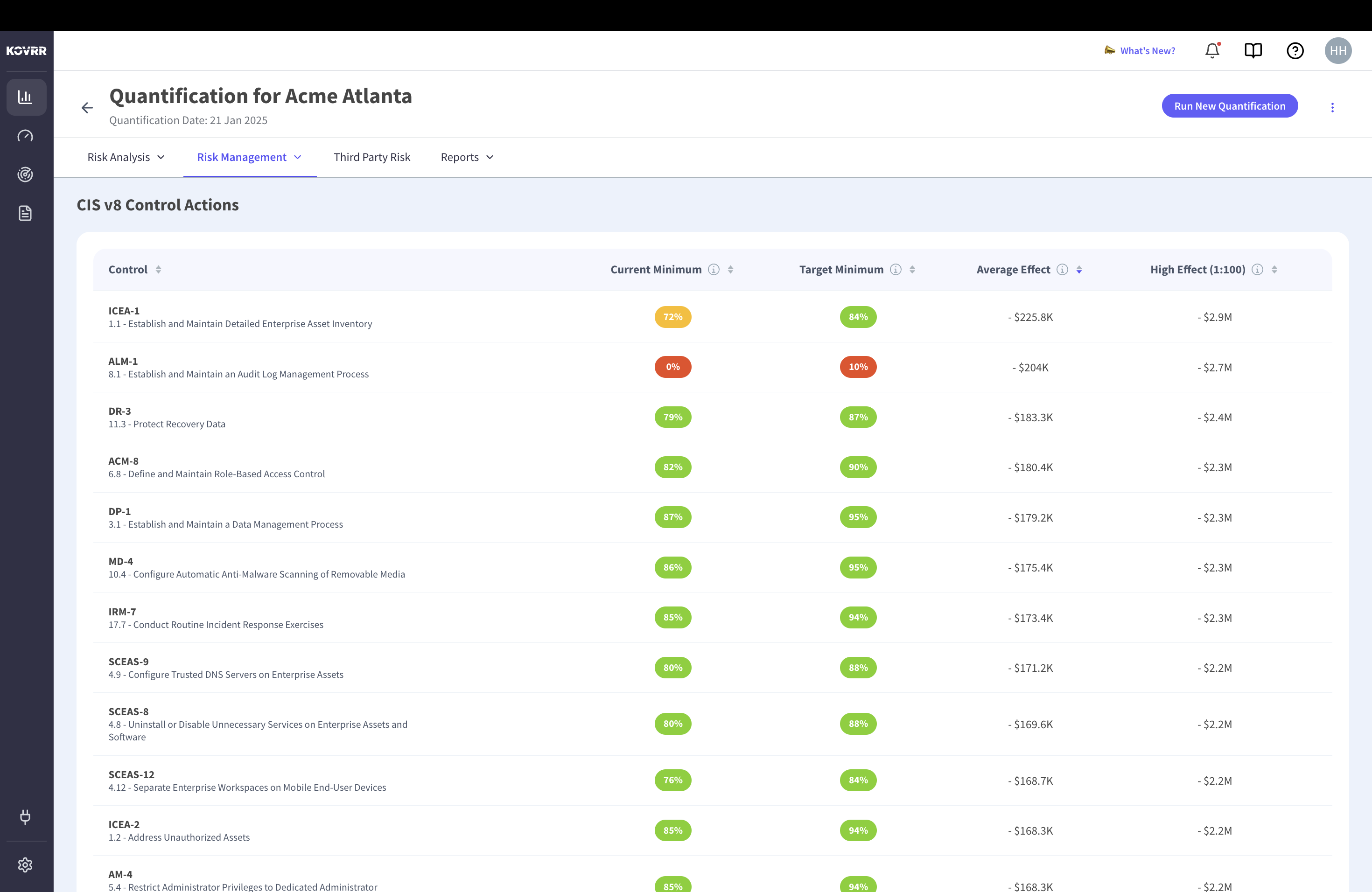
Three ordering principles are available and they produce different sequences. Implementation group tiering orders by organization size and gives a defensible starting subset. Threat mapping orders by which techniques the controls interrupt. Financial effect orders by the loss each improvement removes, which is the ordering that survives a budget conversation because ties disappear. Turning an assessment into a sequence is the step most programs skip, and converting assessments into action plans covers how the handoff works.
Shared Controls Deserve Priority
A control satisfying requirements in all three frameworks earns more than one satisfying a single framework, and the crosswalk makes that visible for the first time. Asset inventory and log management typically sit at the top of that list, appearing in every framework and underpinning controls that depend on them. Sequencing with a risk-focused approach to prioritization rather than by framework order avoids finishing one standard while another stays untouched.
What to Build
The deliverable is smaller than most teams expect. Three artifacts carry the whole approach.
- A Normalized Control Register: One entry per control with an owner, evidence location and cross-references to each framework it satisfies.
- A Coverage View: Per framework, which requirements are met, partially met or unmet, generated from the register rather than maintained separately.
- An Evidence Index: Where each artifact lives, when it was refreshed, and which controls cite it.
Maintaining these inside a cyber risk register rather than in parallel spreadsheets keeps the cross-references current, since the failure mode is drift rather than absence. A register built once and updated continuously beats three that get reconciled before each audit, and a smarter register strategy is largely about where the mapping lives.
Assessment Cadence Keeps It Honest
Continuous testing beats periodic review here, since continuous control monitoring catches a control that stopped operating between assessments. A crosswalk also decays as frameworks revise and as the environment changes, so scoring on a standing cycle matters more than the initial mapping exercise. Running maturity assessments against the same register each period also produces the trend making coverage improvements visible, which a control assessment supplies as a byproduct rather than a separate exercise.
One Program, Several Vocabularies
Frameworks are reporting formats over a single security program, and the program does not change because the audience does. Building the register once with cross-references, starting from published crosswalks rather than a blank sheet, and budgeting for the framework-specific remainder turns multi-framework compliance from three programs into one with three views. Kovrr's cybersecurity GRC approach scores a single control set against several frameworks, so coverage per framework comes out of one assessment.
To see how one control set scores against NIST CSF, ISO 27001 and CIS v8 at the same time, book a demo with our cyber risk experts.

Framework Mapping FAQs
Speak to an ExpertHow much do NIST CSF, ISO 27001 and CIS Controls overlap?

Do I need to build a framework crosswalk from scratch?
Which framework should be the structural spine?
Does a control mapping mean one framework satisfies another?
How should controls be prioritized once the crosswalk exists?
How do you keep a crosswalk from going stale?