Blog Post
What an AI Risk Committee Can Do That a Manager Cannot
August 30, 2026
Charter templates for AI risk committees are widely available and they mostly agree. The committee holds final approval authority over whether a high-risk system moves into production, plus a veto over live models, inspection rights and policy-setting powers.
The first of those is the one a committee cannot exercise well, and building the charter around it is why so many committees end up as a documentation exercise. A body that meets monthly cannot sit in the path of releases that ship weekly. It will either delay them or be routed around, and in practice it is routed around.
Why Deployment Approval Fails as a Committee Power
Three reasons, and none is about the quality of the people on it.
Cadence is the first. A monthly meeting against a delivery cycle measured in days means either the deployment waits or somebody finds a description of the work that does not require the meeting. The second is context, since a committee reviewing twelve systems in ninety minutes is working from a summary somebody else prepared and cannot interrogate the parts that matter. The third is accountability, because a decision made by nine people is a decision nobody signed, and the record afterwards shows a body rather than a name.
The Individual Signs, the Committee Does Not
Operational approval works better with a named individual who owns the consequence, which is a separate question from what a committee is for. Accountability for what an agent does belongs to whoever carries the outcome, and a committee that tries to occupy that position weakens both roles.
Prohibitions Are the Only Absolute Power It Holds
A committee can declare that the organization will not do something at all. No individual manager can, because the scope of the decision exceeds any single business unit, and that makes the prohibition list the one instrument with genuine teeth.
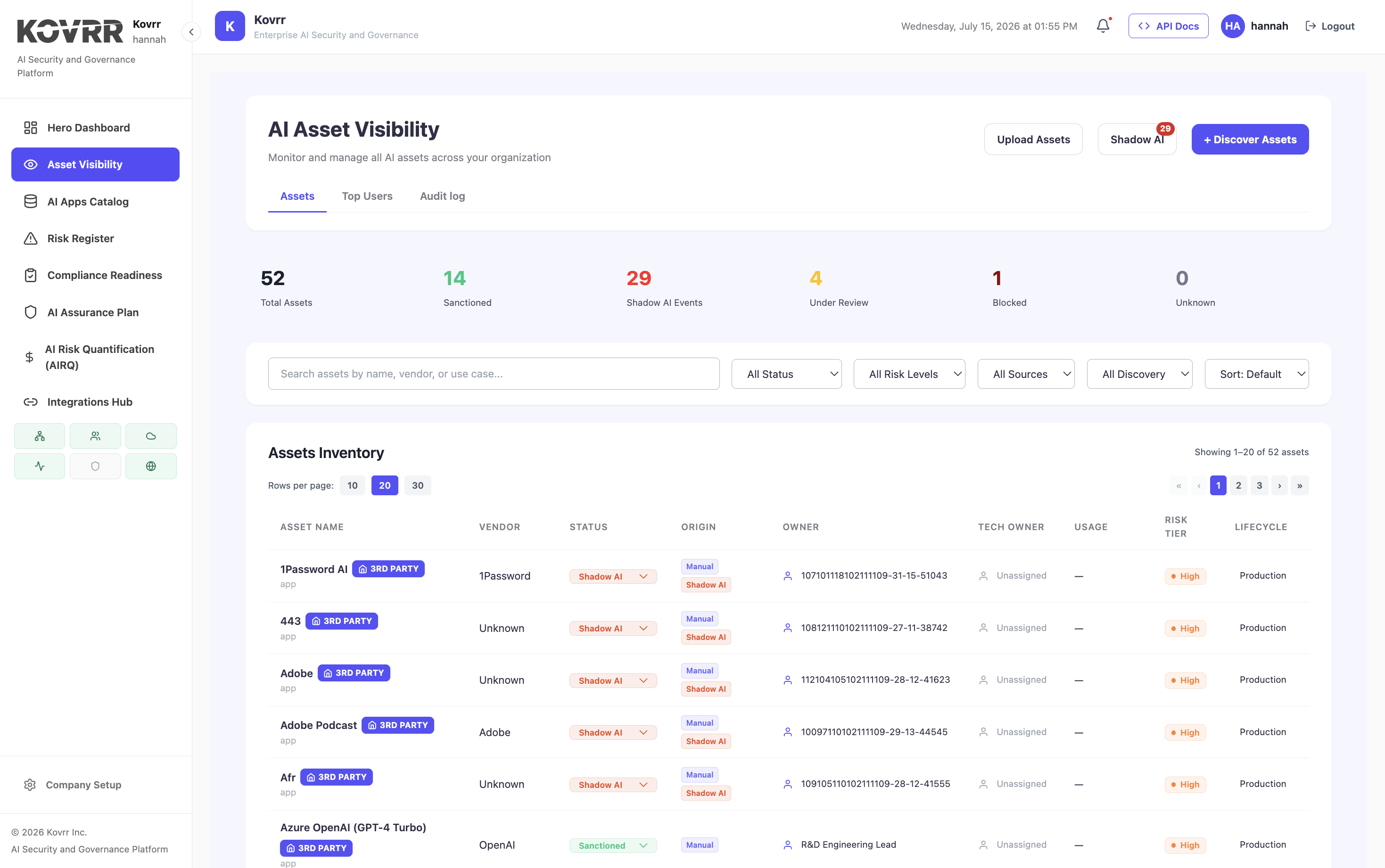
The list needs to be short, specific and enforceable at a technical layer rather than a policy one. Categories of use the organization declines regardless of business case. Data classes that may never reach an external model. Decision types that always require a human determination. Each entry should name the mechanism that enforces it, because a prohibition with no enforcement point is a statement of intent.
A Prohibition Applies Without a Meeting
The absence of a meeting is what gives it force. A standing rule operates on every deployment continuously, whereas a case-by-case veto operates only on the cases that reach the room. The committee's leverage comes from rules that run in its absence rather than from decisions it makes in session.
Thresholds Decide Who Decides
The second real power is defining which decisions require which level of sign-off. Templates generally get the shape right and put the committee in the wrong tier.
Tiering by consequence works. Prohibited categories terminate automatically. Systems affecting livelihoods, safety or regulated decisions need a named senior approver with recorded evidence. Customer-facing assistants and internal coding tools need registration and periodic sampling. Low-impact automation needs recording and nothing else. The committee's job is setting where those lines fall and revising them as the estate changes, not occupying the second tier itself.
Getting the Lines Wrong Produces Shadow Systems
Thresholds set too low route a large population through a heavy process, and the predictable result is work that never enters the process at all. Reviewing the distribution of systems across tiers, and asking whether the counts look plausible against what the organization is building in practice, is a better use of committee time than reviewing individual submissions. How the estate is counted determines whether that distribution means anything.
The Aggregate View Belongs to Nobody Else
This is the committee's genuinely exclusive contribution and the one most charters omit. Individual approvers see their own decisions. Business units see their own systems. Only the committee sees the total.
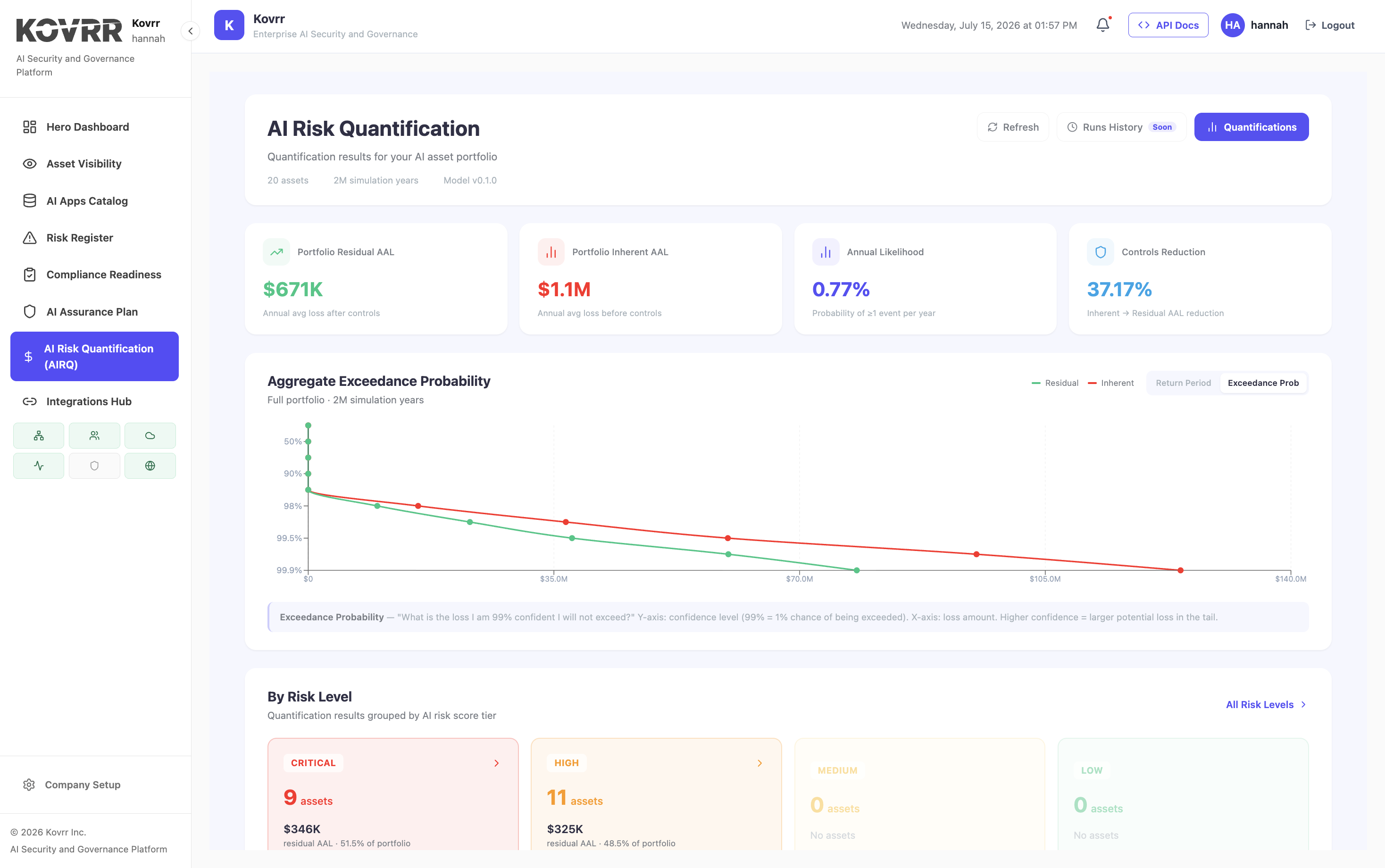
Four aggregate figures are worth standing agenda items. Total exposure accepted across all approved systems, which nobody sums unless asked. The override rate, meaning how often an objection was raised and the deployment proceeded anyway. Where exceptions cluster, since concentration in one business unit or one system type is a finding about the threshold rather than about the unit. The proportion of the estate entering without passing any gate.
Exposure in Currency Rather Than Severity
Aggregating severity ratings produces a count of high-rated items and no basis for comparison against anything else the organization carries. Aggregating modeled loss produces a figure that sits alongside other enterprise risks, which is what allows a committee to argue for resource rather than describe concern. AI risk quantification is what makes the aggregate additive at all.
It Has to Be Reachable From Outside the Chain
The fourth power is structural. Where an assessment function reports through the same executive as the delivery function, an uncomfortable conclusion travels up one chain and resolves predictably.
A committee positioned outside that chain gives the objection somewhere to go. The requirement is that escalation reaches it without permission from the party being escalated about, and that escalations are recorded whether or not they changed the outcome. A log of objections the committee declined to uphold is stronger evidence the route works than an empty log, which the challenge problem applies to every review function.
Measuring Whether It Has Authority
Committees are usually assessed on attendance, meeting frequency and papers produced. None of those indicates whether the body can affect an outcome.
- Override Rate: How often the committee's position was set aside, which is the most direct available measure of its standing.
- Prohibition List Movement: Whether anything has been added or removed, since a list unchanged in two years describes a body that has stopped deciding.
- Threshold Revisions: Whether tier boundaries moved as the estate grew, which is the committee's main lever being used or left idle.
Reporting the override rate upward is the uncomfortable part and the part that matters. A board receiving a committee's recommendations without knowing how often they were disregarded has an incomplete picture, and directors examining oversight quality read that figure as informative rather than as an admission.
What Membership Needs to Deliver
Composition is where most guidance concentrates, and it matters for a narrower reason than usually argued. The committee needs enough seniority that its standing rules are not casually overridden, and enough functional coverage that a decision does not have to be revisited when legal or the business reads it afterward.
The requirement argues for fewer people with more authority rather than broad representation. A body of six who can commit their functions decides; a body of fifteen consults. The chair should not own delivery of the AI program, since a chair whose objectives depend on shipping cannot chair the body that constrains shipping, and defensibility under supervision turns on exactly that separation.
Authority Comes From Standing Rules
A committee built around approving deployments will be bypassed, because monthly cadence cannot serve weekly delivery and a group decision leaves no accountable name. The powers that work operate continuously and without a meeting, being a short enforceable prohibition list, thresholds that decide who signs what, an aggregate view nobody else produces, and a position outside the reporting chain that objections can reach. Measuring the override rate is how an organization finds out whether any of it is real. Kovrr's AI Security and Governance Platform maintains the inventory, ownership and exposure figures that make the aggregate view possible.
To see total accepted AI exposure across your estate rather than a list of individual approvals, book a demo mapped to your own environment.

AI Risk Committee FAQs
Speak to an ExpertShould an AI risk committee approve individual deployments?

Which powers give an AI risk committee teeth?
Why is a prohibition list more powerful than a veto?
How should risk tiers be set?
What should be on the standing agenda?
How do you measure whether the committee has authority?