
Blog Post
When a Cybersecurity Finding Stops the Sale
September 18, 2026
Every cyber loss model runs in the same direction. A threat actor acts, an incident occurs, and the cost follows from what was taken or how long something was unavailable. Frequency comes from threat data and severity from asset values.
There is a loss category that runs the other way. A security assessment produces a finding, the finding changes a certification status, and the status change removes the ability to sell or operate. No attacker, no incident, and no term for it in any information-security model.
Where Does Certification Gate Revenue?
Wherever a security certification is a precondition for market participation rather than a demonstration of good practice, and the list is longer than it first appears.
Vehicle type approval in several markets depends on the manufacturer operating a certified cybersecurity management system, so a non-conformity can suspend approval and stop sales of affected models. Medical device submissions can be refused at intake where required cybersecurity content is missing. Card acceptance depends on a compliance status a commercial counterparty can withdraw. Defense contract eligibility depends on a certification level held at award.
Which Have Nothing in Common Except the Structure
Different sectors, different bodies, different standards. What repeats is that a security judgment about the organization sits upstream of a commercial permission, so the loss travels from an assessment room to a revenue line without passing through an incident. One certification regime in detail shows what an assessment against this kind of standard involves.
Where Does the Frequency Term Come From?
Your own calendar and your own defect rate, which is the most consequential difference from a conventional scenario.

Threat intelligence tells you nothing here. The probability of the loss is the probability that an assessment occurs, which is a published schedule, multiplied by the probability it produces a finding serious enough to affect status, which is estimable from your own assessment history.
Which Makes This Unusually Tractable
Most cyber scenarios have an unknowable frequency and get an estimate. Here the event is scheduled and the conditional probability comes from records you hold, so the frequency side is better grounded than in almost any adversarial scenario, and working without an incident history is harder than working from an audit calendar.
Which Variant Applies to You?
Four shapes exist and they behave differently enough that treating them as one scenario produces the wrong number.
- Gate at entry: Certification is required to enter a market or compete for work, so the loss is delay or opportunity foregone rather than revenue interrupted.
- Gate at renewal: Status persists until a periodic reassessment, so the exposure concentrates on known dates and the loss is a suspension.
- Gate at continuation: Status must be maintained throughout performance, so a lapse mid-contract is a termination question rather than a bidding one.
The fourth is the sharpest. Where a commercial counterparty holds the gate rather than a regulator, the decision is discretionary, the timeline is unpublished and there is no appeal, so the same finding produces different outcomes depending on the relationship.
Why Does This Change Control Prioritization?
Because it gives the same control two different values, which no single ranking can express.
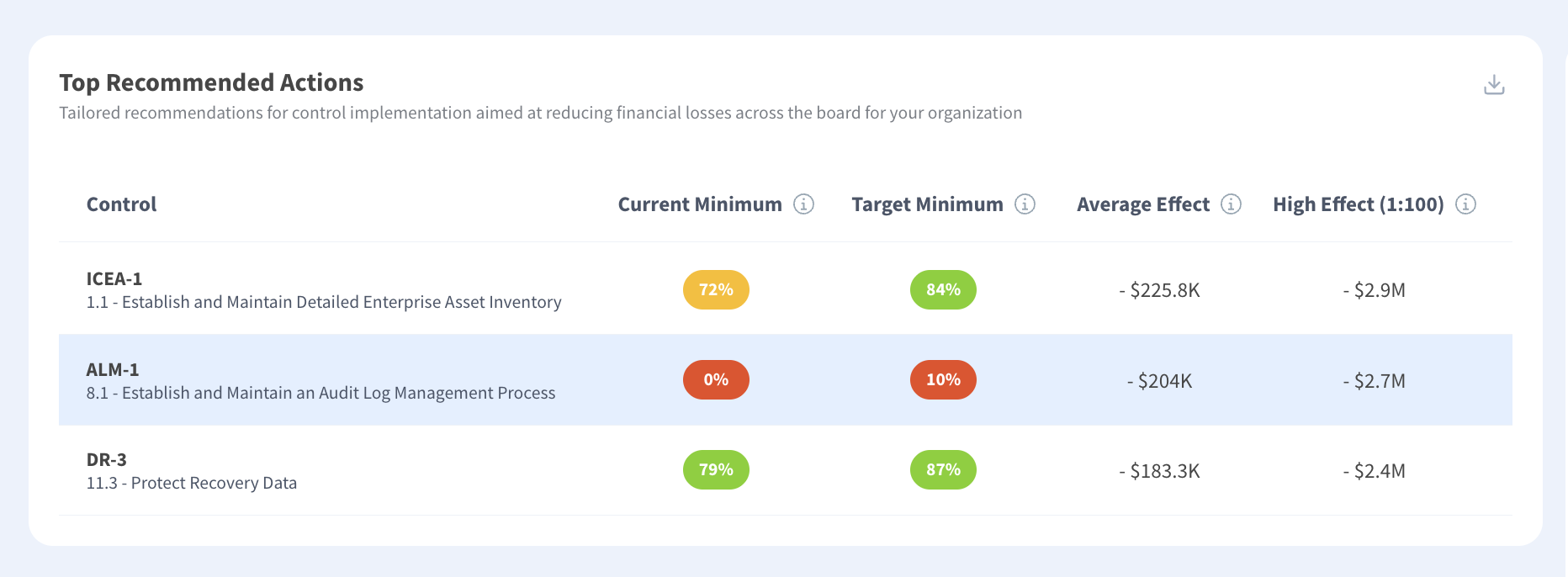
A control might contribute modestly to breach exposure and be the specific item an assessor checks against the standard governing your market access. Ranked on loss avoided it sits mid-table. Ranked on revenue protected it is first. Both rankings are correct and they answer different questions.
Which Argues for Two Columns Rather Than One
Recording against each control both the exposure it reduces and whether it is assessed for a certification you depend on turns an argument about priorities into a comparison. A control appearing in both columns is straightforward to fund, and one appearing only in the second is the case that gets lost in a purely loss-driven ranking.
Where Does It Belong in the Register?
In the cyber risk register with a revenue figure attached, which is not where it currently sits in most organizations.
The usual arrangement puts certification status in a compliance register tracking obligations and dates, separate from the cyber register tracking scenarios and losses. The split is defensible for most obligations and wrong for this one, because the trigger is a security control finding and the consequence is revenue, so both halves belong to the cyber scenario.
What Does the Entry Look Like?
A scenario named for the certification rather than for a threat. The asset is market access, the trigger is a non-conformity at assessment, the frequency is the assessment cycle and the severity is revenue dependent on that certification over the suspension period, which an entry carrying its own dated figures makes testable.
Who Owns It?
Three functions, and the risk looks complete to none of them, which is why it goes unquantified.
Security produces the finding and treats it as a control weakness to remediate. Quality or regulatory affairs holds the certification and treats a finding as a corrective action item. Commercial owns the revenue and has no visibility of either. Each view is internally coherent and none contains the loss.
What Is the Smallest Fix?
Naming, per certification, the revenue that depends on it. The figure makes the exposure visible to all three functions in the same unit, and somebody in finance can produce it in an afternoon from the product or contract mapping, and valuing a security position commercially uses the same reasoning in a different setting.
Can the Exposure Be Transferred?
Almost never, which is worth confirming before anybody assumes insurance addresses it.
A cyber policy responds to incidents. Here there is no incident, so the trigger for cover is absent before any exclusion needs reading. Loss of revenue caused by a suspended approval or a withdrawn status is a commercial consequence of a governance finding, and no standard wording contemplates it.
Which Makes It Retained by Default
Retained exposure attracts a stronger funding case than transferable exposure of the same size, because nothing else absorbs it. An organization comparing this against a breach scenario of similar magnitude should weight this one higher on that basis alone, and what a policy does not reach is where the assumption otherwise gets tested.
Is There Mitigation Other Than Compliance?
Two, both structural rather than technical. Diversifying across markets or certification regimes reduces the proportion of revenue any single status controls, and where a gate is held by a commercial counterparty, holding an alternative relationship means a withdrawal is a disruption rather than a stop. Both are commercial decisions that a security exposure figure can justify.
What Should Be Established First?
Four things, and none requires a security assessment.
Which certifications, approvals or statuses are preconditions for selling or operating in your markets. What proportion of revenue depends on each. Which variant each represents, since entry, renewal, continuation and commercial-discretion gates have different loss shapes. Then what your non-conformity rate has been at the last several assessments, which is the conditional probability. Cyber risk quantification built from those four produces a figure in the same unit as every other scenario, which is what lets it compete for budget.
The Finding Is the Event
This loss runs from an assessment finding to a status change to lost market access, which is the reverse of every scenario an information-security model contains, and there is no attacker anywhere in it. The frequency comes from your assessment calendar and your own non-conformity rate rather than from threat data, which makes it better grounded than most adversarial estimates. Four variants exist and they behave differently, with the commercial-discretion version the fastest and least appealable. The same control carries two values, one against loss avoided and one against revenue protected, so a single ranking cannot express both. It belongs in the cyber register rather than the compliance register too, because the trigger is a control finding and the consequence is revenue. Kovrr's cyber risk quantification prices market access alongside conventional loss.
To see certification-dependent revenue modeled as a cyber scenario, book a demo with our risk experts.

Certification Exposure FAQs
Speak to an ExpertWhere does certification gate revenue?

Where does the frequency term come from?
Which variants of the gate exist?
Why does this change control prioritization?
Where does this belong in a risk register?
Who owns this risk?