
Blog Post
What a Cyber Insurance Submission Reveals About Your Program
September 16, 2026
A cyber insurance application is treated as a form to complete. Somebody gathers the answers, checks the boxes, submits it and waits for terms.
Read the other way, the questions are a ranked list of what a market with claims data across thousands of organizations believes predicts loss. The list was assembled by parties who pay when they get it wrong, which makes it a more disciplined signal than most control frameworks and it arrives for free.
Why Do These Questions Carry Signal?
Because the people writing them lose money when the correlation is weak, which is a constraint few other sources of security guidance operate under.
A framework aims for completeness and lists everything that could matter. An application aims for prediction and asks about the few things that separate a book that performs from one that does not. After several years of severe underwriting results, carriers narrowed the questions substantially, so what remains is what survived contact with claims.
Which Makes the Short List the Interesting Part
An application asking about a dozen controls is telling you those dozen carry most of the predictive weight in the market's view. A framework listing several hundred is not ranking them. Where the two disagree about importance, the application is the one backed by payouts, and prioritizing by what each control removes reaches similar conclusions from a different direction.
What Does the Market Consider Predictive?
Four things dominate, and the reasoning attached to each is more useful than the control itself.
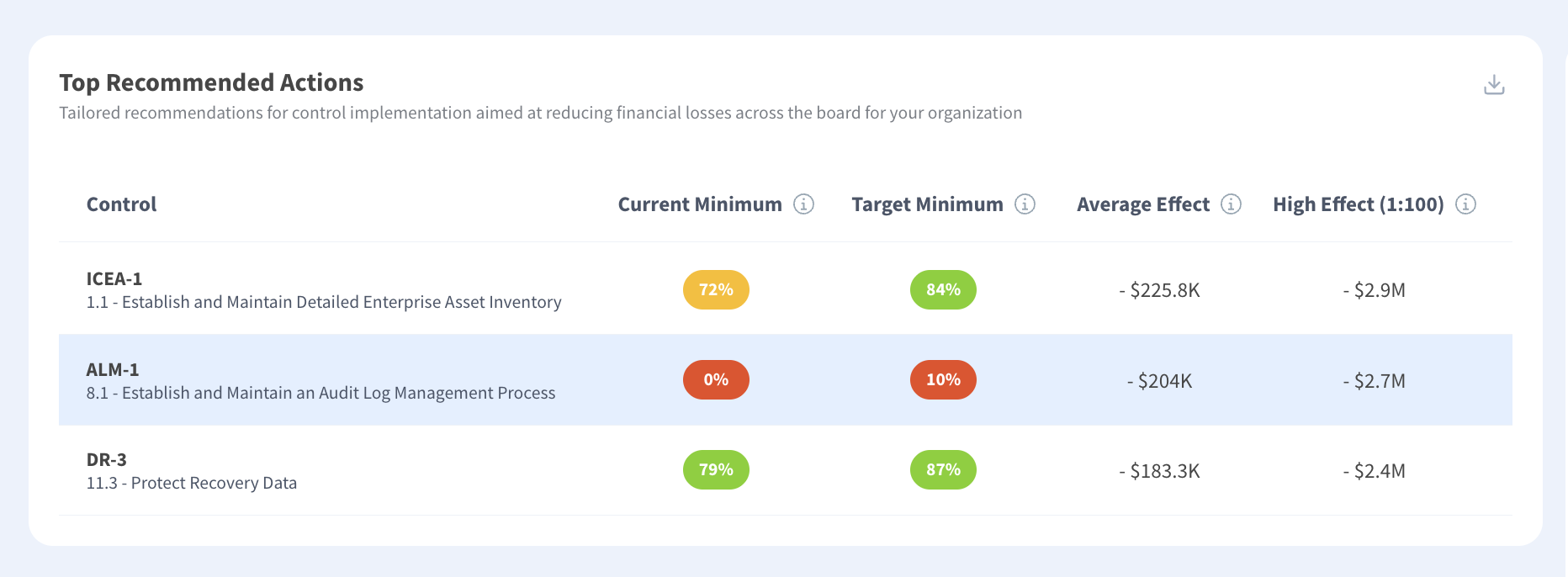
Multi-factor authentication coverage, because stolen credentials are the initial access path in most events the market pays for. Endpoint detection with behavioral monitoring, because it interrupts automated lateral movement that conventional antivirus does not. Isolated and tested backups, because they determine whether an organization restores or negotiates. Patch timelines for critical vulnerabilities complete the set,, because exposure duration is the window the market observes being exploited.
Which Answer Reveals the Most?
The backup question, since it is the only one that predicts severity rather than frequency. The other three affect whether an event happens. Backup capability affects what an event costs once it has, and an underwriter asking whether restoration has been tested is asking about the difference between a week of disruption and a payment.
What Does an Unanswerable Question Mean?
More than a negative answer, and this is the diagnostic value most organizations leave on the table.
A question answered no is a known position. A question nobody can answer indicates the organization does not measure something the market considers basic, which is a finding about visibility rather than about the control. Whether multi-factor authentication is enforced everywhere is a coverage percentage somebody either has or does not, and not having it is the more informative result.
How Should Those Be Recorded?
As a separate list from the negative answers, because they lead to different work. A no requires a control program. An unknown requires a measurement, which is usually faster and cheaper, and it frequently turns out that the control exists and nobody could evidence it, which continuously verified control state addresses.
What Do the Questions Reveal About Severity?
The parts of the application nobody reads as a diagnostic, which are the exposure questions rather than the control questions.
.png)
An application asks for record counts by type, revenue dependent on systems, largest customer concentration and reliance on named third parties. Those are severity inputs, and the market asks for them because they determine what a loss costs rather than whether one occurs. An organization that cannot produce them for an insurer also cannot produce them for its own exposure model.
Which Is the Same Data Twice
The submission and a quantified exposure figure draw on an overlapping input set. Assembling the first and treating it as paperwork rather than as the input to the second is duplicated effort, and cyber risk quantification built from the submission data produces an internal figure alongside the external one.
What Should You Do With the Comparison?
Read your own control assessment against the application and look at the disagreements, which is a half-day exercise with a useful output.
Where your assessment rates something highly that the application does not ask about, you may be investing in an area the market does not consider predictive. Where the application asks insistently about something your assessment treats as one item among hundreds, the market is telling you the weighting is wrong. Neither disagreement settles the question and both are worth examining.
Where Should You Trust Your Own Assessment Instead?
On anything specific to your operations, since an application is written for a population. A control mattering because of how your particular business works will not appear, and its absence from the form says nothing about its value. The market signal is strong on common exposures and silent on anything unusual.
What Changes When the Answers Are Evidenced?
The conversation, since carriers moved from accepting attestations to requesting artifacts and the organizations that noticed are in a different position from those that did not.
An answer supported by a coverage report with named exceptions, a dated restoration test or a console export is checkable. The same answer as a yes is an assertion. Underwriters increasingly differentiate between the two, so the evidence exercise affects terms directly rather than only reducing the chance of a dispute at claim, and assembling that evidence across the year is what makes it available.
What Is the Risk of Answering Without Evidence?
A dispute at the worst possible moment. An answer that turns out to overstate the position can affect whether a claim is paid, and the person who completed the form months earlier was frequently not the person who knew. Requiring an evidence reference against each answer protects the organization more than it slows the submission.
What Do the Questions Not Ask About?
Two categories, and both absences are informative rather than oversights.
Insider risk barely appears. An application asks extensively about external access paths and little about what an entitled employee can reach, because the market's claims experience is dominated by external events and because insider frequency depends on organizational factors an underwriter cannot assess from a form. The exposure is real and the market is not pricing it from the questionnaire.
Detection and response time is the second. An application asks whether monitoring exists rather than how long it takes to notice, which is the variable that bounds severity in most scenarios. A yes to endpoint monitoring covers an organization that responds in an hour and one that responds in a fortnight, and measuring the position rather than asserting it is what closes the difference.
What Follows From Those Absences?
A strong submission and a strong security position are not the same thing. An organization optimizing purely for the form can score well while carrying substantial exposure in the two areas nobody asks about, and insider exposure modeled separately is where the first of those gets priced.
Should You Volunteer What Is Not Asked?
Where it helps you, yes. A measured detection time better than the market assumes is a differentiator no question surfaces, and an underwriter given a figure they cannot get from the form has something to price favorably rather than to assume conservatively.
What Should Be Extracted From the Next Submission?
Three artifacts, all byproducts of work already being done.
A list of questions nobody could answer, which is a measurement backlog rather than a control one. A list where your own assessment and the market's weighting disagree, which is a prioritization question worth raising. Then the severity inputs, which feed an internal exposure model rather than sitting in a submitted form. Producing evidence on somebody else's timeline is easier the second time when the first time produced a reusable record.
Read It as a Ranking
A cyber insurance application is a ranked list of what a market holding claims data believes predicts loss, assembled by parties who lose money when the ranking is wrong. The short list is the signal, since a framework aiming for completeness ranks nothing while an application aiming for prediction has already discarded what did not survive contact with claims. Questions nobody can answer are more informative than negative ones, because they indicate a measurement shortfall rather than a control one. The severity questions feed an internal exposure model as readily as an external submission. The market signal is also strong on common exposures and silent on anything specific to your operations. Kovrr's cyber risk quantification uses the same inputs the submission asks for.
To see your control position and exposure figure built from the data a submission already requires, book a demo with our risk experts.

Insurance Submission FAQs
Speak to an ExpertWhy do insurance application questions carry signal?

What does the market consider predictive?
Which question reveals the most?
What does an unanswerable question indicate?
How should the comparison with your own assessment be used?
What changes when answers are evidenced rather than attested?