Blog Post
The Cyber Insurance Renewal Nobody Prepares For
September 5, 2026
Renewal is treated as a procurement event that starts six weeks out. Somebody assembles the submission, answers the questionnaire, gathers what evidence happens to exist, and the terms come back reflecting whatever the year produced.
The evidence underwriters price is dated, which changes when the work has to happen. A signed restoration test from the last twelve months, a coverage percentage with its exceptions, a log showing alerts triaged and closed. None of those can be produced in six weeks, because each one is a record of something that either happened during the year or did not.
Why Can't the Evidence Be Assembled Late?
Because the artifacts carry timestamps and the timestamps are the point. An underwriter asking for proof that backups restore wants a dated log from a test that was performed, not an assurance that they would.
The same applies across the list. Coverage figures for a control deployed last month describe last month. Closure timelines require a retention window that reaches back far enough to show them. A deployment report naming current exceptions says nothing about whether the exception list has been shrinking. Each of those is a byproduct of operating the control rather than a document somebody writes, which producing evidence on somebody else's timeline covers as a general problem.
Which Artifact Has the Longest Lead Time?
The restoration test, and it is also the highest-value one. A signed and dated record of a successful restore is among the few pieces of evidence that speaks directly to whether a ransomware loss becomes an outage or a payment, and it takes planning, a maintenance window and somebody senior enough to sign it. An organization that has not run one by month six will not have one at renewal.
What Do Underwriters Price Most Heavily?
A short list, and knowing it changes the deployment order rather than the deployment plan.
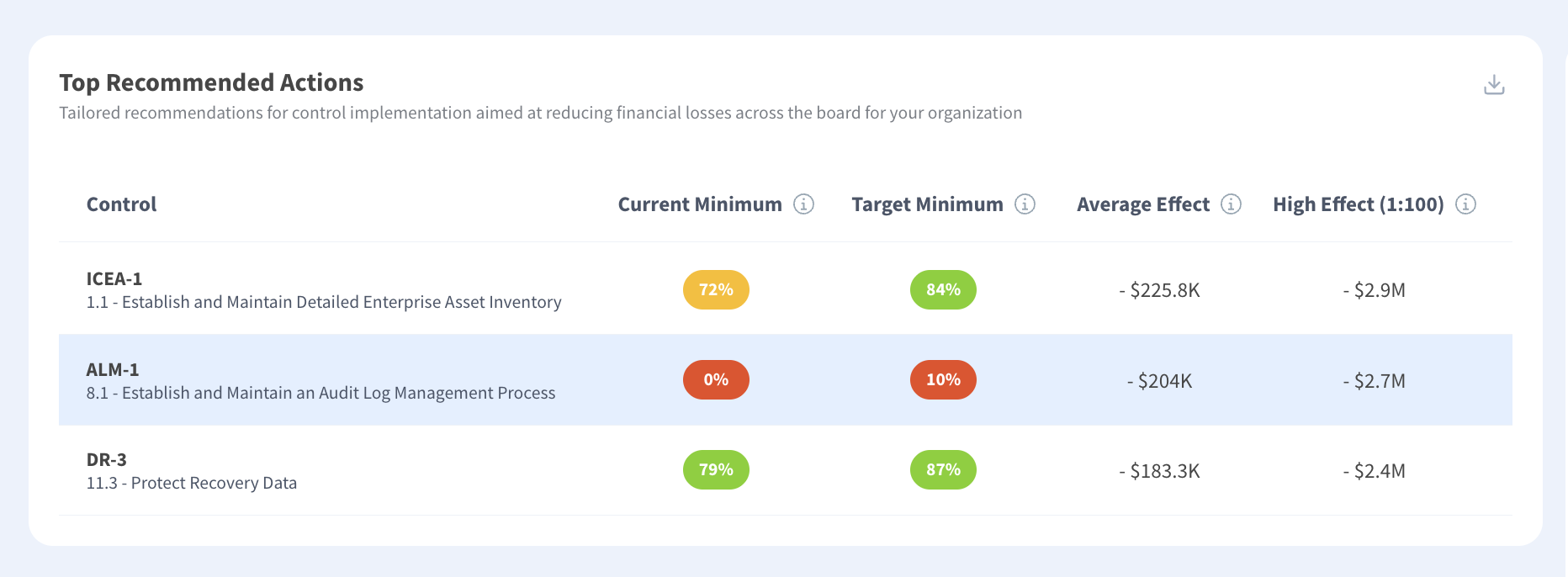
Multi-factor authentication across email, remote access, cloud administration and privileged systems, assessed on coverage rather than presence, with phishing-resistant methods weighted increasingly heavily. Endpoint detection and response deployed across all workstations and servers, where legacy antivirus is treated as close to uninsurable. Backups that are immutable or isolated, since ordinary cloud synchronization is discounted, and what an open weakness costs while it stays open prices the interval before each of these lands. Vulnerability management completes the list, with evidence of remediation rather than of scanning.
Coverage Percentage, Not Presence
The distinction that catches programs out. A control described as implemented reads differently from one reported at ninety-four percent with the remaining six percent named and dated. The second answer is stronger despite being less flattering, because it demonstrates the organization knows its own position, and an assertion of completeness invites a question the exception list would have answered.
What Changes in Month Three?
Four decisions, and each is cheap when made early and unavailable when made late.
- Schedule the restoration test: With a signed record, early enough that a failed first attempt leaves time for a second.
- Start recording coverage monthly: Percentages with named exceptions, so the renewal shows a shrinking list rather than a snapshot.
- Check log retention against the renewal window: Closure timelines cannot be shown from logs that aged out.
The fourth is sequencing. Where two control programs compete for the same quarter and one is priced heavily by underwriters while the other is not, doing the priced one first produces evidence with nine months of operating history rather than six weeks. Both get done either way and only one arrives at renewal looking established.
Does a Control Deployed Late Still Help?
Less than the same control deployed early, which is the part nobody plans around.
.png)
A control present at renewal with six weeks of operation has no coverage trend, no closure history and no test record. The same control deployed in month three arrives with a coverage percentage that has been rising, alerts that have been triaged and closed, and a restoration test inside it if relevant. Both are present. Only one has evidence attached, and evidence is what gets priced.
Which Argues Against the Pre-Renewal Sprint
The familiar pattern of remediating hard in the quarter before renewal produces controls in their least evidenceable state at exactly the moment they are examined. Spreading the same work across the year costs the same and prices better, and continuously verified control state is what generates the record as a byproduct.
Is Premium the Right Thing to Optimize?
Not on its own, and a program optimized purely for premium can end up cheap and unresponsive.
Sub-limits, waiting periods, exclusions and reinstatement provisions decide whether a policy responds to the loss the organization would suffer, and none of them shows up in a premium comparison. A business interruption sub-limit set well below modeled interruption loss, or a waiting period longer than most modeled outages, produces a program that costs less and pays less at exactly the wrong moment, which sizing a program against the distribution examines in detail.
What Should the Evidence Work Be Aimed At?
Both, in a defined order. Evidence improves terms broadly rather than premium specifically, since a well-evidenced submission gives an underwriter reason to relax a sub-limit or shorten a waiting period as readily as to reduce a rate. Asking for the structural improvement rather than only the rate is the negotiation most organizations leave unused.
What Happens When an Incident Occurs Mid-Year?
The renewal conversation changes and the preparation matters more rather than less, which is the opposite of how it usually feels.
A carrier pricing an organization with a recent claim is asking what changed afterward. An incident followed by a dated remediation record, a revised control position and evidence that the specific weakness was closed reads very differently from the same incident followed by an assurance that lessons were learned. The claim is on the record either way, and only one version demonstrates the organization responds to what it learns.
Which Evidence Matters Most Afterward?
The timeline. When the incident was detected, when it was contained, when the underlying weakness was remediated and how that was verified. Those four dates are the ones an underwriter reads, and they exist only if somebody recorded them during a period when nobody was thinking about renewal.
Does a Claim Ruin the Renewal?
Less reliably than people assume. Carriers price the population and expect claims, and an insured who has been through one and demonstrably improved can be a more attractive risk than one with no history and no evidence of tested response. What damages terms is a claim with no visible change afterward, and the part of incident response after containment is where that evidence gets made.
What Should the Broker Be Asked in Month Four?
Two questions, and asking them early is what makes the year's work targeted rather than general.
Which specific controls moved terms for organizations of this profile at the last renewal cycle, since a broker sees a book and knows what carriers are currently rewarding. Then which parts of the current program a carrier questioned or restricted, because a sub-limit that was reduced or an exclusion that was added is a signal about where evidence is thin, and the terms that surface at claim are where those changes land. Both answers are available months before anyone is preparing a submission, and the negotiation itself goes better when the year was spent on the right things.
What Does the Submission Look Like Then?
Shorter and harder to challenge, which is the outcome the year's work buys.
A coverage figure per control with the exception list and its trend. A dated restoration test with a signature. Closure timelines drawn from retained logs. A modeled exposure figure with its basis stated. Then an explanation of what changed during the year and when. The submission takes days to assemble because it is a retrieval rather than a construction, and optimizing the program against modeled exposure is the conversation it makes possible.
The Work Happens in Month Three
Renewal preparation is treated as a six-week exercise and the evidence underwriters price cannot be created in six weeks, because every useful artifact is a dated record of something that happened during the year. A restoration test needs scheduling and a signature. Coverage percentages need a trend to be worth more than a snapshot. Closure timelines need retention that reaches back. A control deployed late also arrives present but unevidenced, which prices worse than the same control deployed nine months earlier. Kovrr's cyber risk quantification produces the exposure figure and control evidence a submission needs as a byproduct of running the program rather than as a separate exercise.
To see modeled exposure alongside your current program structure before renewal season, book a demo with our risk experts.

Renewal Preparation FAQs
Speak to an ExpertWhy can't renewal evidence be assembled six weeks out?

Which evidence has the longest lead time?
What do underwriters price most heavily?
Why does coverage percentage beat stating a control is implemented?
Does a control deployed shortly before renewal still help?
Should premium be the target?