
Cyber Risk Appetite Statement
A cyber risk appetite statement is a formal document expressing the level of cyber risk an organization is willing to accept in pursuit of its strategic objectives, quantified in financial terms where possible.
Why Risk Appetite Needs to Be Quantified
A qualitative risk appetite statement ("we have a low appetite for cyber risk") is not decision-useful. It cannot be tested against actual exposure, cannot inform investment decisions, and cannot be used to escalate when exposure exceeds acceptable levels.
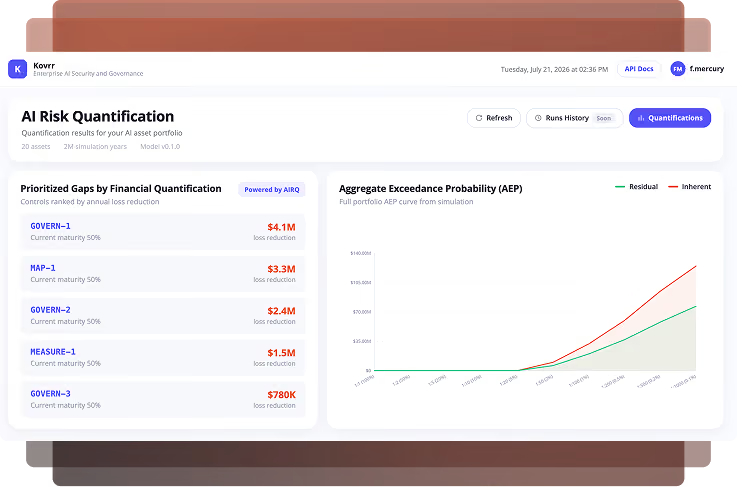
A quantified statement can. "We are willing to accept up to $X in 1:100 annual cyber loss exposure at the enterprise level" is a statement the organization can test its actual posture against.
What a Cyber Risk Appetite Statement Contains
Effective statements typically specify quantitative thresholds at the enterprise level (1:100, 1:250, or AAL limits), qualitative red lines that will not be crossed regardless of financial analysis (specific data categories, jurisdictions, or activities), specific accountability for monitoring against the statement, and defined escalation paths when exposure approaches or exceeds thresholds.
Risk Appetite in Board Governance
Boards typically approve risk appetite statements as part of enterprise risk oversight. The statement then serves as the reference against which management reports and against which the board evaluates whether cyber risk is being managed within agreed bounds.
See how to translate cyber risk into financial terms the CFO understands.
Related Terms


Turn Cyber Risk Into Financial Exposure the Board Can Act On
Security leaders are being asked to defend budgets, prioritize controls, and report cyber risk in the same terms as every other enterprise risk. Kovrr's CRQ Platform models loss scenarios, benchmarks control performance, and gives the C-suite a defensible view of where cyber sits on the balance sheet.